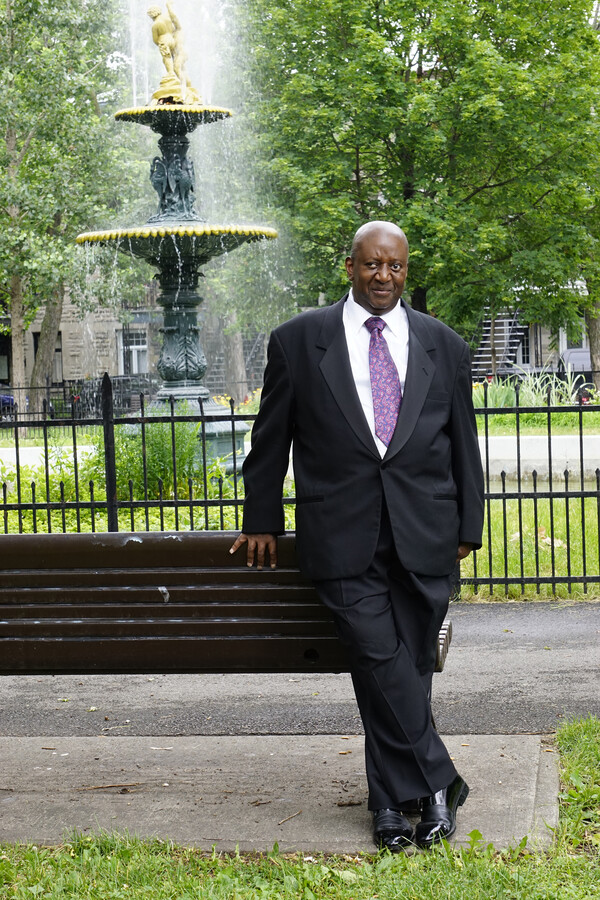
P. Bailey: You Won’t Forget His Soul
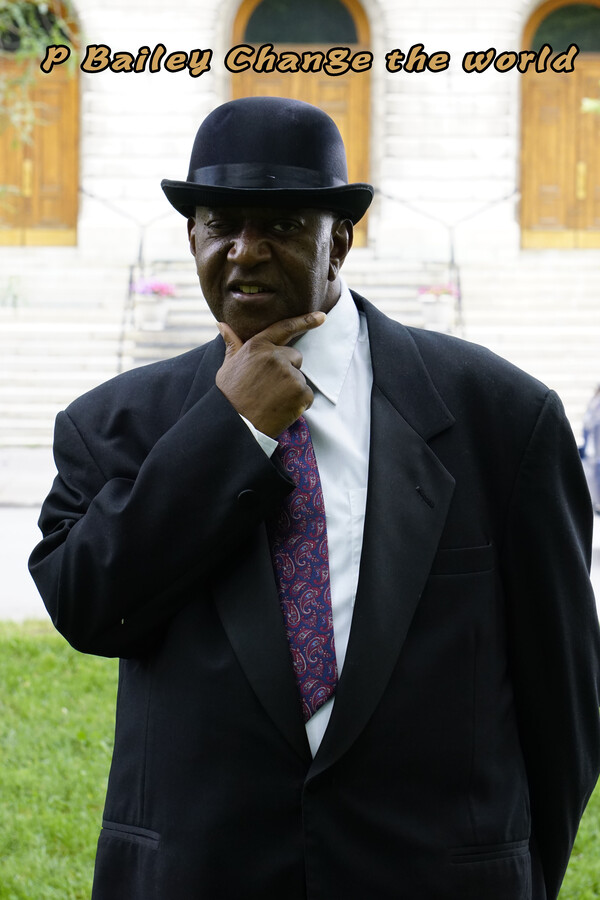
Some artists arrive on the scene with a voice. Others, like P. Bailey, come with a soul. A five-octave powerhouse with roots that span continents, P. Bailey is a singer, songwriter, and soul ambassador whose music transcends time zones and trends. From the hallways of a UK grade school to international music charts and sync placements worldwide, his story is one of passion, perseverance, and pure talent.
We caught up with P. Bailey to trace his journey—from early influences and breakthrough moments to the hard-earned wisdom of an artist who still sings with the same fire that first lit him up decades ago.
From the UK to Canada: A Soul Awakens
P. Bailey’s musical roots begin across the Atlantic, born in the UK during the early days of a cultural revolution. ‘The UK music explosion started when I was there,’ he recalls. ‘That was my early influence—the sound that brought me to Canada.’
But it wasn’t just the Beatles or Stones that shaped him. It was something more soulful—grittier, deeper. ‘Motown and Muscle Shoals… their soul spoke to me and my soul,’ he says. ‘It stirred me as if I was living a past life experience. It felt so familiar, like it was already part of me.’
One pivotal moment in grade school made all the difference. During a music class, the principal unexpectedly walked in. Bailey assumed he was in trouble. After class, with his heart racing, he waited to be reprimanded. Instead, his teacher, Miss Johnston, looked him in the eye and said, ‘You’re really good. You should follow this path.’ Her belief—and that of his music teacher—was the spark that never faded.
The Voice Within: Building a Range, Finding a Sound
With no formal training, P. Bailey developed a jaw-dropping five-octave range by listening, mimicking, and tirelessly practising. ‘I listened to my favourite records and mimicked both male and female artists until I got the range,’ he explains. ‘I worked hard at it.’ Stevie Wonder’s “Songs in the Key of Life” became a personal benchmark. Michael Jackson? ‘From the minute he exploded onto the scene, I knew he would be great,’ Bailey says.
His voice, often compared to Ron Isley’s, carries a silky smoothness and emotional grit that cuts straight through. ‘Great comparison!’ he says. ‘I loved the Isley Brothers—Ron’s voice had that depth, that feeling. I used to listen to a lot of them.’ Bailey writes from both personal experience and universal truths. ‘Sometimes it’s love. Sometimes loss. But it’s always real,’ he says. His song “Melody” is a standout—a showcase of both vocal acrobatics and raw emotional storytelling. ‘I was hitting some crazy notes on that tune,’ he laughs.
Crossing Genres, Breaking Barriers
One of the most surreal moments in his career came unexpectedly: a track he had written, “Part-Time Lover,” was sampled by Rick James for the movie “Colours”. ‘It was crazy,’ he says, still with a hint of disbelief. ‘I met the band at a nightclub in Montreal and gave them my demo. We stayed in touch for six months, but I had no idea Rick was listening—until the sample showed up in the movie soundtrack.’
Another turning point came with his house track “Get On Board,” which climbed to #3 on the UK charts and earned him an award. ‘I started with house music, but I was always an urban head at heart,’ he says. ‘The producer took my R&B song and turned it into a house track. I was new to the house then—but I fell in love with it, especially the soulful stuff.’
Bailey continued to expand his musical palette with collaborations—most notably with Walter P.P.K (named after the James Bond gun, a playful take on the trio’s names: Peter, Paul, and Ken) and producer DJ Robby Demlakian, whom he met while shooting a film. Their creative chemistry brought R&B into a new, dance-ready dimension.
Going Global: Deals, Syncs & Soul Across Borders
With music licensed for film, TV, and even dance sports performances, Bailey has become a sought-after name in the sync world. ‘I’ve always been looking for placements, so I was glad for the opportunities,’ he says. ‘I love this medium and I’m always looking for relationships with music supervisors or sync agents.’
He’s signed deals in Africa, Italy, China, and South Korea, a testament to both his adaptability and his global appeal. But navigating international waters hasn’t been without its lessons. ‘Going to Midem and working with Global Soul taught me a lot,’ he explains. ‘Not all agreements are alike. Getting legal advice, learning how to negotiate—it’s been a learning curve.’ When writing for sync, Bailey shifts his lyrical lens. ‘The only difference is in the themes. I keep it universal—no person, place, or thing—so it can fit in different contexts. That way, the song works for sync and for singles or albums.’
New Vibes, Timeless Feelings
P. Bailey’s recent single “Catching Feelings” was born from a vibe and a conversation. ‘The song just came alive,’ he says. ‘A famous actor even told me it’s a great song. And a bunch of dance crews wanted to choreograph to it. That felt good.’ The accompanying video sizzles with energy and movement. ‘I just let the dancers do their thing,’ he adds. ‘They brought it to life.’
Then there’s “Just For You,” a deeply emotional track inspired by the loss of a loved one. ‘I was devastated,’ Bailey says, his tone softening. ‘That’s where the inspiration came from. It’s not my newest, but it’s one of my most honest.’ Though he’s open to exploring new styles, he’s focused right now on keeping things ‘traditional’—a return to the roots that started it all.

Legacy, Grounding, and the Soul That Remains
Looking back, P. Bailey’s proudest moment isn’t a chart position or award. It’s endurance. ‘That I’m still here, doing things in a tough industry that forces you to adapt… that’s something I’m proud of.’ His definition of success has changed over time. ‘It’s doing what you love, no matter the difficulties,’ he says. ‘Because this is what I was born to do from day one.’
When the industry overwhelms, he goes back to the beginning. ‘Listening to my favourite records—that’s what grounds me and inspires me.’ Asked what he wants listeners to feel after hearing his music, he pauses. ‘Never really thought of that,’ he admits. ‘But maybe… “He did what he loved. Whether he made money or not, he did it for the love of it all.”’ And the phrase that’s followed him for years—‘You won’t forget his soul’? ‘If you don’t feel me when you listen,’ he says, ‘then it didn’t touch you. I’m trying to touch your soul. That’s the mission. I only do it with heart and soul.’