
Christopher Cross Brings Quiet Magic to Berlin
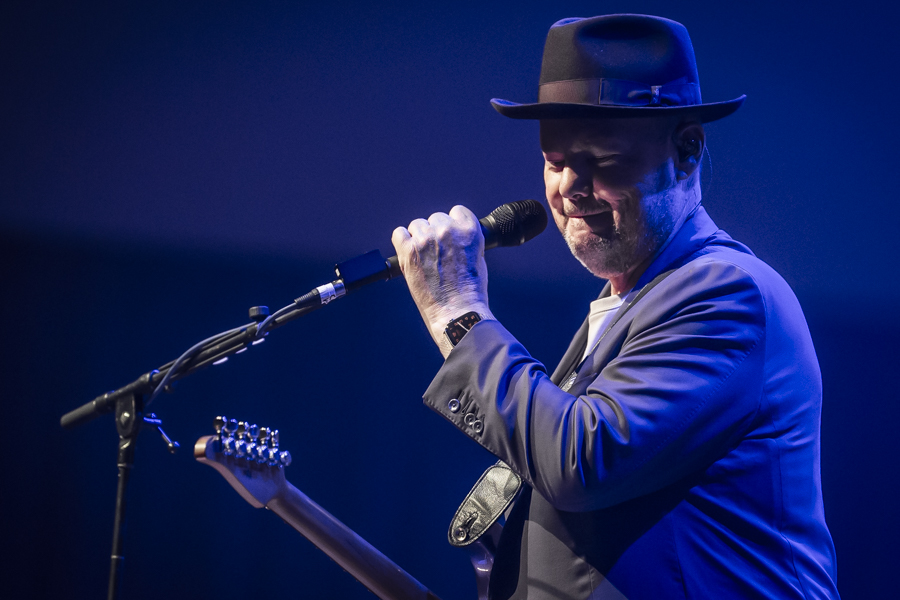
It was one of those spring evenings where Berlin feels unusually soft around the edges. Around 20 degrees, people drifting down Friedrichstrasse without any rush, heading toward the Admiralspalast as if they already knew the night would take its time.
That building alone carries a lot of weight. Over a century of history, from early 20th-century entertainment palace to 1920s glamour venue, later decline, then careful restoration. Tonight it felt less like a monument and more like a living room for a very large, very nostalgic gathering.
Inside, the audience told its own story. Mostly mid-fifties and older, settled in quickly, not here for discovery but for recognition. These were songs that had been around with them for decades.
Austin Jenckes opened quietly, almost like he was easing the room into the right temperature rather than starting a show. It worked. By the time Christopher Cross appeared, the atmosphere was already calm, receptive, ready.
The stage design was simple but oddly warm. Behind Cross, his familiar flamingo-and-flowers artwork glowed softly, almost like a personal signature rather than a backdrop. At the front of the stage sat a large pot of flowers, slightly theatrical but also strangely homey. The lighting did its job well, though the occasional heavy use of smoke drifted a bit far into overstatement.
One of the first things you noticed was what wasn’t there. No traditional keyboard setup, no layered electronic station. Just a Yamaha stage piano off to the side, keeping things grounded. The rest of the band was tight and compact: drums, bass, three backing vocalists, and a multi-instrumentalist handling saxophones and flute-like instruments. A small group, but it never felt thin.
Cross opened with “All Right”, and the reaction was immediate recognition rather than surprise. The arrangement was slightly streamlined compared to the original, with simplified harmonic movement in places, but the core feel remained intact. The backing vocalists carried the choruses with a rich, blended sound that became one of the evening’s anchors.
He greeted the audience warmly and set the tone early: mostly the big songs from the first two albums, mixed with what he called “deep cuts” from later years.
“Never Be the Same” followed, and here he stayed closer to the original structure, including the full key change in the final section. It might sound small, but live, many artists skip that moment. Here, it landed cleanly and gave the song its familiar lift.
Then came “I Really Don’t Know Anymore”, which opened the door to something looser. Extended piano and saxophone sections turned it into more of a shared jam than a fixed arrangement, and you could feel the band listening to each other rather than just following a script.
One of the early surprises was “Alibi”, replacing what had reportedly been “Dreamers”. It shifted the mood slightly, a more reflective detour. “Baby Says No” followed, and its opening stood out immediately thanks to a soft, almost airy flute introduction that made the room feel quieter without anyone asking for it.
Then came “Light the World”, and this was one of the more unexpected highlights. The backing vocalists switched parts of the chorus into Swahili, not as a gimmick but as a genuine musical texture. It changed the energy in the room in a noticeable way. People started clapping along more naturally, like the audience had briefly stopped watching and started participating.
The centrepiece arrived with “Sailing”. It didn’t start big. It began with an extended solo piano passage, very restrained, almost fragile, before slowly building into a bed of orchestral textures coming from playback strings and pads. When the familiar guitar figure finally entered, there was a clear wave of recognition across the hall, not loud but collective.
The arrangement was carefully balanced between live playing and backing elements. The string parts and atmospheric layers were clearly pre-produced, but Cross himself played the signature guitar line with precision and restraint. It wasn’t reinvented, just respected. And that, in this case, was enough.
From here, he moved into a seated position for much of the rest of the show, shifting the energy into something more intimate. “Walking in Avalon” followed in that calmer mode, with Cross settled, guitar in hand, unhurried.
“Say You’ll Be Mine” was one of the more stripped-back moments of the night, almost conversational in tone. A duet with one of the backing singers, reduced to voice and guitar, with just a subtle piano touch at the very end. It felt closer than most of the set.
There were also more playful production ideas in this section. “The Light Is On” stood out for its structure: a dual intro featuring recorder and bass, an unusual pairing that somehow worked. And then the lighting concept kicked in. Every time the title line came around in the chorus, a sharp white flash hit the audience. It got reactions every time, part humour, part surprise, part applause. It was simple but extremely effective stagecraft.
“Arthur’s Theme (Best That You Can Do)” followed, delivered with remarkable precision. Cross mentioned Burt Bacharach and dedicated the performance to him. Musically, it was almost note-for-note faithful, including the iconic saxophone passage. It felt less like interpretation and more like preservation.
“No Time for Talk” kept the momentum steady, polished but slightly more straightforward, clearly part of the build toward the end.
Then came “Ride Like the Wind”, and this was the moment the room finally shifted fully. People stood up almost immediately. Singing, clapping, some dancing. The polite concert behaviour disappeared completely, replaced by something more communal and loose.
Rather than leaving the stage, Cross flowed directly into “Think of Laura”. The shift was immediate and noticeable. From collective energy to stillness. The song carries personal weight, written in memory of Laura Carter, and it showed. The room became quiet in a different way, more attentive than passive.
What tied the evening together wasn’t virtuosity or spectacle, though there was plenty of both in small doses. It was the sense of ease. Cross didn’t push the audience, didn’t over-explain, didn’t try to modernise anything unnecessarily. Between songs, he was relaxed, lightly humorous, occasionally self-aware about the passage of time, which the audience clearly appreciated rather than resisted.
At 75, his voice still has its characteristic warmth, even if the upper range is thinner and less sustained than on the original recordings. The phrasing, however, remains intact. His guitar work is still steady and unforced, never trying to overcompensate.
The front-of-house mix was clean and well balanced, making good use of the Admiralspalast’s natural acoustics. Separation between instruments was clear, and vocals sat comfortably on top of the mix. The low mids could have used a touch more presence around 300 Hz, which would have given a bit more body, and the bassist was slightly under-lit and visually understated in the mix of the stage picture.
Still, these are small details in a production that otherwise felt carefully handled and musically coherent.
Christopher Cross didn’t try to turn the evening into something new. He didn’t need to. Instead, he delivered something more specific: familiar songs played with care, space, and a quiet sense of respect for the audience that had carried them through the years.


