
Precious Pop Pearls: The Story Behind Chumbawamba – “Tubthumping”
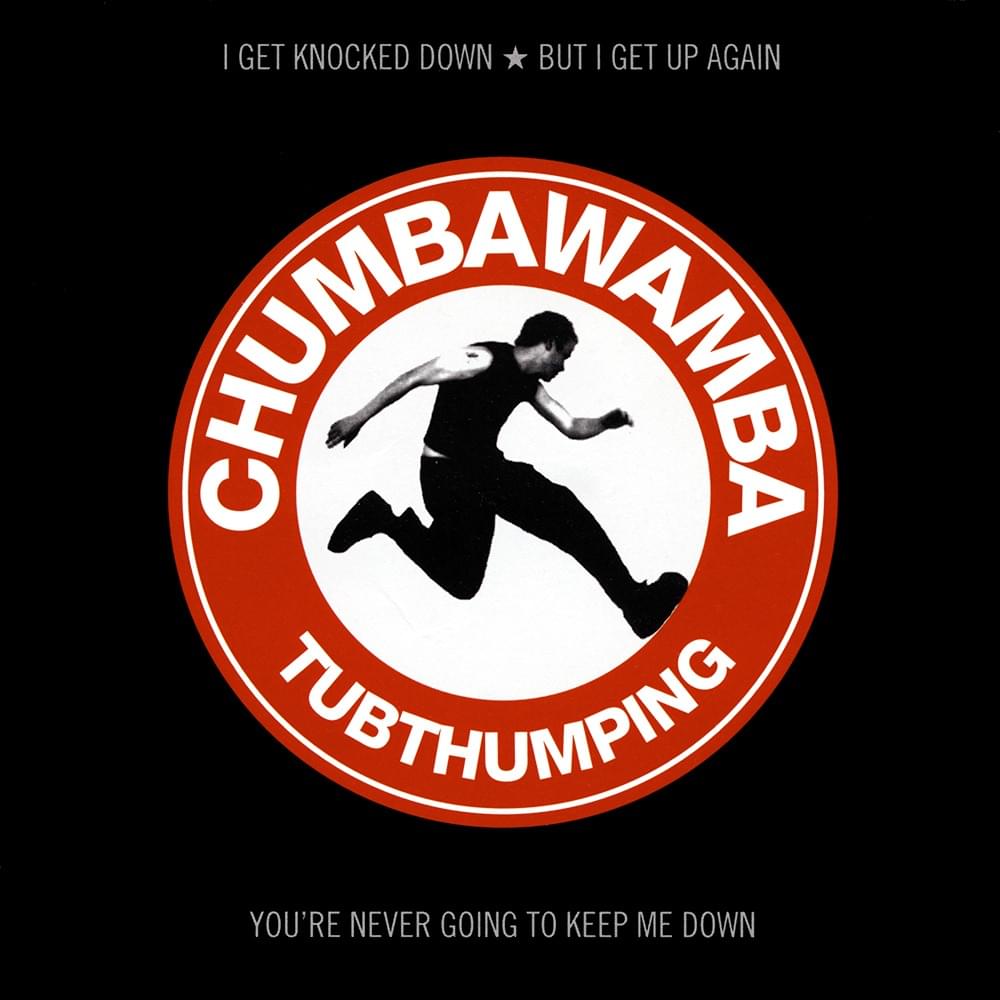
There are songs that you never lose after hearing them once. Not because they are so refined, not because they triggered a musical revolution, but because they are etched somewhere deep in the collective memory of a generation. “Tubthumping” by Chumbawamba is one such song. It appeared in the summer of 1997, sounded like a football stadium and a dance floor at the same time, and within weeks had the whole world in its grip. It was the work of an anarchist punk band that had operated on the margins for fifteen years and suddenly, almost against their will, found themselves at the top of the charts. The story behind the song is one of resilience, contradiction and the stubborn power of a simple message. <h2>Chumbawamba</h2>
It began in 1982, in a squatted building in Leeds, northern England. A handful of young idealists with political convictions that went far beyond punk rhetoric formed a collective they called Chumbawamba. The name meant nothing in particular, and that was exactly the point. What the band did mean was clear from the start: anarcho communism, feminism, anti fascism, animal rights, and class struggle. The world had to change, and Chumbawamba would fight for that with music as a weapon.
For most of their career, the band consisted of seven to eight members and drew from a wide range of musical styles, including punk rock, pop, folk and dance. This could be heard clearly: early records sounded like raw punk attacks, but the band never allowed themselves to be confined to one sound. They made a fully a cappella album of traditional English folk songs, experimented with electronic beats and lyrics intended as political pamphlets set to music.
Chumbawamba emerged from the squatting community of Leeds and over a career spanning almost three decades played punk rock, pop influences, world music and folk. Gradually, they built a loyal following, people who valued the band’s do-it-yourself ethos and their willingness to accept consequences for their political stance. The band was actively involved in the British poll tax protests, against an unpopular tax introduced by Prime Minister Margaret Thatcher that was criticised as favouring the wealthy and discouraging poorer voters.
In 1993, they achieved their first modest chart entry in the United Kingdom with “Enough Is Enough”, a collaboration with Credit to the Nation. This was followed by songs such as “Timebomb” and “Homophobia”, which made the band known in alternative circles but had little commercial impact. Until 1997.
Tubthumping
The moment the band definitively shifted towards a larger scale approach was their move to EMI, one of the major multinational music companies. For a band that ten years earlier had contributed to a compilation literally titled “Fuck EMI”, this was a controversial decision. Their move to a major label caused huge unrest among their fanbase, with many older supporters feeling the band had diluted everything it stood for. The band defended itself by arguing that all record companies, large or small, operate on capitalist principles, and that reaching a wider audience was more important than remaining in a small niche.
The result of this controversial step was “Tubthumping”. The song was released in August 1997 by EMI Records as the first single from their eighth studio album “Tubthumper”. Written and produced by the band themselves, it became their most successful single.
The inspiration for the song was surprisingly ordinary. Guitarist Boff Whalley told The Guardian that it was written about ‘the resilience of ordinary people’. A pub in Leeds called the Fforde Grene served as inspiration. The chorus, with its repeated mantra about getting up again after falling, sounds like a terrace chant on a Saturday afternoon, a pub composition about both individual perseverance and class consciousness.
Musically, “Tubthumping” was a strange creature. It is a dance rock, alternative rock and dance punk song. The intro contains a sample from the British film “Brassed Off”, a drama about a miners’ brass band trying to justify its existence while the mine around them closes. That detail was not accidental. The reference anchored the song in the social reality of working-class communities in northern England.
The chart performance was impressive. In the United Kingdom, the song entered at number two and spent three consecutive weeks in that position, held from number one by Will Smith’s “Men in Black”. It spent eleven consecutive weeks in the top ten and twenty consecutive weeks in the top one hundred.
The song became an international hit. It reached number one in Australia, Canada, Ireland, Italy and New Zealand. In the United States, it reached number six on the Billboard Hot 100 and topped three other Billboard charts. For a British band previously known mainly in alternative circles, this was a stunning breakthrough.
The song sat at the heart of a vibrant musical era in 1997. That same year, acts such as Hanson, Savage Garden, No Doubt, Prodigy and the Spice Girls scored major hits. Britpop peaked with bands such as Oasis and Blur, while the dance scene led by acts like The Chemical Brothers and Daft Punk increasingly influenced the mainstream. “Tubthumping” did not fit anywhere neatly and yet everywhere at once: it had the raw energy of punk, the catchiness of dance and the collective force of a football anthem.
At the Brit Awards in 1998, “Tubthumping” was nominated for Best British Single. It sold 880,000 copies in the United Kingdom.
They Might Be Giants
The success of a song can also be measured by how others respond to it. “Tubthumping” proved to be a song that attracted others precisely because of its unusual structure. The alternative rock band They Might Be Giants covered “Tubthumping” for The A.V. Club A.V. Undercover video series in 2011.
The reasoning behind the choice was striking. John Linnell suggested it might be the song most like a They Might Be Giants song because of how structurally unusual it was and how unlike a standard pop song it felt. He wrote that part of its nature came from being written by a collective.
To make the anthem-style chorus work effectively, John Flansburgh packed as many A.V. Club staff members as possible into the small recording space to chant along with the band. The result was an energetic version that captured the essence of the original while giving it a distinct identity. The cover was later included on the band’s compilation album “Album Raises New and Troubling Questions”, showing how highly they regarded it.
The choice by They Might Be Giants is telling. They are not the most obvious artists to take on a late-nineties drinking anthem, yet their choice underlined what many already felt: beneath the rough surface of “Tubthumping” lies songwriting quality that goes beyond the average one-hit novelty.
Tubthumper
“Tubthumping” was the precursor to the album “Tubthumper”, released on 1 September 1997. The album is the band’s eighth studio album and their major label debut, released by EMI. It marked a musical shift away from the group’s anarcho punk roots and incorporated pop rock, dance pop and alternative rock. Thematically, the album functions as social commentary on a range of political issues, especially class struggle.
The album achieved strong commercial results. In the United States, it reached number three on the Billboard 200 and sold more than 3,200,000 copies. In Canada, it reached number two and in the United Kingdom, number nineteen.
Alongside “Tubthumping” the album included other strong tracks. The second single, “Amnesia” showed that the band had more to offer than one major hit.
Amnesia
After the success of “Tubthumping”, the world watched to see what Chumbawamba would release next. “Amnesia” is the second single from the eighth studio album “Tubthumper” by Chumbawamba, released on 19 January 1998 by EMI. The lyrics focus on the sense of betrayal felt by English left-wing voters during the rise of New Labour.
The song is more politically sharp than its predecessor. “Amnesia” explores the dishonesty of politicians and the ignorance of voters who continue to re-elect them. It was written for the general election in England, aimed at Blair’s New Labour, but carries a universal message about politicians failing to keep promises after being elected.
Commercially, it held its ground. The song was a successful follow-up to “Tubthumping”, reaching the top ten in both the United Kingdom and Canada, and giving the group their final top twenty entries in both countries. Its performance confirmed that Chumbawamba’s success was not a matter of chance alone.
The period after “Tubthumping” and “Amnesia” was one of gradual withdrawal from the mainstream. The band continued making music but returned to smaller labels and a more acoustic folk-oriented sound. In 2004, several long-standing members left, and the group continued as a four-piece acoustic formation with a more folk-influenced output.
The band also became known for political actions that made international headlines. At the Brit Awards in 1998, singer Danbert Nobacon poured a jug of water over then British Deputy Prime Minister John Prescott, in protest against Labour policy towards striking dock workers in Liverpool. It was exactly the kind of act associated with Chumbawamba: loud, direct and completely unexpected.
In the late 1990s, the band turned down a 1.5 million dollar offer from Nike to use “Tubthumping” in a World Cup advertisement. According to the band, the decision took about thirty seconds.
On 7 July 2012, Chumbawamba announced its impending dissolution. Their final concert took place at Leeds City Varieties. After thirty years, fourteen studio albums and a level of political activism few bands ever match, it was over.
But “Tubthumping” lives on. On the side of the Leeds Playhouse, there is a neon artwork reading ‘I get knocked down, but I get up again’ from the single. It stands as a monument to a song that began as a drinking chant in a Leeds pub and became one of the most recognisable songs of the 1990s. A reminder that the simplest message can sometimes be the most powerful: get up, every single time.


