
Precious Pop Pearls: The Story Behind Édith Piaf – “La Vie en rose”
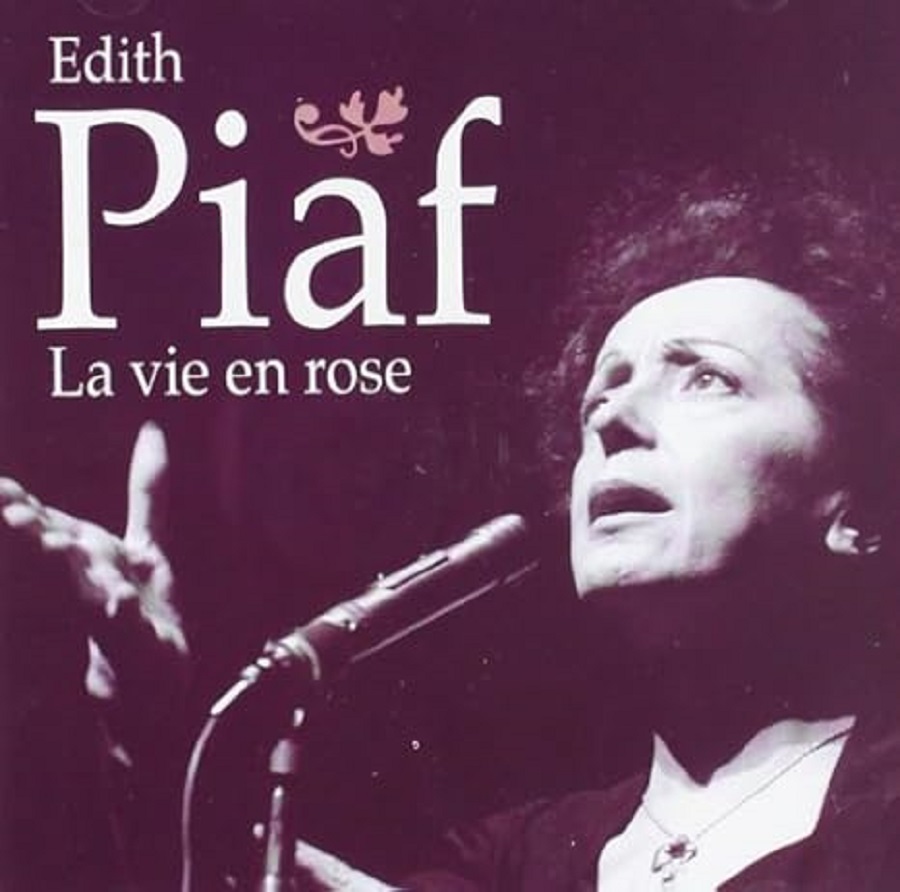
Some songs reflect an era, and there are songs that transcend time itself. “La Vie en rose” belongs to the second category. Written in turbulent post-war Paris, released as a single in 1947 and brought back to life thirty years later by Jamaican performer Grace Jones, this chanson has grown into one of the most recognisable and unrivalled love songs in the history of popular music. It is a song about seeing the world through a rosy haze of happiness, about love that colours everything and changes everything. And yet it possesses a depth that far exceeds the romantic cliché. Behind the notes of this song lies the story of a woman who knew life in its harshest form and found beauty in it nonetheless.
Édith Piaf
Édith Giovanna Gassion was born on 19 December 1915 in Paris, in circumstances one would not wish upon anyone. Her mother, an Italian-Berber cabaret singer who performed under the name Line Marsa, left her shortly after birth. Her father, the acrobatic street performer Louis Alphonse Gassion, was unable to care for her and left her with his mother, who ran a brothel in Normandy. The girl grew up amongst prostitutes, temporarily lost her sight at a young age due to a corneal infection, and moved in with her father as a teenager to survive as a street performer.
At fifteen, she left the family home for good and sang for her supper on the pavements of Paris. Her voice, raw and yet extraordinarily refined, left no one unmoved. In 1935, she was discovered by Louis Leplée, the owner of the nightclub Le Gerny. He gave her the nickname La Môme Piaf, the little sparrow, a name that would stay with her forever. Leplée was murdered a year later, allegedly by gangsters with whom Piaf had previously come into contact through her life on the streets. She was questioned but acquitted, though the case temporarily damaged her reputation.
What followed was a career of extraordinary scope. Piaf became not only the greatest singer in France, but one of the most celebrated artists of the twentieth century. She embodied the genre of the chanson réaliste, songs about love, loss and the weight of life, and she sang them with an intensity that disarmed her audience time and again. Her music was deeply autobiographical: the pain in her voice was not performed, but lived. She lost her great love, the boxer Marcel Cerdán, in a plane crash in 1949. She struggled with severe alcoholism and a dependency on medication that wrecked her health. She survived three serious car accidents. And yet she kept on singing.
In 1957, she achieved one of her greatest triumphs with a sold-out concert at Carnegie Hall in New York, where the reviewer for the New York Times wrote that the hall was flooded with tears. Ten thousand people applauded her for minutes on end. It was a confirmation of something the Parisian public had long known: Édith Piaf was unique, inimitable, and in a class of her own.
La Vie en rose
The story of “La Vie en Rose” begins on a terrace in Paris, sometime in 1945. Piaf and her friend Marianne Michel met in a café, and Michel had a handful of musical notes with her. She asked Piaf whether she could do something with the melody. What followed was one of the most fruitful songwriting sessions in French musical history. Piaf wrote lyrics to the melody almost immediately, though her original version differed from the final one on one crucial point: she initially wrote ‘les choses en rose’, things in pink, whereupon Michel slightly adjusted the lyrics to ‘la vie en rose’, life in pink. That small change would go on to conquer the world.
The music was officially registered in the name of composer Louis Guglielmi, better known as Louiguy, because Piaf did not meet the requirements of the music organisation SACEM to claim authorship herself. The reality was more complicated: composer Marguerite Monnot also played a role in the creation of the melody.
Initially, those closest to Piaf and her songwriting team were not particularly enthusiastic. They considered the song weaker than the rest of her repertoire. On their advice, she set the song aside for a time. But in 1946, she sang it live in concert for the first time, and the audience responded immediately. The song spoke directly to the hearts of people who had just endured the horrors of the Second World War. A song about pure love, about finding beauty in everyday life, sounded in that context not naive but necessary.
In 1947, “La Vie en rose” was released as a single through Columbia Records, a division of EMI. The success was overwhelming. The song was the best-selling single in Italy in 1948, and the ninth best-selling in Brazil in 1949. In the United States, it broke through entirely in 1950: no fewer than seven different versions simultaneously reached the Billboard charts. Tony Martin reached number nine, Paul Weston number twelve, and Bing Crosby number thirteen. Piaf herself also performed well there with her own version. Louis Armstrong, Dean Martin and Ralph Flanagan likewise released cover versions that charted well. It was an unprecedented phenomenon: one French song becoming a hit simultaneously through seven artists in one country.
Lyricist Mack David wrote English lyrics to the melody, making the song accessible to a wider international audience. Piaf appeared in the French film “Neuf garçons, un coeur” in 1948 and sang the song live in it. Later, “La Vie en rose” appeared on virtually all of her studio albums and countless compilations. It became her signature, her calling card, the song with which her name would be forever linked.
In 1998, the song received the Grammy Hall of Fame Award, a distinction that definitively sealed its timeless significance.
Grace Jones
In 1977, a young Jamaican woman did something that seemed almost impossible at first glance: she took Piaf’s most iconic song and made something entirely her own from it. Grace Beverly Jones, born on 19 May 1948 in Spanish Town, Jamaica, had by that time already completed a successful modelling career in Paris and New York. She had posed for Elle and Vogue, served as muse to designers such as Yves Saint Laurent and Kenzo, and shared a flat in Paris with, among others, Jerry Hall and Jessica Lange.
But music drew her too, and after a series of poorly received singles in 1975 and 1976, she signed a contract with Island Records. She was paired with disco maestro Tom Moulton, and together they recorded the debut album “Portfolio” at Sigma Sound Studios in Philadelphia. Jones had a radical approach: she did not want to hear “La Vie en Rose” in Piaf’s version before recording her own interpretation. She did not want to be influenced by the way Piaf sang it. The result was therefore entirely unlike anything audiences had come to expect.
Where Piaf sang the lyrics with restrained passion and theatrical depth, Jones opted for a bossa nova-disco combination that transformed the melody into something fluid, sensual and modernist. The album version ran to more than seven minutes, a testament to the elaborate production Moulton brought to it. The single version was trimmed to three and a half minutes. The song reached the French and Italian top five, and was also a major hit in the Netherlands upon a reissue in 1983. In 1985, it reached number twelve in the British charts as a double A-side, coupled with “Pull Up to the Bumper”. The single was certified gold in both France and Italy.
Jones’ version became one of the fixtures of her live repertoire. In her celebrated “A One Man Show” from 1981, it was the only song from her disco period she included in the show. That says everything about the particular significance the song held for her.
Portfolio
The album “Portfolio” was simultaneously a bold and shrewd move. The first side consisted of a continuous disco medley of three songs from Broadway musicals: “Send in the Clowns” by Stephen Sondheim from “A Little Night Music”, “What I Did for Love” from “A Chorus Line”, and “Tomorrow” from “Annie”. With this, Jones positioned herself as an interpreter of great theatrical classics, but in a contemporary, dancefloor-friendly guise.
The second side opened with the seven-minute version of “La Vie en rose”, followed by original compositions and the club hit “I Need a Man”, which had earned Jones considerable popularity with gay club audiences in New York. The album had a luxurious feel, with artwork by illustrator Richard Bernstein, who worked for the magazine Interview. Tom Moulton’s production was glossy and spacious, precisely what the disco scene of those years demanded.
“Portfolio” was followed by “Fame” in 1978 and “Muse” in 1979, both also produced by Moulton. Jones then made a radical stylistic shift towards new wave, reggae and post-punk with albums such as “Warm Leatherette” and the monumental “Nightclubbing” from 1981. Jones grew into one of the most defining figures of the pop landscape of the 1980s, with a visual identity and stage presence that has influenced generations of artists after her, from Madonna to Beyoncé.
Non, je ne regrette rien
To name Édith Piaf is also to name “Non, je ne regrette rien”. Although “La Vie en Rose” marked her international breakthrough, it is this song that many regard as her true testament. It was written by composer Charles Dumont and lyricist Michel Vaucaire, and recorded on 10 November 1960. Piaf initially reacted dismissively when Dumont offered her his compositions, but after much persuasion, she was so deeply moved by this song that she said on the spot: ‘This is the song I have been waiting for all my life.’
The song reached the top of the French charts and remained there for seven weeks. Piaf dedicated it to the French Foreign Legion, which adopted the song as a kind of battle hymn. Later, “Non, je ne regrette rien” would reach a new global audience thanks to the science fiction film “Inception” from 2010, in which it served as an acoustic signal to leave dream levels. A surreal fate for a song that was once intended as a pure declaration of love.
Piaf sang the song at some of her most difficult moments, her back bent by arthritis and barely able to stand for the pain. And yet her voice remained unbroken. That contrast, between the vulnerability of her body and the indestructible power of her voice, made her performances in her final years almost unbearably intense experiences for those who were there.
There is something remarkable about the fate of great songs: they seem to grow larger as time passes. “La Vie en Rose” has, in the decades since Piaf died in 1963, grown into more than a song. It has become a symbol of France, of romance, of a kind of human warmth that transcends all cultural boundaries. The film “La Vie en Rose” from 2007, a biopic about Piaf’s life with Marion Cotillard in the lead role, brought the song and its creator back into global consciousness.
Grace Jones gave the song a second life in 1977, proving that the melody can withstand radical reinterpretation, and at the same time made it her own artistic statement. That a song written in post-war Paris still resonates in films, advertisements, and concert halls around the world is no coincidence. It is proof that the heart of “La Vie en rose” touches something universal: the longing for love, and the joy when it is found. Piaf knew that. She only had to sing it.


