
Precious Pop Pearls: The Story Behind Robbie Nevil – “C’est La Vie”
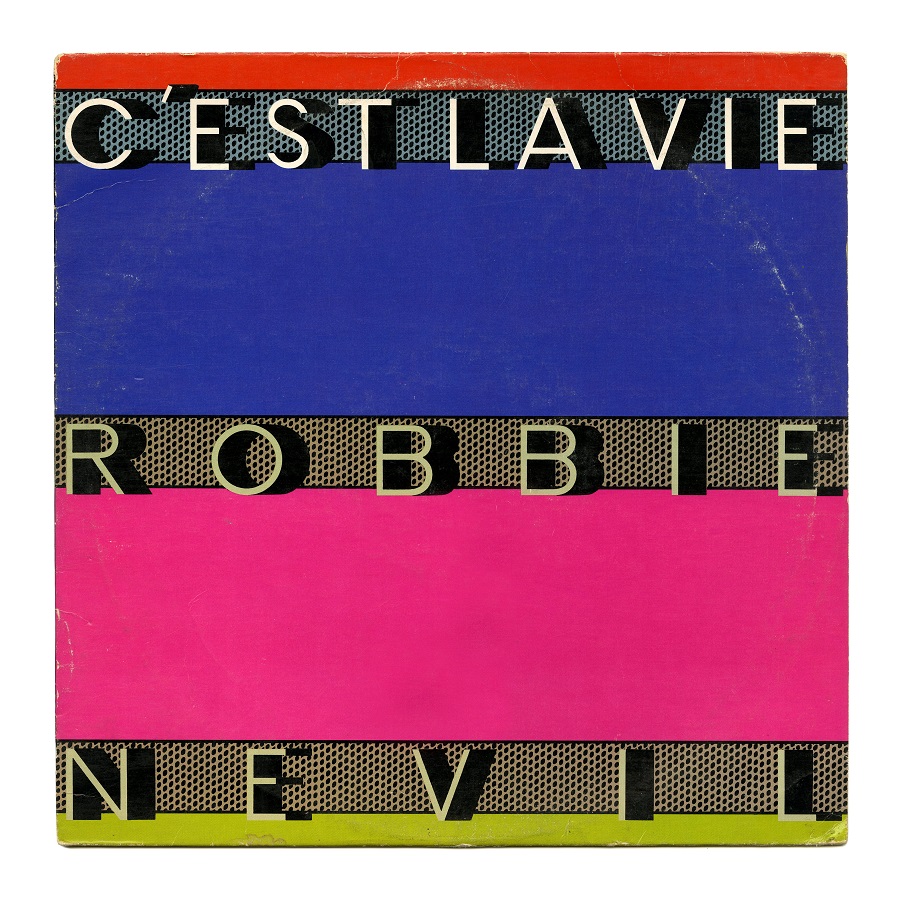
Some songs seem to blow in out of nowhere and immediately be everywhere at once. “C’est la Vie” by Robbie Nevil is one such song. It sounds light, cheerful and almost carefree, but behind that cheerful guitar riff and catchy chorus lies a story of years of hard work, doubt and ultimately a breakthrough that nobody had quite seen coming. At the end of 1986, the single conquered the charts from North America to Scandinavia, and decades later it still sounds fresh enough to belong on any eighties playlist. This is the story behind one of the most underrated pop gems of that era.
Robbie Nevil
Robert S. Nevil was born on 2 October 1958 in Los Angeles. As an eleven-year-old boy, he picked up a guitar for the first time and soon played in one cover band after another, having grown up with the music of Stevie Wonder and Earth, Wind & Fire as major sources of inspiration. Those influences can clearly be heard in his later work, in which funk, soul and pop effortlessly blend together.
Before he ever released a record himself, Nevil made his mark as a songwriter. In 1983, he secured a publishing deal and wrote songs for established artists such as The Pointer Sisters, Sheena Easton and Melissa Manchester. It was an education that sharpened his skills as a lyricist and melody writer, but he himself was still out of the spotlight.
It was not until 1986, after years in the background, that Nevil signed a record deal with Manhattan Records and it was decided that he would also step forward as an artist himself. What followed was a brief but intense period of fame. Between 1986 and 1996, he was in the spotlight as a performing artist, while he remained active as a songwriter and producer to this day, including contributions to the soundtrack of High School Musical.
C’est la Vie
The remarkable thing about “C’est la Vie” is that it was not written for Nevil himself at all. He wrote the song together with Duncan Pain and Mark Holding, actually for Kool & the Gang, but when they declined, Beau Williams recorded the song. The song did not achieve much success and when the record label wanted to use it as Nevil’s debut single, he had serious doubts. He did not consider it one of his newest or strongest compositions and feared that it would not resonate well with the public.
Ultimately, it was the determination of executive producer Steve Reed that made the difference. He was convinced of the song’s potential and insisted that it should still be released as the first single. In hindsight, that proved to be one of the best decisions of Nevil’s career. The song was produced by Alex Sadkin and Phil Thornalley, who were known as perfectionists in the studio. The recordings are said to have taken months, with countless repeated takes to get the vocal performance exactly right.
That effort paid off. “C’est la Vie” steadily climbed the American Billboard Hot 100 and reached number two in January 1987, where it remained for two weeks. The song spent a total of sixteen weeks in the top 40, making it Nevil’s biggest American hit ever. It did even better on the dance floors: thanks to a remix by Arthur Baker, the record reached number one on the American dance and disco chart.
The song was also hugely successful outside the United States. In the United Kingdom, “C’est la Vie” peaked at number three, while in Canada and Switzerland it even reached number one. The single also made the top three in Germany, Ireland, New Zealand and Sweden. It thus grew into a worldwide hit that reached the charts in dozens of countries, from Australia to Spain.
Musically, “C’est la Vie” fitted perfectly into the spirit of the mid-eighties, a period when danceable pop music with a touch of R&B and funk dominated the charts. The song shared that atmosphere with contemporaries such as Level 42, Wham! and Hall & Oates, artists who likewise combined guitar pop with tight, danceable production. While much of that music at the time relied heavily on synthesisers, “C’est la Vie” stood out precisely because of its prominent guitar part, giving the song a slightly more organic sound than many of its synthpop contemporaries.
Sugar Beats
A song that has become so deeply embedded in the collective memory of a generation does not go unnoticed by other artists. In 2008, for example, the American group Sugar Beats released their own version of “C’est la Vie”. Sugar Beats is a music project that rerecords well-known pop classics from the eighties and nineties in an accessible, child-friendly format, with the aim of introducing young listeners to timeless pop music.
Their version of “C’est la Vie” retained the recognisable melody and cheerful undertone of the original, but with a lighter, more playful performance suited to their target audience. It is a fine example of how a song that was once intended for the dance floor can, decades later, gain a completely new lease of life among a very different generation of listeners, without losing the essence of the song.
Robbie Nevil
The self-titled debut album “Robbie Nevil” was released in November 1986, shortly after the success of the first single. In the United States, the album reached number thirty-seven on the Billboard 200 and remained there for almost a year, a sign that the album was not merely carried by one hit single but had broader appeal.
In the United Kingdom, the album was even renamed “C’est la Vie”, after the single that had performed so well there, and became a minor hit when it reached number ninety-three in June 1987. The album contained ten tracks, including “Just a Little Closer”, “Limousines”, “Back to You” and “Walk Your Talk”, and was produced by the same team responsible for the impressive production of the title track. In total, the album produced three singles that reached the American top twenty, an achievement that few debut albums of the time could match.
Wot’s It to Ya
After the success of “C’est la Vie”, there was first the single “Dominoes”, which reached number fourteen on the American chart, followed by “Wot’s It to Ya”. The latter proved to be an excellent follow-up and climbed to number ten on the Billboard Hot 100, conquering the dance floors and radio programmes just like its two predecessors. The song also performed excellently on the American dance and disco chart, reaching number ten there as well.
With three top twenty hits from the same album, Nevil proved that his debut was no fluke, but the result of years of experience as a songwriter who had finally found his own voice. Yet none of his later singles would ever match the success of “C’est la Vie”, something that would primarily define him in the years that followed as an artist with one unforgettable breakthrough hit.
“C’est la Vie” was released at exactly the right time. It captured the energy of an era in less than four and a half minutes of music, and did so with a lightness that many contemporaries lacked. The story behind the song, from a songwriter who spent years not considering his own material good enough to a worldwide hit that reached the charts in dozens of countries, shows precisely how unpredictable the road to a pop classic can be.
Almost forty years later, the song still turns up, on compilations, in cover versions and at every party where the eighties are celebrated. That may well be the best proof that a well-written pop song, no matter how uncertain its creator may have been about it himself, will ultimately take on a life of its own.


