
Stevie Wonder in Amsterdam: a man with something essential to say
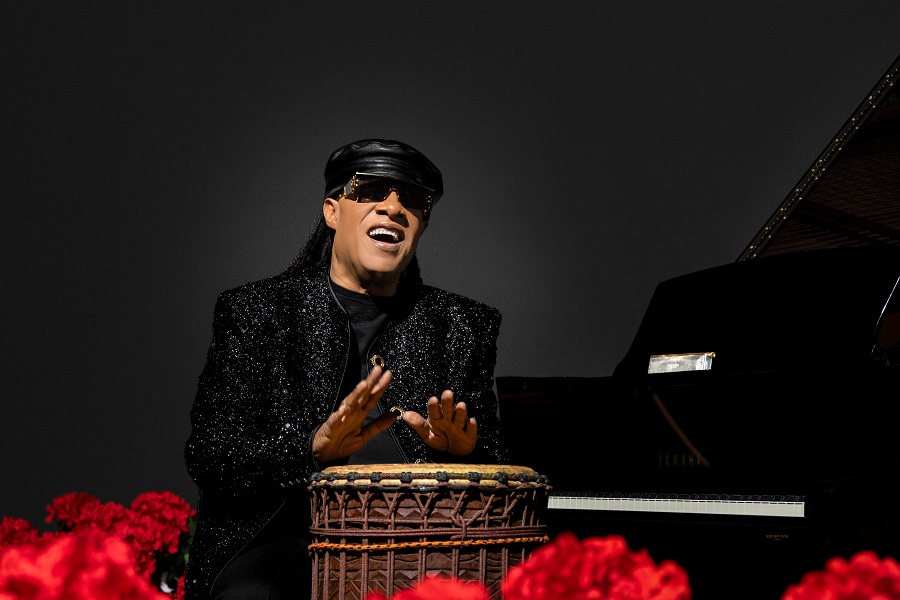
When Stevie Wonder released “Songs in the Key of Life” in September 1976, he was already one of the most successful musicians in pop music at the age of 26. With albums such as “Talking Book” (1972) and “Innervisions” (1973), he had reached an artistic and commercial peak in the early seventies. For a while, he considered leaving the music industry behind to work with disabled children in Ghana, but ultimately his creative spirit won out over the prospect of a different life. The result was an eclectic double album in which funk, jazz, soul, gospel, Latin and pop came together, bringing themes such as love, faith and social inequality into focus. “Songs in the Key of Life” became an enormous success, with hits such as “I Wish” and “Sir Duke”, and earned Wonder, among other accolades, the Grammy Award for Album of the Year.
Fifty years later, “Songs in the Key of Life” is regarded as one of Stevie Wonder’s best-known and most beloved albums, widely considered one of the great masterpieces in pop history. This is reason enough to mark its golden anniversary. Last September, Wonder announced a European tour during which he would perform the album in its entirety. The news did not fall on deaf ears, as Wonder is hardly a frequent visitor to the stage. His last performance on mainland Europe dated back to 2014. Seeing the master at work live was therefore a rare opportunity for many fans. The 17,000 tickets for Amsterdam’s Ziggo Dome sold out within minutes. On the day of the concert, tickets were being offered on the resale market for exorbitant sums, reaching as much as €13,000. Those who attended on 28 October were treated to a three-hour show filled with nostalgia, musical craftsmanship and a message that has lost none of its relevance.
The worrying state of humanity
The show opened, just like the album, with the soulful ballad “Love’s in Need of Love Today”. In it, Wonder sings about the worrying state of humanity and the ongoing struggle between love and hate. It was a thoughtful opening that immediately set the tone. It did not take long before he moved towards a harder, funkier sound with “Have a Talk With God”. Faith is presented here as a source of comfort and support, a listening ear that is always available. The warm groove and infectious rhythms made the spiritual message anything but a ponderous affair.
With “Village Ghetto Land” and the instrumental “Contusion”, Wonder then demonstrated the album’s versatility. One moment, his music sounded like a painful social commentary; the next, like a virtuosic jazz-rock composition. This contrast was one of the great attractions of “Songs in the Key of Life”: Wonder refused to be confined, either musically or thematically.
Exuberant big-band sound
Next came “Sir Duke”, his swinging tribute to jazz great Duke Ellington. The brass section was given plenty of room, and the band switched effortlessly to an exuberant big-band sound. Wonder was visibly enjoying himself. It was one of those moments when the music needed no explanation, because the energy, sheer enjoyment of playing and infectious melody spoke for themselves. With “I Wish”, Wonder then took a trip back to his childhood. He longed for the carefree days of the fifties and sixties, when mischief in the school playground could still end with a visit to the headteacher. The memories were carried by irresistible funk that got the Ziggo Dome moving. The band extended the song with instrumental passages in which the musicians gave one another room to shine. It was music that simultaneously looked back and lived fully in the moment.
That combination of craftsmanship and spontaneity continued with “Knocks Me Off My Feet” and “You Are the Sunshine of My Life”, the latter taken from the album “Talking Book”. Wonder actively sought interaction with the audience and invited them to sing along and improvise. What began as a performance of familiar songs grew into a shared musical adventure. Even a detour into Michael Jackson’s “Billie Jean” fitted effortlessly into the whole. It illustrated how naturally Wonder moves between his own repertoire and the music of other artists he admires.
Social commitment
With “Pastime Paradise”, the atmosphere changed. The compelling composition, carried by the strings, sounded like a warning against pursuing material wealth and glorifying an idealised past. Wonder holds up a mirror to the listener: those who fixate on what once was or on what they own risk forgetting what truly matters here and now. It is a theme that connects with the social commitment running like a common thread through his body of work.
After the first half of the show, more musical and personal highlights followed. In “Isn’t She Lovely”, originally written to celebrate the birth of his daughter Aisha, this personal side was given full rein. Before the song, Wonder introduced his nine children to the audience. His love for his family thus became part of a broader message about connection and humanity. The song itself was an exuberant celebration of new life, with his recognisable harmonica playing at its radiant centre. A warm and disarming moment.
Wonder could no longer always hit every high note, but his voice still sounded remarkably strong. Although it has lost some of its suppleness, it still possesses that distinctive combination of soul, charm and expressive power. He managed to take his audience along not only through his music, but also through his stories and convictions. Wonder’s musical abilities and the way he interprets his material inspire admiration time and again. His performance was therefore more than a succession of classics.
An impressive musical ensemble
For the performance, he had brought along an impressive 30-piece musical ensemble, including a string section, five horn players and six backing vocalists. Under the direction of musical director and keyboardist Greg Phillinganes, who had previously worked with artists including Michael Jackson, Eric Clapton and Toto, the album was brought to life with great precision. The polished performances still left plenty of room for improvisation and dazzling solos. The songs were regularly extended without losing their momentum. A delight for the ears was the guest contribution by young harpist Brandee Younger on “If It’s Magic”. Her playing emphasised the song’s fairy-tale quality and gave it a special dimension in the live performance.
The show reached its emotional climax with “As”, one of Wonder’s most beloved compositions. Its exuberant gospel influences and unconditional declaration of love made the song a compelling musical statement. Wonder did not merely sing about love; he made the audience feel it, too. “Another Star” followed, bringing a festive release of energy in which Latin rhythms and soul merged into an irresistible groove. But even then, the evening was not over. After a performance of John Lennon’s “Imagine”, sung by his daughter Zaiah, Wonder returned for the ultimate finale. The opening notes of “Superstition” were enough to make the Ziggo Dome tremble once more. The distinctive clavinet sound, driving bass and razor-sharp groove provided the starting signal for one final burst of musical fireworks. It is difficult to imagine a better ending.
More than entertainment
Yet it was not only the musical craftsmanship that made this concert special. At the Ziggo Dome, Stevie Wonder showed that music can be much more than entertainment. His songs are about love, freedom, equality and the responsibility people have towards one another. During his performance, he emphasised that love is the answer to a world becoming increasingly divided. At a time when racism, exclusion and hostile ideologies are once again gaining ground, this message sounds less like a casual appeal for solidarity than an urgent call to action. Equality is not a matter of political preference, and human dignity is not something open to negotiation. Wonder’s music presents a vision of a world in which ancestry and skin colour do not determine how we treat one another, but in which the human being takes centre stage.
That is what makes “Songs in the Key of Life” as relevant as ever after fifty years. The album is an ode to life in all its facets, with all the contradictions, concerns and possibilities that come with it. Wonder demonstrated that music can simultaneously move, entertain, unite and provoke thought. His idealism may sound naive in a world confronted daily with intolerance and conflict, but his music gives that idealism a convincing voice. At the Ziggo Dome, “Songs in the Key of Life” once again proved itself a timeless masterpiece. Not only musically, but also in the message it conveys. Fifty years after its release, the album is still very much alive. Just like Stevie Wonder. A man with something essential to say in the turbulent times in which we live. An unforgettable and beautiful evening.


