
Precious Pop Pearls: The Story Behind Was (Not Was) – “Walk the Dinosaur”
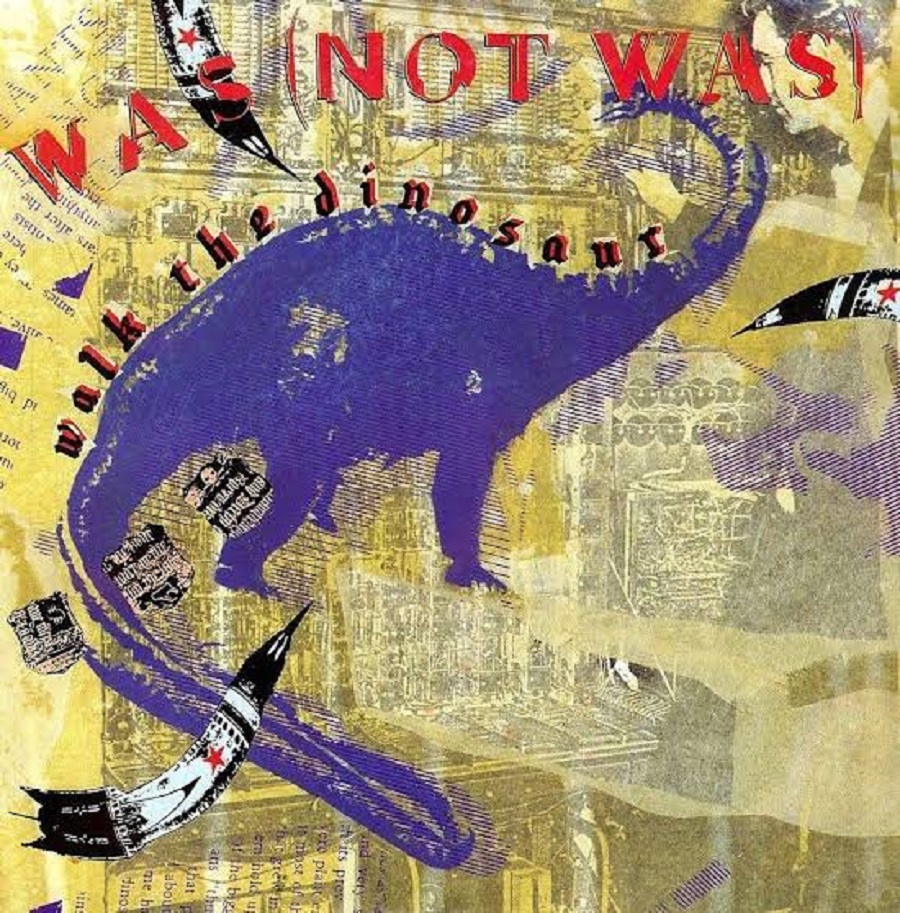
Imagine a dance floor at the end of the 1980s. The bass rolls, a cowbell ticks out the rhythm, a pounding horn section gets the room going, and suddenly everyone starts waving their arms and stomping along to the chorus, as if a giant lizard were walking through the room. It looks harmless, almost childish. But anyone who listens carefully can hear that this party has deep roots and that something quite different is rumbling beneath the rhythm section.
“Walk the Dinosaur” is one of those songs that is more than it seems. It became a worldwide hit, a television favourite, a staple of theme parks and children’s videos, and it remains a guarantee of a packed dance floor to this day. Yet the group behind it was no ordinary hit machine. It was a loose collaboration of unconventional musicians from a motor city who preferred playing with unexpected guests and absurd lyrics to following the beaten track. This is the story of a funny song with a dark edge, and of the people who made it without ever really wanting to be pop stars.
Was (Not Was)
It begins with two friends in the suburb of Oak Park, near Detroit. David Weiss and Don Fagenson met at school, during the years when the city sounded like the most important music factory in the world. They shared a love of soul, jazz, films and comedy, and grew into two very different men with the same hunger. David became a jazz critic, while Don played bass in Detroit’s jazz scene. The duo wrote songs over the telephone, from a distance. When they decided to start a band, they chose a stage name they could both share: they both became Was. The group name was a kind of joke on top of a joke, originating from a slip of the tongue by Don’s young son.
Their first recording in 1980 was a lively dance track, “Wheel Me Out”, released on the adventurous New York label Ze Records, which was known for clever, eccentric and provocative dance music. It was the starting point for a musical kindergarten where anything went. On their first albums, they mixed rock, disco, jazz and Beat Generation poetry with sharp political satire and a huge dose of humour. The group’s public face was formed by two experienced soul singers, Sweet Pea Atkinson and Sir Harry Bowens, who moved effortlessly from a ballad to an absurd sketch. The band also featured guitarist Randy Jacobs and trumpeter Marcus Belgrave, and occasionally a guest from the rock world joined them, such as Wayne Kramer of MC5.
Their second album, released in 1983, became a celebration of guest appearances. Ozzy Osbourne rapped over electronic beats, Mitch Ryder sang a rockabilly number with a techno sheen, and singer Mel Tormé recorded a distinctive ballad. The group had established a reputation as an artistic quartet known for unpredictable choices. Commercially, however, things did not go as hoped. The record label did not quite know what to make of such a chameleon. A dispute with the company, a change of contract and years of separate projects followed. It was not until 1987 that another album appeared, bringing a breakthrough that almost nobody still expected.
Walk the Dinosaur
The song was written by David Was, Don Was and Randy Jacobs, and produced by David and Don Was themselves. It appeared in 1987 and sounds like a tight funk record: a driving bass, sharp horns and a cowbell ticking through it like a metronome. The vocals are by Sweet Pea Atkinson, who lifts the whole thing with a warm, rough-edged soul voice. The chorus is a command so simple that you immediately sing along.
What makes the song special is the contrast between its packaging and its content. At first listen, it seems like a dance joke, a song to belt out with your friends. But the lyrics are about nuclear annihilation, about the fear of a global catastrophe, an ending that could befall humanity just as it did the dinosaurs. It was the era of the Cold War, when songs about nuclear anxiety had already become a genre of their own, ranging from ominous synth-pop to European protest songs. Was (Not Was) took a different route and turned the apocalypse into a dance craze. This created a peculiar effect: the listener cheerfully moves along to something that, on closer inspection, is quite ominous.
Its success followed an unusual route. In the United Kingdom, the song reached number ten at the end of 1987, giving the group its first top-ten hit. In the United States, it took until 1989 for the song to break through, helped by a music video that received heavy rotation on MTV. In it, four scantily clad cavewomen dance in a prehistoric setting, while a television in the style of The Flintstones shows clips from a cartoon featuring Daffy Duck and a dinosaur. Towards the end, modern-day people join in with the chorus. The video turned the song into a dance: people began imitating the movements, as if it were a new version of the twist. In the spring of 1989, two years after the British hit, the song reached number seven on the American Billboard Hot 100, becoming the band’s biggest hit in their home country.
The song also travelled far elsewhere. It reached number six in Canada and Norway, number nine in Australia and Switzerland, number ten in the Netherlands and South Africa, and number eleven in Ireland. In France and West Germany, it stalled at numbers forty-nine and forty-eight respectively. It was therefore a genuine worldwide hit, although outside North America its peak everywhere remained just below the very highest reaches of the charts.
Compared with other music from that era, it sounds surprisingly unique. Prince and Cameo had refined funk in the late 1980s and translated it into slick, electronic pop songs. The Beastie Boys and Tone Loc showed that humour and a playful wink could work perfectly well alongside commercial hip-hop. Bobby McFerrin scored a hit with a light-hearted song that sounded almost as innocent. The difference is that “Walk the Dinosaur” sounds like a live band in a sweaty basement, with real horns and a band sound that does not come from a machine. It is retro and modern at the same time, which makes it so timeless. It is not a revolution, but the atmosphere of a colourful, carefree party night is difficult to match.
George Clinton
A song that plays so freely with funk and humour practically calls for a reworking by someone who helped put that kind of music on the map. In 1993, that came from George Clinton, the man behind Parliament and Funkadelic and the creator of immortal funk tracks such as “Atomic Dog”. His version appeared on the soundtrack to the film Super Mario Bros. and can also be heard during the closing credits.
It brings things full circle. Clinton was part of the music that David and Don Was grew up with in the Detroit area. The group also included a percussionist from the circle around Parliament and Funkadelic, making the connection between the two worlds even stronger. Clinton brought the song back to where it had really always come from: a crossroads between dance-floor funk and cartoonish madness. His version fits his own reputation for playful, unrestrained funk. The fact that the song ended up in a film about a video game suits the place it had already acquired: a cheerful backdrop for a world full of fantasy.
What Up, Dog?
The album from which it all came appeared in the spring of 1988 and was called “What Up, Dog?”. The recordings ran from 1984 to 1988, a long and chaotic period whose diversity can be heard throughout the record. It is an album full of unexpected turns. It features funk tracks, a ballad, ironic stories and satirical sketches, along with a procession of guest musicians that only this group could have brought together. Iggy Pop, Leonard Cohen, the Roches sisters and singer Syd Straw all contributed, and there is even a track with a songwriting credit for Elvis Costello. Guitarist Stevie Salas, bassist John Patitucci and Frank Sinatra Jr. can also be heard.
Commercially, it was the band’s highest climb. The album reached the US top fifty and produced several singles that entered the charts. Alongside the big hit were “The Boy’s Gone Crazy”, a re-release of “Out Come the Freaks” and “Anything Can Happen”, which peaked at number seventy-five on the American Hot 100. Three entries on that chart in total, one of which climbed into the top ten, was not a bad result for a group that never took itself seriously.
One particularly interesting detail is the visual language surrounding the album. Artist and animator Christoph Simon made short, strange animated films for several tracks, perfectly translating the band’s absurd tone. They fit the group’s reputation: music that can be funny and unsettling at the same time, and that refuses to be confined to neat categories.
Spy in the House of Love
Alongside the dinosaur, the album featured a very different single, which had actually appeared earlier. “Spy in the House of Love” is slower, darker and more of a slow burner. It revolves around a menacing, hypnotic bassline and sounds like the soundtrack to a late-night thriller. In the United Kingdom, its initial release in 1987 stalled at number fifty-one, but a re-release a year later reached number twenty-one. In the United States, the song reached number one on the dance charts and number sixteen on the Hot 100, a major hit that preceded the dinosaur’s American success.
It is one of the band’s few songs that people do not immediately listen to with a knowing wink, and it makes for an interesting counterpoint to the theme-park appeal for which they became known. Others recognised its strength, too: in 1997, British singer Steve Winwood released a song that borrowed not only the title but also the bassline and other elements. It shows that the group, particularly in those moments when the fun temporarily moved out of the spotlight, had more to offer than just a dance joke.
What followed the major breakthrough was mainly a gradual fading away. The 1990 album failed to live up to the high expectations, and the commercial momentum dried up. In 1992, the group toured with Dire Straits and scored one final major hit in the United Kingdom with a newly recorded version of “Shake Your Head”, this time featuring Ozzy Osbourne and actress Kim Basinger. It became their biggest British success, reaching number four in the charts. After that, the two founders drifted apart, and for a while little remained beyond a compilation album.
Meanwhile, Don Was became one of the most sought-after producers in the world, working with artists such as Bonnie Raitt and Bob Dylan, and later also serving as head of the jazz label Blue Note. The band returned from time to time in the following years, with a club tour in 2004 and a new album, “Boo!”, in 2008. Singer Sweet Pea Atkinson died in 2020 at the age of seventy-four, marking the end of an era in which soul, humour and social criticism came together.
Meanwhile, the song itself took on a life of its own. It features in the 1994 film The Flintstones, in television spots for the Disney film Dinosaur, in a dinosaur-themed world at a Disney theme park, and in 2009 in an animated version featuring Queen Latifah, with adapted lyrics for a young audience. It is still played at parties, often without people realising where it came from. Perhaps that is its finest legacy: an unconventional, almost self-mocking song by a group that never belonged among the biggest stars, but which nevertheless managed to get the whole world dancing about the end of the world.


