
Precious Pop Pearls: The Story Behind Pat Benatar – “Love Is a Battlefield”
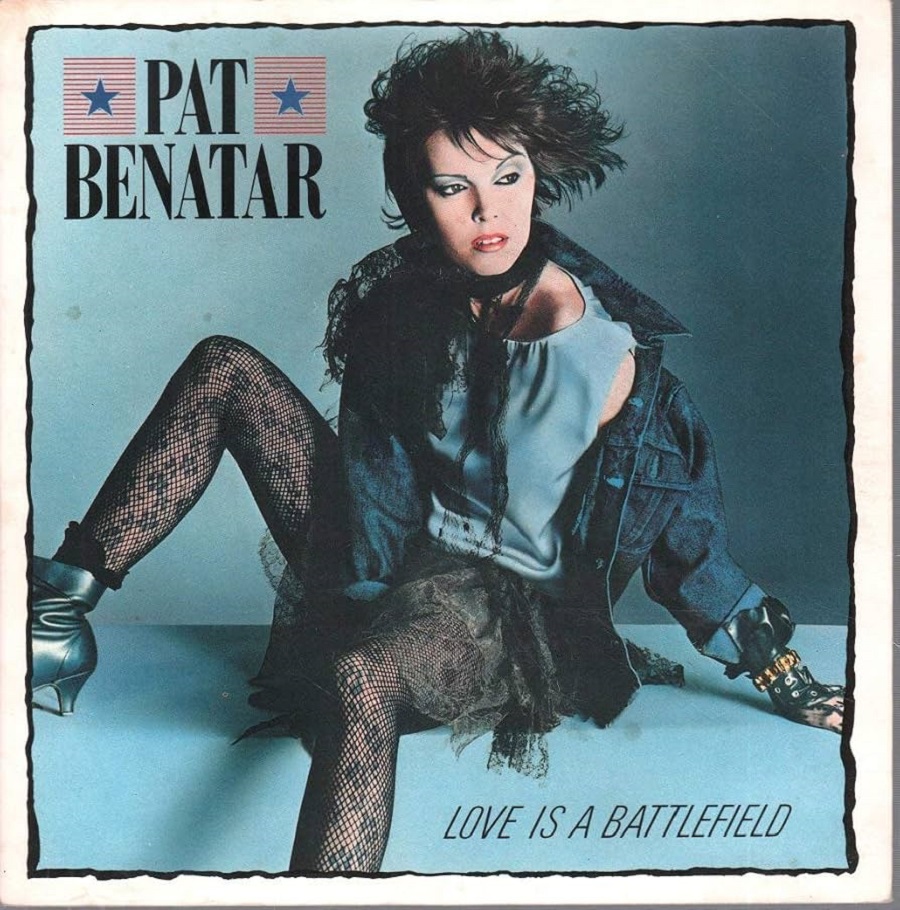
There are songs that you recognise immediately from the very first beat, even if it has been decades since they first came through the speakers. “Love Is a Battlefield” is one such song. The pounding drum machine, the ominous bass synth and that unmistakable voice that combines defiance and vulnerability in a single breath made this 1983 single one of the enduring icons of the eighties. The song brought out a new side of Pat Benatar, far removed from the hard rock with which she had made her name, and established a tone that continues to be sung, covered and rediscovered to this day. In this part of Pearls of Pop Music, we delve into the story behind this song: the woman who sang it, the single itself, a surprising cover, the album from which it came and the follow-up that proved the success was no coincidence.
Pat Benatar
Before she became known worldwide as one of the most powerful voices in rock music, she was simply a girl from Brooklyn with a classically trained voice and a desire for something greater. Born in 1953 as Patricia Mae Andrzejewski, she grew up in a family in which music naturally had a place. Her mother had given up a career as an opera singer to start a family, and that passion was passed on to her daughter. At secondary school she excelled in musical theatre, and her vocal range of several octaves proved exceptional from an early age.
Life initially led her in a different direction. She married young, moved to Virginia with her then husband and worked for a time as a bank employee, far from the stages where she would eventually become famous. It was only after this period that she took the leap to New York, where she performed in small clubs and soon attracted the attention of record companies. There she also met guitarist Neil Giraldo, with whom she developed not only a musical but also a personal bond. They married in 1982, and Giraldo would remain her regular producer and creative partner for decades.
Her debut album brought her her first hits, but it was with records such as “Crimes of Passion” that she grew into one of the major names in the emerging rock scene. Between 1980 and 1983 she won a Grammy Award for Best Female Rock Vocal Performance three years in a row, each time for a different album or song, a unique achievement that confirmed her reputation as a serious rock artist. By the time “Love Is a Battlefield” was released, she had already established herself as an artist unafraid to push boundaries, and the song would ultimately earn her the fourth and final Grammy of that unparalleled run.
Love Is a Battlefield
The song was written by Mike Chapman and Holly Knight, two renowned songwriters who had only just begun working together at the time. Knight had initially envisioned a calm, melodic ballad, far removed from the danceable uptempo hit it would eventually become. It was Neil Giraldo who, after experimenting with drum machines and the band sound, decided to turn it into an energetic, rhythm-driven track. That decision ultimately proved crucial to the song’s success.
The single was released on 12 September 1983 and displayed an electronic, danceable side that did not fit the singer’s earlier, harder sound. Nevertheless, guitars and drums remained prominent, making the song a unique bridge between rock and the emerging synthpop of those years. In the United States it peaked at number five on the Billboard Hot 100 and spent weeks at the top of the rock charts. Worldwide, the song was at least as successful: it reached number one in Belgium and the Netherlands, number three in Germany, and in Australia it even held the number one position for five weeks, making it one of the best-selling singles of the year at the time. It also achieved high chart positions in New Zealand and Switzerland. For a long time, it was regarded as one of her biggest international hits.
The accompanying music video, directed by Bob Giraldi, tells the story of a young woman who runs away from home and ends up in the big city as a dancer in a seedy club, where she eventually rebels against the owner. At the time, it was one of the most frequently played videos on the still-young music channel MTV and contributed greatly to the song’s popularity. The song was awarded a Grammy Award for Best Female Rock Vocal Performance, the singer’s fourth in a row, and was later included in several lists of the best pop songs of the decade.
Compared with other hits from the same period, it is striking how unique the combination of rock and electronics was at the time. While contemporaries such as Eurythmics and Culture Club switched completely to synthesiser pop and artists such as Michael Jackson dominated the dance floor with a polished pop sound, this single chose a middle ground. The raw rock voice remained intact, but was surrounded by electronic rhythms that gave the song a timeless, hybrid sound. That tension between vulnerability and strength, between machine and human, is perhaps precisely why the song has managed to stand the test of time for so long.
Trevor Horn and Marc Almond
One of the most striking covers of the song did not come from a young artist rediscovering it, but from two established names in the music world themselves. Producer Trevor Horn, known for his work with, among others, Frankie Goes to Hollywood and Grace Jones, recorded the song for his cover album on which he collaborated with several renowned singers. For this track he asked Marc Almond, the former singer of the duo Soft Cell, to take the honours.
The result is a simmering, danceable reinterpretation that respects the original while at the same time evoking a completely different atmosphere. Where the original sounds defiant and direct, Almond brings a more restrained, somewhat melancholic quality to the song, fitting his reputation as a singer who effortlessly conveys drama and emotion. The collaboration between two artists who themselves belong to the same musical generation as the original recording created additional recognition among an audience that grew up with both sounds. It is a fine example of how, after more than forty years, a song can still inspire new interpretations, and how artists from the same zeitgeist continue to honour each other’s work.
In addition to this cover, the song has received numerous other interpretations over the years, from restrained acoustic versions to heavier rock performances, demonstrating how flexible the composition actually is. The core of the song, the lyrics about a love that feels like a battle, repeatedly prove appealing, regardless of the musical interpretation built around them.
Live from Earth
Remarkably enough, this studio recording appeared as part of a live album. “Live from Earth” was recorded during a sold-out world tour that took place in late 1982 and early 1983, and alongside concert recordings it also contained two new studio tracks. In addition to the title track, there was another new song on the record, produced by Neil Giraldo and Peter Coleman.
The album reached a position in the upper regions of the Billboard 200 and eventually sold more than one million copies. The combination of energetic live recordings and a brand-new studio hit proved to be a winning formula. For many fans, the album offered the opportunity to capture the energy of the concerts, while the new single simultaneously gave the singer’s career a fresh boost at a time when the music industry was changing rapidly under the influence of MTV and the rise of synthesisers. Later reissues of the accompanying concert recording appeared on both video and DVD, underscoring the enduring popularity of this period in her career.
We Belong
A year later, the singer proved that the success of 1983 was not a one-off moment. In October 1984, the lead single from her fifth studio album appeared, a song with a considerably softer, more melodic approach than her earlier, harder work. Written by songwriting duo Eric Lowen and Dan Navarro, the song tells of two lovers who, despite setbacks, remain together because they simply belong together.
This single also became a worldwide success. In the United States it matched the chart position of the earlier hit by also reaching number five on the chart, and internationally the song also performed excellently, with high positions in Switzerland, Australia, Canada, Ireland and Germany, among others. It also earned the singer a Grammy nomination. Musically, the song represented a deliberate step away from the earlier hard rock sound, with more room for acoustic guitars, synthesisers and restrained production. It confirmed that the artist was capable of reinventing herself time and again without losing her recognisable voice and identity.
More than forty years after its release, “Love Is a Battlefield” remains one of those songs that effortlessly withstand the test of time. It combines a timeless melody with lyrics that could just as easily have been written today, about the struggle and surrender that come with love. From the dance floors of the eighties to today’s streaming platforms, and from the original performance to the many covers that followed, the song continues to prove that a well-written song can effortlessly transcend the boundaries of time and genre. It is precisely that kind of timelessness that deserves to see it called a true pearl of pop music.


