
Precious Pop Pearls: The Story Behind Boomtown Rats – “I Don’t Like Mondays”
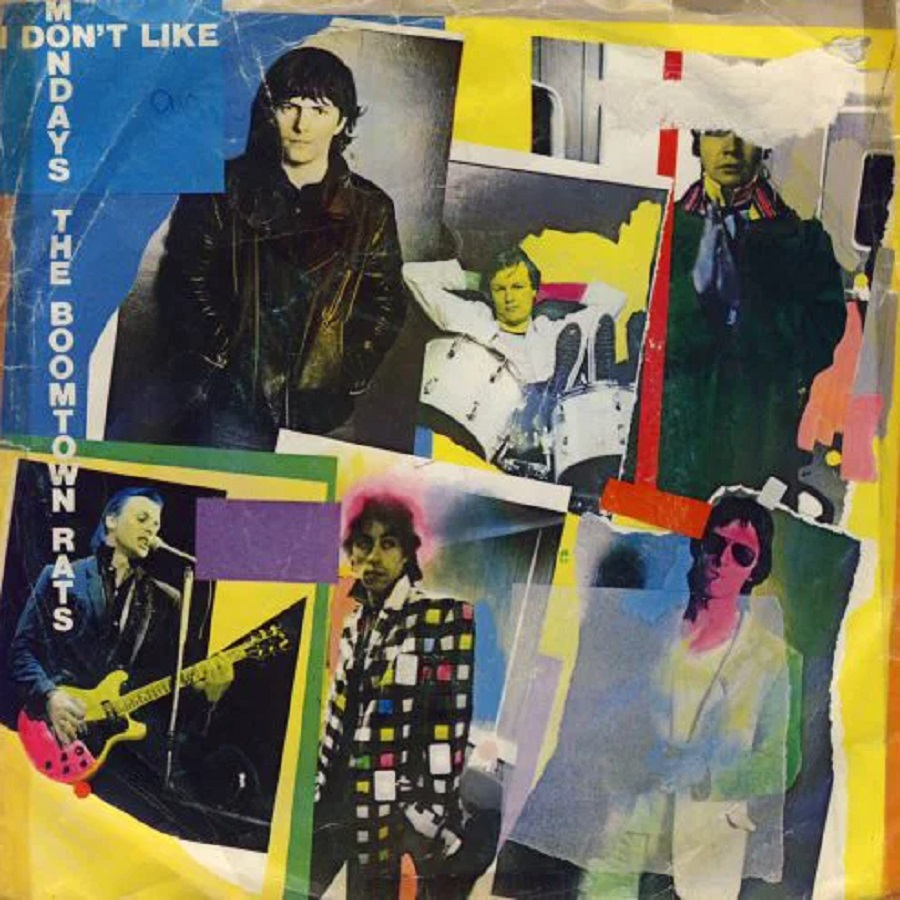
There are songs that you immediately recognize from the first piano notes, and there are songs whose title still echoes through offices and classrooms on Monday mornings many years later. “I Don’t Like Mondays” is both. What begins as a light-hearted, almost playful pop song, upon closer examination develops into one of the most disturbing number-one hits in the history of pop music. Behind the captivating piano and the infectious melody lies a true-life drama, and that contrast between form and content made the song one of the most discussed singles of 1979. This is the story of the band that wrote it, of the song itself, of the artists who later performed it again, and of the album and the other hits that emerged around it.
The Boomtown Rats
The Boomtown Rats were formed in 1975 in Dún Laoghaire, a place near Dublin. The band was formed by singer Bob Geldof, guitarists Garry Roberts and Gerry Cott, keyboard player Johnnie Fingers, bassist Pete Briquette and drummer Simon Crowe. Initially they performed under the name The Nightlife Thugs, but they soon chose a name that would make a much greater impression. Geldof took the name Boomtown Rats from the book Bound for Glory by folk singer Woody Guthrie, in which a gang of street children was given that name.
The band grew up in a time when Ireland was struggling with a certain suffocating narrow-mindedness, and punk offered an outlet for that. Yet The Boomtown Rats never sounded as raw as the Sex Pistols or as cold as Joy Division. Their sound was more melodic, more cynical and at the same time more accessible, a mix of new wave, pub rock and radio-friendly pop rock. Geldof developed into a frontman with a sharp tongue and a political awareness that extended beyond that of the average punk singer.
After their self-titled debut album in 1977 and the album “A Tonic for the Troops” in 1978, they achieved their definitive breakthrough with the single “Rat Trap”, the first single by a punk or new-wave band ever to top the British charts. When “I Don’t Like Mondays” was released in 1979, the band was at the height of its popularity, and the song immediately became their biggest and most controversial hit.
I Don’t Like Mondays
The story behind “I Don’t Like Mondays” has become almost as well known as the song itself. Bob Geldof was in Atlanta in January 1979 for a radio interview when he saw a news report via a telex message about a shooting at an elementary school in San Diego. Sixteen-year-old Brenda Ann Spencer had opened fire that Monday morning from her house opposite the school at children who were playing. She killed two adults and wounded eight children and a police officer. When she was later asked about her motive, she gave an answer that was chillingly simple, she simply said that she did not like Mondays and that this gave the day some excitement.
That same unsettling indifference formed the core of the song that Geldof, together with Johnnie Fingers, wrote within a few weeks. What began as an idea in reggae form, grew through an initial piano demo into the dramatic, almost classical-sounding pop song that would conquer the world. Fingers’ piano gives the whole piece an almost church-like gravity, while the lyrics attempt to capture the incomprehensible with a cool detachment.
The song was released on 13 July 1979 as the first single from the album “The Fine Art of Surfacing”, and it hit like a bombshell. In the United Kingdom it remained at number one for four weeks, the second and final number-one success for the band after “Rat Trap”. In Ireland, Australia and several European countries, the single also reached the highest positions in the charts. In the United States it was different, where the song stalled at number 73 on the Billboard Hot 100, which nevertheless made it the band’s only American chart entry. Brenda Spencer’s parents still unsuccessfully attempted to prevent the release of the single in the United States.
Musically, the song stood out in 1979 between disco, which had passed its peak, and the emerging new wave that was replacing it. While contemporaries such as Gloria Gaynor or The Bee Gees were still filling dance floors and Blondie with “Heart of Glass” created a bridge between disco and new wave, “I Don’t Like Mondays” chose a dramatic, almost theatrical approach that was closer to the ballad tradition than to the prevailing dance music. It placed the Boomtown Rats in the same year in which Pink Floyd with “Another Brick in the Wall” and The Police with “Message in a Bottle” also showed that new wave was perfectly suited for serious, socially charged themes wrapped in an infectious melody.
Bon Jovi
Songs with such a recognizable piano and such a moving story rarely receive convincing cover versions, but there is one performance that has made it into the history books. In 1995, almost ten years after Live Aid, where Geldof performed the song with his band in what would prove to be their last major performance, Bon Jovi was at Wembley Stadium. Geldof was invited onto the stage and together they performed “I Don’t Like Mondays” again. That performance was recorded and later appeared on Bon Jovi’s live album “One Wild Night Live 1985 to 2001”, and also as a bonus track on a reissue of their album “These Days”.
Where the original is driven by the restrained piano of Johnnie Fingers, Bon Jovi gave the song a bigger, more stadium-worthy treatment, fitting the arena rock with which the American band made its name in the eighties and nineties. It is a fine example of how a song can adapt to another generation and another genre, without losing the core of its story.
The Fine Art of Surfacing
“I Don’t Like Mondays” appeared as the opening single of “The Fine Art of Surfacing”, the third studio album by The Boomtown Rats, which was released on 5 October 1979. The album was produced by Robert John Mutt Lange, who would later make a name for himself with records by artists including AC/DC, Def Leppard and Shania Twain, and it was recorded at the Phonogram studios in Hilversum. In the United Kingdom, the album peaked at number seven on the album chart, and it also sold remarkably well in the United States and Canada, something that was far from guaranteed at the time for an Irish band.
Besides the title track, the album contains songs such as “Diamond Smiles” and “Someone’s Looking at You”, both of which were released as singles and reached respectively the thirteenth and fourth places in the British charts. Music critics at the time especially praised the versatility of the album. While some songs, such as “Diamond Smiles”, explore dark themes like loneliness and suicide, other songs, such as “Nothing Happened Today”, sound light-heartedly mocking and ironic. That combination of lightness and heaviness characterized the band and made “The Fine Art of Surfacing” what many consider to be the commercial and artistic peak of The Boomtown Rats.
Rat Trap
If you want to understand why “I Don’t Like Mondays” had such an impact, it helps to look at the single that came before it. “Rat Trap” was released at the end of 1978 and became an absolute breakthrough for the band. It was the first single by a punk or new-wave band ever to reach the number-one position in the British charts, something that was seen at the time as a small revolution in a musical landscape that was still dominated by disco and established rock names.
The band’s performance of “Rat Trap” on Top of the Pops became legendary. During the performance, Geldof tore up photographs of John Travolta, a symbolic farewell to disco, which at the time was considered the great enemy of punk and new wave, while he also pretended to play the saxophone on a candlestick. It showed exactly where the band’s strength lay, a combination of musical ambition, theatrical flair and a healthy dose of swagger. While “Rat Trap” mainly painted a narrative, almost cinematic picture of life in working-class neighbourhoods, “I Don’t Like Mondays” would tackle an even more direct and confrontational subject a year later.
Almost fifty years after its release, “I Don’t Like Mondays” remains one of those rare songs where the melody and the message continue to exist in a strange tension with each other. It is a song that is still recognized all over the world from its opening bars, and at the same time a song whose history, once known, never fully lets go. For The Boomtown Rats it became the peak of their commercial success, for Bob Geldof it was a first step towards a career that would eventually take him further than music. And for listeners worldwide it remained a reminder of how pop music sometimes has the courage not to look away from the uncomfortable, but instead to look it directly in the eye.


Related Posts
-
 Precious Pop Pearls: The Story Behind Grover Washington Jr. – “Just the Two of Us”
-
 Precious Pop Pearls: The Story Behind The Whispers – “And The Beat Goes On”
-
 Precious Pop Pearls: The Story Behind Flash and the Pan – “Waiting for a Train”
-
 Precious Pop Pearls: The Story Behind Scott McKenzie – “San Francisco”