
Precious Pop Pearls: The Story Behind Eddy Grant – “Electric Avenue”
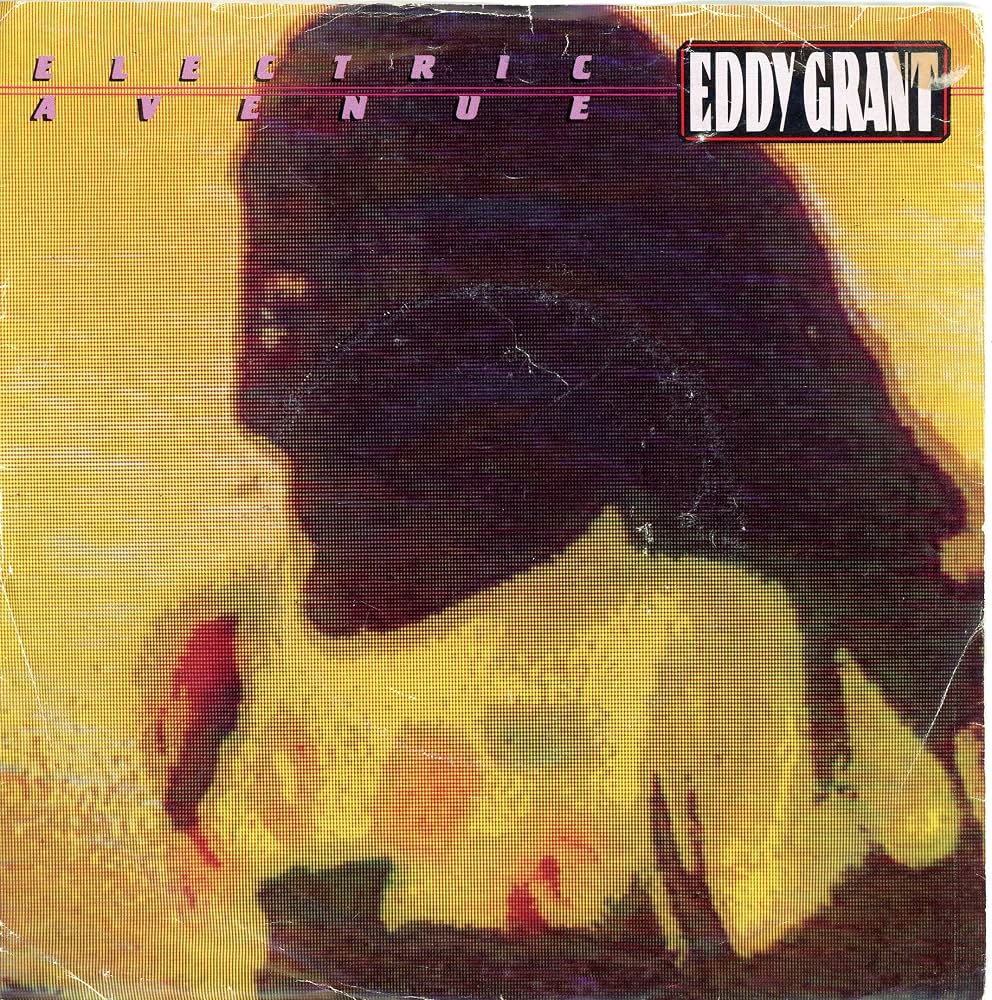
There are songs you recognise after just two bars. A tight, angular rhythm, a guitar bouncing through the mix like a little ball, and a chorus that stays in your head for the rest of the day. “Electric Avenue” is one of those songs. It turns up at parties, in shops, in films and on every playlist featuring music from the eighties, and almost everyone sings along without giving it a second thought.
That is precisely what makes this single so special. Beneath its cheerful, danceable exterior lies a song about anger, unemployment and a neighbourhood that went up in flames in 1981. Eddy Grant wrote it out of indignation and wrapped those feelings in a melody the world would dance to. The song reached number 1 in Canada, peaked at number two in the United States, the United Kingdom and Australia, and reached the top ten in countries including Belgium, Ireland, Austria, Switzerland, Germany, Sweden and the Netherlands.
How does an angry song about a market street in south London end up on radios across an entire continent? It is a story about a boy from Guyana, a multiracial band from the sixties, a lost suitcase full of songs and a music channel that needed a new face at exactly the right moment.
Eddy Grant
Edmond Montague Grant was born on 5 March 1948 in Plaisance, a village in what was then British Guiana. He grew up partly in Linden. His father played trumpet in a small band, and his parents worked in England, from where they sent money home to pay for their sons’ education. In 1960, Eddy and his younger brother Rudy followed them to Kentish Town in London. At school, he learnt to read and write music, and after attending a Chuck Berry concert, he had made up his mind: he wanted to work in music.
At the age of sixteen, he formed The Equals with school friends, one of the first British bands to feature both white and Black members. He played guitar, sang backing vocals and wrote the songs. In 1968, their big breakthrough came with “Baby, Come Back”, a cheerful pop song with a tentative nod towards reggae that reached number 1 in the United Kingdom. The song proved indestructible. In 1994, it topped the British chart again, this time in a version by Pato Banton featuring Ali and Robin Campbell of UB40. Another song by Grant, “Police on My Back”, enjoyed a second life when The Clash recorded it for their album “Sandinista!” in 1980.
On 1 January 1971, Grant suffered a heart attack and a collapsed lung. He left the band to concentrate on producing and, in 1972, built his own recording studio in the garden of his home in Stamford Hill. In 1974, he followed this with his own label, Ice Records. This says a great deal about the man: he wanted to keep control of everything, from writing to recording and from releasing music to owning the rights.
His solo career began hesitantly. A self-titled album released in 1975 made little impression. The 1977 album “Message Man”, on which he played all the instruments himself, is now regarded as an early precursor of soca, the energetic, danceable music of the Caribbean. Recognition in the United Kingdom came with “Walking on Sunshine” (1979) and the single “Living on the Frontline”. A year later, “Do You Feel My Love” reached the top ten, and the album “Can’t Get Enough” earned him his first entry in the British album chart in 1981.
His style is difficult to fit into a single category. Reggae, rock, funk, soul, calypso and African rhythms intermingle, sometimes within a single song. In 1982, he moved to Barbados and opened Blue Wave Studios there. The island became his home, his workplace and the place where his biggest hit was born.
Electric Avenue
Electric Avenue really exists. It is a market street in Brixton, in south London, and it was the first market street to be illuminated by electric light. Grant became familiar with the street while working as an actor for a time at the Black Theatre of Brixton. The neighbourhood is known for its large Caribbean community.
In the spring of 1981, tensions in Brixton escalated into riots. High unemployment, poverty, racism and heavy-handed policing combined to create a powder keg that was later described in an official inquiry report. Grant was shocked and furious, and “Electric Avenue” was his response. Shortly afterwards, he moved to Barbados. During the journey, a suitcase containing a batch of new songs went missing in his luggage, forcing him to write an entirely new collection of songs in a short time. “Electric Avenue” was part of that new batch and was recorded in his own studio on the island.
Musically, it is an unusual blend. Funk, reggae, rock and new wave come together in a sound that is both sharp and playful. Squealing synthesisers and a driving rhythm make your feet move along, while the lyrics deal with a neighbourhood in distress. On the accompanying album, Grant performed the vocals and played the guitars, synthesisers and drums himself. The contrast between the cheerful sound and the serious background gives the song a weight that many pop songs of the period lack.
The music video, filmed in Barbados, played an important role in its American success. In its early years, the music channel MTV played almost exclusively videos by white artists, prompting widespread criticism, including from well-known musicians. After Michael Jackson’s “Billie Jean” became a gigantic hit, the channel hurriedly began looking for more Black artists to include in its programming. Grant arrived with his video at exactly that moment.
The figures speak for themselves. In the United Kingdom, “Electric Avenue” reached number two in early 1983. The American branch of the record company released the single later that year, after which it spent five weeks at number two on the Billboard Hot 100. In the Cash Box magazine chart, it even reached number one. It became a number 1 hit in Canada, a number 2 in Australia and a number 3 in Ireland. It reached number three in Belgium, number six in Austria and Switzerland, number six in the Dutch Top 40, and number nine in Germany and Sweden. France was more reserved, with the song reaching number 37. In the United States, the single was certified platinum for sales of more than one million copies, as it was in Canada, while it received a silver certification in the United Kingdom. In Canada’s year-end charts for 1983, the song even made the top six.
It helps to look at the music surrounding it. In the summer of 1981, when Brixton was burning, The Specials’ “Ghost Town” topped the British chart, a dark and menacing song about urban decay. In 1982, Musical Youth had a worldwide hit with a reggae song full of youthful exuberance. The year 1983 revolved around “Billie Jean”, the smooth, polished pop of The Police and Culture Club, and the synthesisers breaking through everywhere. UB40 brought reggae into the upper reaches of the charts, but usually in a softer, smoother form. Grant sat precisely between these styles. He had reggae’s roots, the sheen of new wave and rock’s direct power, adding a social message that most of his contemporaries preferred to leave out. It is hardly surprising, then, that the song was nominated for a Grammy Award in the Best R&B Song category. The award went to “Billie Jean”.
The song continued to resurface afterwards. In 2001, Peter Black produced a new version, the Ringbang Remix, which reached number five in the United Kingdom. The remix also entered the charts in Ireland, the Netherlands and the European chart, while a greatest-hits compilation reached number three in the United Kingdom. A song that had originated almost twenty years earlier suddenly sounded new again.
Refugee Camp All Stars
You can recognise a good pop song by the fact that other musicians want to take it over. Several versions of “Electric Avenue” exist, but the best-known came from the world of hip-hop in 1997. Released under the name Refugee Camp All Stars, “Avenues” was a reworking of the song for the soundtrack of the comedy film “Money Talks”.
Refugee Camp All Stars was not a traditional band. It was a loose group of artists and a production label centred around the Fugees, the influential hip-hop group from New Jersey featuring Wyclef Jean, Lauryn Hill and Pras Michel. Pras led the way on “Avenues”, and the chorus featured a reggae singer who was himself a son of Bob Marley. This gave the song a new dimension: Pras’s raw rap verses turned the street in London into a story about a street in an American big city, while the reggae sounds preserved the connection with the original.
The audience understood the reference. In the United States, the new version reached number 35 on the Billboard Hot 100. In Norway, it even reached number two, while it peaked at number seven in Sweden, number twelve in Finland and number ten in the Dutch Top 40. The song later also appeared on Pras’s album “Ghetto Supastar”. It is a fine example of how a song from 1983 could take on a new role in the nineties, this time in the language of a new generation.
Many years later, a very different adaptation followed. In 2009, the Welsh band Skindred, who play alternative metal incorporating reggae and dancehall into their sound, released their own version. It appears on their album “Shark Bites and Dog Fights”. The fact that a song can work in both hip-hop and metal says a great deal about the strength of its melody and rhythm.
Killer on the Rampage
The album featuring “Electric Avenue” was released on 15 November 1982 by Ice Records and Portrait Records. “Killer on the Rampage” is Grant’s sixth studio album and, to date, his most successful. It reached number seven in the British album chart and number ten on the Billboard 200 in the United States. It also reached number four in Canada, number eleven in both Australia and Germany, number sixteen in Austria, number thirty in Sweden and number 45 in the Netherlands.
The making of the album had something of an emergency measure about it. Because several of his new songs had gone missing during the move, Grant had to rewrite almost an entire album. The result is a record full of variety. It was recorded in his new studio in Barbados and consists of ten tracks with a running time of just over forty minutes. Rock, funk, pop, reggae, disco and new wave flow smoothly into one another. Alongside the two big hits are tracks such as “It’s All in You”, “Funky Rock ‘N’ Roll”, “Latin Love Affair” and “Another Revolutionary”, which demonstrate the breadth of his musical tastes. The album opens with “Electric Avenue” itself.
The album’s first single, “I Don’t Wanna Dance”, was the track that attracted the most attention in the autumn of 1982. This light-hearted, swaying song about a relationship that has ended came together during a tour, in the minutes before a performance. It spent three weeks at number 1 in the United Kingdom, becoming Grant’s only solo number 1 there. It also topped the chart in Flanders in early 1983. It is a surprising story: the album’s biggest British hit is a light-hearted love song, whereas the track that ultimately conquered the world deals with a serious subject. A third single, “War Party”, followed in 1983 but stalled at number 42 in the United Kingdom.
For a long time, the album was unavailable on the major streaming services because Grant objected to the way they paid artists. That changed in February 2024. “Killer on the Rampage” reappeared on the familiar platforms, allowing a new generation of listeners to discover what makes the record so special.
Gimme Hope Jo’anna
After the success of 1983, things became quieter around Grant. He devoted much of his time to his studio and label and, among other things, made the title song for the film “Romancing the Stone” in 1984, a track that was ultimately removed from the film and failed to reach the British top fifty as a single. His albums “Going for Broke”, “Born Tuff” and “File Under Rock” failed to enter the charts and produced no new hits. Many artists in such a situation would have played it safe. Grant did something different.
In 1988, he released “Gimme Hope Jo’anna”, a song with an upbeat sound and a sharp political message. The song protested against apartheid, and its title refers playfully to Johannesburg. It reached number seven in the United Kingdom and was banned by the apartheid regime. Here, you can see the same approach as in “Electric Avenue”: a catchy melody, a light tone and a serious core. The audience danced along, yet the message still got through. In 2008, Grant appeared on stage at the concert celebrating Nelson Mandela’s ninetieth birthday.
His career then took an unusual turn. In 1994, during the Crop Over festival in Barbados, he introduced a new genre, ringbang, which aims to bring together all rhythms originating in Africa into a single sound. He made albums such as “Reparation” in 2006, an appeal for redress for the injustices of slavery, and “Plaisance” in 2017, named after the village where he was born. His Blue Wave studio was used by major names such as The Rolling Stones, Sting, Cliff Richard and Elvis Costello. In 2004, he even made a playful parody of “Gimme Hope Jo’anna” for an advertising campaign for a yoghurt drink.
A remarkable chapter followed in 2020, when Grant launched a lawsuit against then US President Donald Trump because “Electric Avenue” had been used without permission in a campaign video. In September 2024, the judge ruled that copyright infringement had occurred. In November of that year, both parties decided to settle the case without making the terms public.
Grant has lived in Barbados since 1982. In 2024, he received the Honorary Order of Freedom there. He was also honoured in his native Guyana with a lifetime achievement award, an honorary doctorate and his own postage stamp.
Looking back, what stands out most is how consistently Grant has remained true to himself. He wrote his own songs, built his own studio, ran his own label and kept his music off streaming services for a long time because he disagreed with their terms. That makes “Electric Avenue” more than just a hit from the eighties. It is a little history lesson that goes unnoticed because you are too busy singing along. A street in Brixton, an angry songwriter and a lost suitcase came together to create a song that people can still dance to forty years later. And if you listen carefully, you can still hear the neighbourhood where it all began beneath the rhythm.


