
Precious Pop Pearls: The Story Behind Gary Numan – “Cars”
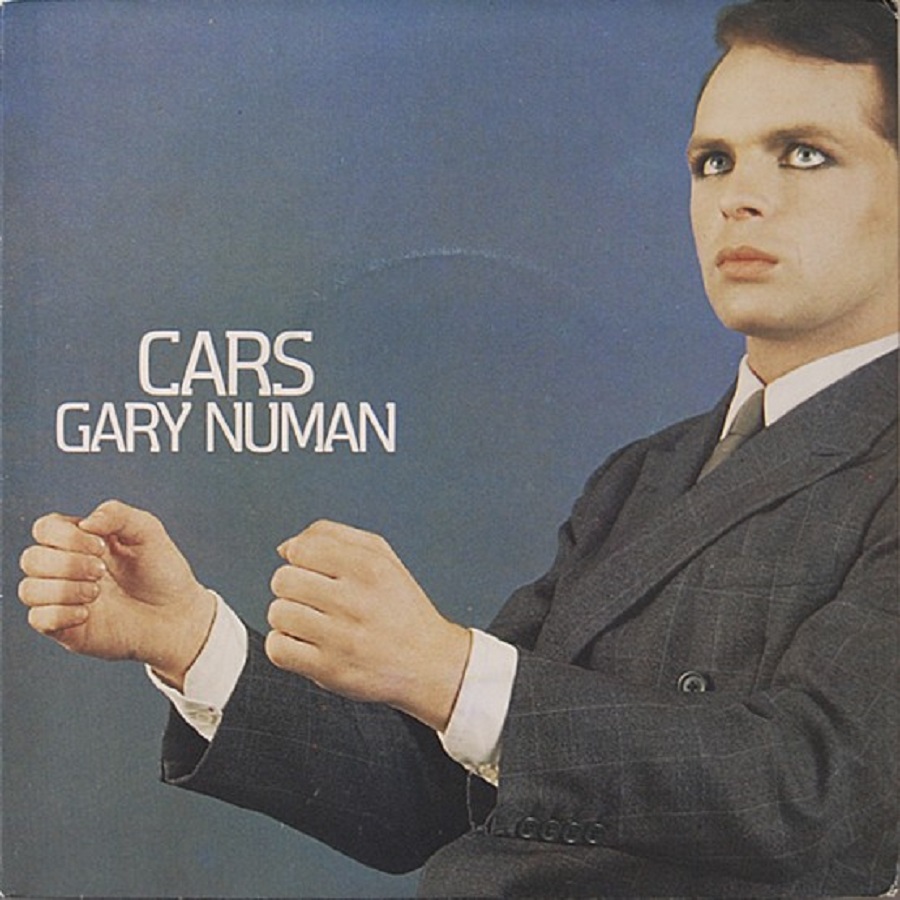
A car is a peculiar space. You sit behind glass, between a dashboard full of lights and a steering wheel that gives you a sense of control. The world outside sounds muffled, as if it is tuned to a different station, while at the same time you are driving straight through it. Anyone who has ever sat alone in a car on a rainy evening will recognise that strange feeling of safety and distance.
On 24 August 1979, a twenty-one-year-old Brit with pale skin, black clothing and an expressionless face came up with precisely that feeling. His new single lasted less than four minutes. There was no guitar in it, but there was a pounding bassline, a cold synthesiser riff and a voice that sounded as if it had come from a maintenance shaft. Within a month, the song was at the top of the British charts. A few months later, it reached the top 10 in the United States and number one in Canada. More than forty years later, it is still being sampled, covered, played in clubs and performed at festivals.
This is the story of “Cars”, the song with which Gary Numan gave electronic pop music a face, and of the man who could never quite escape it.
Gary Numan
Gary Numan was born Gary Anthony James Webb, on 8 March 1958 in Hammersmith, in west London. His musical career began like that of many young people of his generation: with the shock of punk. In 1977, he was in a band that would eventually be called Tubeway Army, with his uncle Jess Lidyard on drums and Paul Gardiner on bass. They signed to the independent label Beggars Banquet in 1978 and released two singles, “That’s Too Bad” and “Bombers”. Neither reached the charts.
Tubeway Army’s debut album, at the end of 1978, was already much more interesting. The limited edition sold out quickly and revealed a young songwriter with a fascination for dystopian stories, for the bleak science fiction of writers such as Philip K. Dick and for a cool, detached tone. The real turning point came when a Minimoog, which happened to be in the studio, caught his attention. The instrument offered him a sound that was bigger, stranger and much more distinctive than what a punk guitar could give him.
The second album, “Replicas”, appeared in April 1979 and took the single “Are Friends Electric?” to number one in the United Kingdom. The album did the same. Numan decided after that success to abandon the band name and continue under his own name. That moment provides the backdrop for “Cars”.
What made him so special? Firstly, his appearance. Numan stood stiff and motionless on stage, with a look that refused to give anything away. He later openly said that he has Asperger’s, which puts that detachment in a different light: it was less of a pose than a natural way of existing. Secondly, his music. While the new wave of bands were still mainly guitar bands with tight suits and fast songs, he chose synthesisers as the main attraction. He found inspiration in David Bowie’s work from his Berlin period and in the German pioneers of electronic music, but shaped that into a form that was accessible to a large audience.
He would eventually sell more than ten million records and has since been regarded as one of the pioneers of electronic pop, industrial and so-called darkwave.
Cars
The stories surrounding the creation of “Cars” have something almost comical about them. Numan wrote the entire song in about thirty minutes. It began with the bassline, the very first thing he played on a newly purchased bass guitar. That is striking, because that very line is the backbone of the song: it is simple, hypnotic and unforgettable after hearing it once.
The lyrics arose from an unpleasant experience. During a car journey, Numan was harassed by a group of men who wanted to pull him out of his car. He locked the doors, eventually drove onto the pavement and got away. What remained was an observation: in a car, you feel untouchable. You sit in your own little kingdom on four wheels, protected from the rest of the world. The song turns that into a science-fiction-like, icy feeling: the human being retreating into his machine and not really becoming happy because of it, but certainly becoming safe.
The recording took place in the summer of 1979 at Marcus Music in London, with Numan himself as producer. The song sounds stark and sharp. A monotonous rhythm, synthesiser lines that cut through the mix like cold neon tubes and a vocal line without any exuberance. An instrumental B-side was made under the title “Asylum”. In the United States, the single was accompanied by “Metal”, a song from the accompanying album. A short version of “Cars” had already been heard in a session for an influential radio programme in June 1979, which had already stirred the attention of music lovers.
In the video, we see Numan with his then live band, including Ultravox keyboard player Billy Currie. Currie did not, incidentally, play on the recording itself. The images are a monument to the era: a stark studio, cool colours, little movement.
In the United Kingdom, the single entered the chart in the first week of September 1979 and reached number one in its fourth week, exactly the same week in which his debut album was also at number 1. After one week, he had to hand the throne to “Message in a Bottle” by The Police, an image that neatly sums up the erratic taste of the time: a guitar trio with reggae influences knocking a synthesiser artist off the throne.
Internationally, the success came in waves. In Ireland, “Cars” reached number five and in Australia number nine. In New Zealand, it reached number 18, number 28 in the Flemish chart and number 45 in Germany. The real miracle happened at the beginning of 1980 in North America. In Canada, the song spent two weeks at number 1, and in the United States it climbed to number nine on the Billboard Hot 100. It spent seventeen weeks there in the national Top 40 and remained Numan’s only US Top 40 entry. This places him in the category of artists who became etched into the collective memory in the United States with precisely one song, while scoring a whole series of hits at home.
The song subsequently received a second life several times. In 1987, the remix “E Reg Model” reached number sixteen in the United Kingdom. In 1993, a version called “93 Sprint” appeared, which stalled at number 53 but was used to promote a compilation album. In 1996, a commercial for a beer brand led to a new chart entry at number 17. Thus, “Cars” became one of the few songs to appear in the British top 20 in three different decades.
Whoever places “Cars” alongside the hits of 1979 and 1980 can hear how distinctive it was. Donna Summer had broken open the dancefloor for electronic music two years earlier with “I Feel Love”, but that was a song full of warmth and ecstasy. The German band Kraftwerk had already created an ode to driving in 1974 with “Autobahn”, a long, dreamy journey along the motorway that looked confidently towards the future. Numan turned that around. With him, the car is not a vehicle for adventure, but a refuge.
In Britain, too, he had contemporaries. The duo Buggles were at the top of the charts at the end of 1979 with “Video Killed the Radio Star”, an ironic and polished piece of synthesiser pop. Orchestral Manoeuvres in the Dark had a feel for melody and melancholy, and Ultravox would create a romantic, almost classical variation on the genre with “Vienna”. Blondie combined disco with new wave in “Heart of Glass”. In that company, “Cars” stands out through its unrelenting coolness. It is less a song to sing along to than an atmosphere you step into.
Fear Factory
If a song sounds like a machine, it is only natural that a band would eventually come along wanting to turn it into a real machine. That happened in 1998, when the American group Fear Factory recorded their own version, with Gary Numan himself on vocals.
Fear Factory formed in 1989 in Los Angeles and became a leading light of industrial metal, a style that combines the raw power of metal with mechanical rhythms and electronic sounds. The core of the band consisted of vocalist Burton C. Bell and guitarist Dino Cazares. Their 1995 album “Demanufacture” is regarded as a landmark of the genre. Two years later, “Remanufacture”, a remix album that reached the charts in several countries, including Australia, Belgium and the United Kingdom, appeared. The next studio album, “Obsolete” from 1998, was later reissued in an expanded edition featuring the cover of “Cars”. The song was released as a single in 1999, with a video featuring Numan himself.
What makes that version so fascinating is the interplay with the source. The original recording runs entirely on synthesisers, while Fear Factory turns the riff into a pounding wall of guitars and double bass drums. Yet the skeleton remains intact, proving how strong the design is. Numan sang as an honorary guest, a symbolic gesture: a pioneer embracing a new generation that had used him as a building block.
Fear Factory then continued with mixed fortunes. The 2001 album “Digimortal” did well in Australia, but a year later the band split up. In 2003, they got back together, without Cazares, and in 2004 “Archetype” appeared, reaching number thirty in the United States and number eighteen in Australia.
They are not the only ones to have taken on the song. Dozens of covers exist. British producer Dave Clarke made an electronic version in 1997 for a tribute album. Bands such as Foo Fighters, Hole and Smashing Pumpkins played Numan songs during their concerts, and Marilyn Manson recorded his song “Down in the Park”. The bassline also lived on in dance music and hip hop. In 1989, it was sampled by Kool G Rap and DJ Polo, and around the turn of the millennium, American producer Armand van Helden came up with “Koochy”, a dance hit that climbed to number four in the British chart and unmistakably leaned on “Cars”.
The Pleasure Principle
The album on which “Cars” appeared was released on 7 September 1979, two weeks after the single and six months after “Replicas”. It was Numan’s first solo album. The foundation had already been laid in April, when he recorded a whole series of demos together with a new permanent drummer and a keyboard player, before “Are Friends Electric?” had even reached the market. A second session a few weeks later produced another four songs.
The album, recorded in the same London studio as the single, lasts exactly 41 minutes. It is a radical record. There is not a single guitar on it. Everything revolves around piano, Minimoog, Polymoog and the rhythm of bass and drums. The result is electropop with a cold exterior and a surprisingly warm core. Songs such as “Airlane”, “Metal”, “Films” and “Complex” sketch a world in which human and machine merge, and in which the singer feels more at home among devices than among people.
The record immediately went to number 1 in the United Kingdom, the second album in a row to achieve this. For the tour, Numan built an exuberant futuristic stage, causing the costs to rise so much that the series of concerts cost money rather than making it. He was wealthy by then, though: he used his new fortune for a hobby he had long dreamed of, flying.
The album also remained a source for later generations. Trent Reznor of Nine Inch Nails listened to it extensively during the early years of his band, and Nine Inch Nails later recorded “Metal” themselves. Numan appeared as a guest vocalist at a number of the band’s concerts in 2009, including performances of “Cars” and “Metal”.
The follow-up to “Cars” was “Complex”, in November 1979, which reached number six in the British chart. In September 1980, “Telekon” appeared, Numan’s third consecutive number 1 album, with the hits “We Are Glass” and “I Die: You Die”, both of which reached the British top five. This album is less direct than its predecessor and uses more guitars and piano parts reminiscent of Erik Satie. Many songs sound like a secret farewell. That was no coincidence: in April 1981, Numan gave three sold-out concerts at Wembley Arena, announced as his farewell concerts. He returned to the stages a few months later, and in 1983 he began larger tours again.
Are Friends Electric?
To understand why “Cars” was such a sensation, you have to go back to the single that preceded it. “Are Friends Electric?” appeared in 1979 under the name Tubeway Army and became Numan’s first major hit. The song revolves around a cold conversation in a future in which machines fulfil human needs, and it sounds exactly like that story: austere, eerie, with a penetrating synthesiser melody as its main line. Numan himself played Minimoog, Polymoog and guitar, Paul Gardiner handled the bass and Jess Lidyard the drums.
The single reached number one in the United Kingdom and also performed remarkably well internationally. In Ireland, it reached number 3, in New Zealand number 8, in the Netherlands number 9 and in Australia and Austria number 12. In Belgium, it reached number 21, in West Germany number 23, and in the United States it stood at number five on the list of near-hits. For many European listeners, it was the first moment when synthesisers no longer sounded like a gimmick, but like the main voice of a pop song.
Whoever places the two songs side by side can hear a line. “Are Friends Electric?” is the fantasy of a future full of human robots, “Cars” is the sober realisation that that future has long been driving around. The fact that within a few months two songs of this kind stood at the top of the British chart is remarkable enough.
Many artists have one song to which they remain connected throughout their lives. For Gary Numan, that is “Cars”, but he has never made himself a prisoner of it. The song appears on almost all of his live albums and is still performed, but his career went much further. In 1994, he returned to the spotlight with “Sacrifice”, with a darker, industrial sound, and in 1997 “Exile” followed. Albums such as “Pure” from 2000 and “Jagged” from 2006 sounded heavy and personal, and “Splinter” (2013), “Savage” (2017) and “Intruder” (2021) sketched a post-apocalyptic Earth and the consequences of climate change. He continued searching, while a new generation of musicians discovered his early work and openly acknowledged his influence.
It is almost a joke of history that “Cars” seems to have acquired even more meaning in our time. Cars have become computers on wheels, full of screens and sensors, and we do indeed sit protected behind glass, connected to everything except the world around us. A song about a man who feels safe between four doors now sounds almost prophetic. And then there is that bassline, thirty minutes of work in 1979, which still sounds as if it was made this morning. Turn it up loud, close the windows and listen. You are safe, but you can hear the rest of the world driving past.


