Album review overview: Bodywash, Sebadoh and more

Dozens of new albums arrive at Maxazine’s editorial staff every week. There are way too many to listen to them all, let alone review them. It ensures that too many albums are left behind. And that’s a shame. That is why today we post an overview of albums that arrive at the editors in short reviews.
Radie Peat – No Human Tongue Can Tell
Radie Peat is best known as one of the defining voices of Lankum and ØXN, but on her solo debut, her own musical imagination is given free rein. No Human Tongue Can Tell brings together traditional Irish, British and American songs in which women are confronted with loss, violence, desire and limited freedom of choice. Peat approaches this material not as an archivist seeking to preserve old forms intact. She rearranges the songs with subtle electronics, layered vocals and carefully selected instrumentation, with her deep contralto remaining at the centre throughout. The sparse opening of ‘Hares on the Mountain’ immediately demonstrates how few elements are needed to build tension. Elsewhere, ‘The Moon and Stars’ moves towards trip-hop, with a pulsating rhythm and spacious keyboards giving the traditional melody an unexpected contemporary dimension. ‘Willow Garden’ and ‘Still I Love Him’ also acquire a compelling intensity through her controlled delivery. John ‘Spud’ Murphy’s production allows the details to breathe and avoids unnecessary embellishment. The result connects centuries-old stories with a distinctly personal interpretation. (Cian Murphy) (9/10) (Rough Trade)
Armand Hammer – Snakes & Ladders
With Snakes & Ladders, billy woods and Elucid once again prove that hip-hop does not depend on a recognisable formula to achieve coherence. The duo entrusts production to a broad group of like-minded collaborators, including Kenny Segal, Preservation, clipping. and Child Actor. As a result, the sixteen tracks constantly shift in texture without the album losing its menacing character. ‘Deadbolts’ opens with a sparse piano passage that gradually develops into an ominous wall of sound. ‘Jet Magazine’ then opts for a more mobile, jazzy rhythm, while ‘Graveside’, featuring DJ Haram, intensifies the electronic tension. The lyrics remain the most important instrument. Woods and Elucid describe everyday situations that develop into observations about power, exclusion, technology and the constant uncertainty of modern existence. Their styles complement each other: Woods works associatively and with dry humour, while Elucid sounds more direct and angular. At times, the density of the wordplay demands several listens, and the production is deliberately inaccessible. This is not a lack of direction, but part of the artistic approach. Snakes & Ladders is a demanding, versatile album that does not spoon-feed its ideas. (Daniel Harris) (9/10) (Backwoodz Studioz)
Sheherazaad – Khudgarzi
On her debut album Khudgarzi, Sheherazaad creates a musical world in which South Asian traditions and contemporary experimental pop do not simply alternate, but constantly influence one another. The New York-based singer writes and performs largely in Urdu, connecting stories from her cultural background with themes such as desire, loss and the position of women. The arrangements are often sparse, but the generous reverb and dark electronic accents create an almost cinematic atmosphere. ‘Qatil’ opens with rhythmic tension that immediately captures the attention, after which ‘Pakeezah’ places her voice in a more intimate setting. On ‘Registaan’, the guitar takes on an alienating sound, while in ‘Zeher’ her vocals are electronically distorted without losing their emotional power. Tabla, veena, rabab, tanbur, cello and strings give the album a rich palette, but are never used as exotic decoration. Not every spoken passage is equally convincing, and the restrained approach requires patience. On the other hand, Sheherazaad develops a recognisable language of her own, in which traditional storytelling forms and modern production reinforce one another. (Elodie Renard) (8/10) (Erased Tapes)
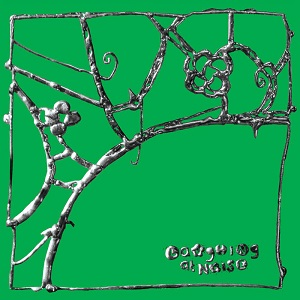
Bodywash – Laughing at Noise
The Canadian duo Bodywash uses Laughing at Noise to bring the rough edges of dream pop and shoegaze more emphatically to the fore. Rosie Long Decter and Chris Steward combine distorted guitars, soft vocals and extended melodies, but do not allow the songs to disappear into a cloud of effects. The album sounds more direct and more guitar-oriented than their earlier work, with production that leaves room for both noise and detail. ‘Lapsang’ is a good example of this approach: the melody remains light and accessible, while the lyrics sketch out a somewhat disrupted everyday life. ‘La Renommée’ builds tension by placing quiet passages against a sudden eruption of guitars. The short ‘A Sticker That’s Peeling’ feels more like a sketch than a fully developed song, but ‘Bliss’ restores the balance with a clear indie pop sensibility. The closing track ‘Overpass’ unexpectedly opts for piano and a more reflective singer-songwriter atmosphere. It is precisely this variation that prevents the album from getting stuck in a single sound. The vocals are unpolished and the arrangements have more atmosphere than melodic sharpness. Nevertheless, Bodywash succeeds with an album that convincingly brings together melancholy and powerful guitars. (Anton Dupont) (8/10) (Light Organ Records)
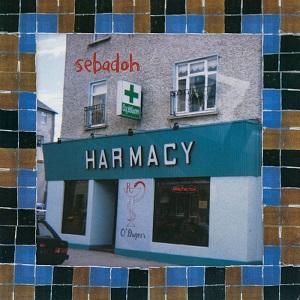
Sebadoh – Harmacy (30th Anniversary Edition)
Sebadoh originated around Lou Barlow, bassist of Dinosaur Jr., who left the band following disagreements to pursue his own musical direction with ‘his’ Sebadoh. Together with drummer Bob Fay and Jason Loewenstein, he made ‘Harmacy’, this time not entirely free from pressure from the record label. Its predecessor, ‘Bakesale’, had performed well commercially, but still fully embodied the messy lo-fi sound with which Sebadoh, alongside contemporaries such as Pavement, had made a name for themselves. With ‘Harmacy’, the emphasis shifted firmly towards a more professional approach. The sound became fuller, more accessible and, above all, more polished. Comparisons with Dinosaur Jr., the mothership to which Barlow has since returned, were therefore almost inevitable. The title ‘Harmacy’ is an apt fusion of ‘pharmacy’ and ‘harm’ and fits the themes perfectly: heartbreak, toxic emotions and the destructive dynamics of relationships. The question, however, is what this 30th Anniversary Edition adds. Alongside the album, we get alternative versions, B-sides, rarities, live recordings and a BBC session. Interesting material for the seasoned fan and admirer of early Sebadoh, but perhaps a little too much of a good thing for the average listener. The original ‘Harmacy’ remains more than convincing. Seven years after ‘Act Surprised’, this anniversary edition nevertheless feels a little like closing the stable door after the horse has bolted. (Bart van de Sande) (7/10) (Sub Pop/Konkurrent)