
Precious Pop Pearls: The Story Behind Sydney Youngblood – “If Only I Could”
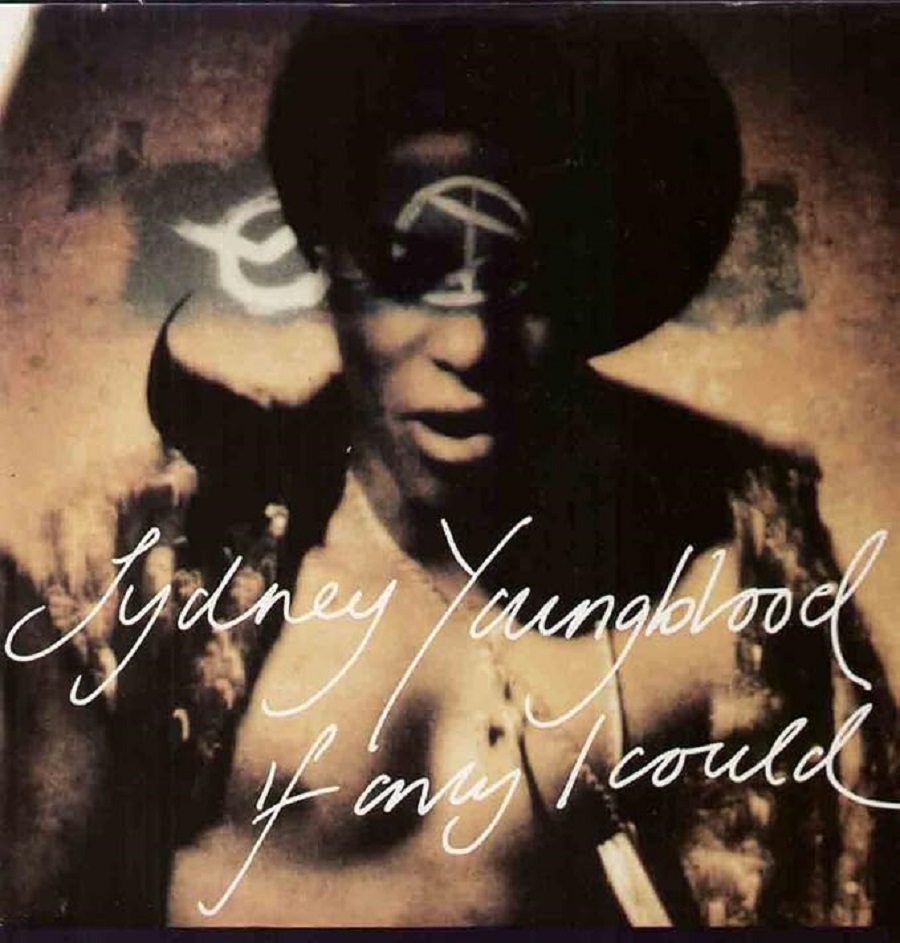
Some songs sound like a summer evening that never wants to end. “If Only I Could” is one of them: a warm, rolling bassline, a gentle yet confident voice, and a guitar that seems to wink towards Spain. In the autumn of 1989, the song topped the charts in a whole series of European countries, even reaching number one in Belgium. It was a dance track that was not about the night, but about a world a singer would create if only he could.
Behind that voice was a man with a remarkable life story: a Texan who served as a soldier in Germany and later found his greatest success in Europe. His biggest hit was built on the rhythm of an American house track and was re-recorded a few years later by an Australian singer. This is the story of a record that repeatedly changed its appearance without losing its soul.
Sydney Youngblood
Sydney Ford, as he is actually called, was born on 2 December 1960 in San Antonio, Texas. He had been singing from an early age. At the age of six, he won a competition in his hometown, and following that performance, his grandmother gave him the nickname Youngblood because of the liveliness with which he sang. He never lost that name.
He played in various bands, but at the age of twenty he chose a completely different path: he joined the US Army and was posted to Germany, where he served for five years. Back in America, he returned to music, this time as a solo singer in search of success. His first record appeared on the Virgin label: a version of “Ain’t No Sunshine”, the soul classic by Bill Withers, which made a brief appearance in the lower reaches of the British charts in 1988.
His breakthrough came a year later, with a series of hits that followed in quick succession. He is often described as an American-German singer, and that is also evident in his music. The soul voice is American, while the polished production and rhythm come from the European dance culture of the time. His style sits somewhere between R&B, dance and house, with a clear preference for warm melodies over hard club sounds.
The highlights of 1989 and 1990 never returned, but he continued making music. In 2018, he appeared in a completely different area of public attention when he took part in the German reality television programme “Ich bin ein Star, holt mich hier raus!”. His name therefore remained in the public eye, long after the charts had moved on from him.
If Only I Could
The song was written by four people: Sydney Youngblood himself, producer Claus Zundel, Markus Staab, who is also known as Mike, and Ralf Hamm. Zundel took charge of the production and gave the song its glossy sound. It was released on 24 July 1989 as the first single from the debut album, with the song “Spooky” on the B-side. The shortened version lasts three minutes and thirty seconds, while the extended club version runs for six and a half minutes.
According to the commonly accepted description, the song borrows its bassline and drum rhythm from “Break 4 Love”, a house track by the American group Raze. Behind that track was Vaughan Mason, a funk guitarist and producer who had turned his attention to house in the late eighties. “Break 4 Love” topped the American dance chart in 1988 and reached number twenty-eight in the United Kingdom. It grew into a classic of early house music and later even featured in a well-known computer game set on the American West Coast. Mason died in 2020. Youngblood took that rhythm and gave it a completely different atmosphere: less raw, more romantic, with a melody you can sing along to after hearing it just once.
What makes the song special is its lyrics. While most dance tracks from that period were about going out and seduction, Youngblood sings about a world of brotherhood and love that he would like to create, if only he could. That friendly, almost utopian message is unusual for a club track. Musically, the song sounds light. The tempo is around one hundred and twenty beats per minute, there is a guitar with a wah-wah effect, a Spanish guitar part reminiscent of flamenco, little bells shimmering subtly over the top, and an underlying tone that recalls the soul records of Motown. Different styles, from reggae to house, flow smoothly into one another.
The video fits that idea. Youngblood bounces around with a ball resembling the Earth, dressed in street clothes and traditional African clothing.
The charts followed. In Belgium and Luxembourg, the song reached number one. In the Netherlands, it reached number two in both the Top 40 and the Single Top 100, and finished at number eight in the Top 40 year-end chart. It also reached number two in Ireland. Austria, Switzerland and Germany stopped at number three, France at number eight and Sweden at number nine. In the United Kingdom, the single reached number three on 1 October 1989 and stayed there for two weeks, earning it thirteenth place in the list of best-selling records of that year. It reached the top five of the Eurochart Hot 100, while Denmark and Finland also included the song in their top twenties. Outside Europe, the results were modest: on the other side of the world, it reached number twenty-eight, while in Australia it went no further than number one hundred and twenty-two. Gold records followed in Austria and Germany, and a silver record in the United Kingdom.
The song fitted into a remarkable year. Towards the end of the eighties, Europe was filling up with dance music that had crossed the Atlantic from Chicago and Detroit. Records such as “Ride on Time” by Black Box and “Pump Up the Jam” by Technotronic showed how quickly house could conquer the pop charts. Soul II Soul brought soul and dance together with “Back to Life”, and Madonna turned pop music into an event with “Like a Prayer”. Alongside those hard beats and grand gestures, Youngblood sounded almost restrained. He demonstrated that a house track could also be gentle, with a voice that would not have sounded out of place on soul records from earlier decades.
Wendy Matthews
The fact that a song does not disappear when the charts move on became clear in 1993. In Australia, singer Wendy Matthews, born in Montreal, chose “If Only I Could” for her second album, “Lily”. That album was released in the autumn of 1992, reached number two in the Australian album chart and earned her the ARIA Award for Best Female Artist in 1993. It also produced the single “The Day You Went Away”, which reached number two in the Australian singles chart in 1992.
Her version, produced by T Bone Burnett, was released in April 1993 as the album’s third single. The arrangement sounds like a different record. Whereas Youngblood placed the song in a club atmosphere, Matthews gave it a much more pop-oriented sound, with warmth instead of a dancefloor feel. On the album, the song lasts four minutes and thirty-nine seconds; the single version is slightly shorter. In Australia, it reached number forty-one in the charts.
There is something ironic about that result. The original had gone no further than number one hundred and twenty-two in Australia, reaching its peak at the end of January 1990. A reissue in July of that year, together with two other singles as a triple A-side, took it to number seventy-one. Matthews therefore did better in Australia than Youngblood himself.
The song received a second makeover later on. In 2007, a version by Tom Pulse featuring Youngblood appeared, reaching number eighty-nine in Germany. This completed a circle: a song built on the rhythm section of another track was repeatedly rebuilt, each time in a different style.
Feeling Free
The debut album “Feeling Free” was released in 1989 and produced by Claus Zundel. It contains twelve tracks. The title track, which opens the album, features guest vocalist Elaine Hudson. This is followed by the two major hits, supplemented by interpretations of soul classics. Alongside Bill Withers’s “Ain’t No Sunshine” is “I’d Rather Go Blind”, made famous by Etta James, and “Kiss and Say Goodbye”, written by Winfred Lovett. The remaining tracks are original compositions by the songwriting team around Youngblood.
That soul was his starting point is evident from the choice of interpretations: his very first single had already been a soul cover, and the album also contains two classics from that genre. The original songs bring that soul voice into the sound of the dancefloor.
The album performed well in the charts. It reached number five in Sweden, number twenty-three in the United Kingdom, number nine in Germany and Switzerland, and number seven in Austria. In the Netherlands, it reached number fifty-six. In 1990, the version for the American market appeared under the title “Sydney Youngblood”, with a different running order. It reached number one hundred and eighty-five in the American album chart.
Sit and Wait
A big hit rarely gets an easy follow-up, but Youngblood managed it effortlessly. “Sit and Wait” appeared as the second single from the album, at the end of 1989 and the beginning of 1990, and was written by the same quartet as the first single. The B-side was the title track “Feeling Free”. In the video, Youngblood wears a military uniform and dances with dancers in a café.
In Germany, Austria and Sweden, the single actually performed better than the first hit, reaching number two. It also reached number two in Belgium. In the Netherlands, it reached number seven and in Switzerland number six. In the United Kingdom, it stopped at number sixteen in December 1989. In Australia, it reached number fifty-nine in April 1990, a better position than the first hit achieved there. Together, the two songs made Youngblood a familiar name across large parts of Europe in a short space of time.
This was followed by “I’d Rather Go Blind”, which reached the top ten of the dance chart in America and came in at number forty-six on the Hot 100 in 1990, his only entry on that chart. A second album, “Passion, Grace and Serious Bass…”, followed in 1991, with the single “Hooked on You”, which entered the charts in Germany, Sweden and Switzerland, among other countries. After that, the charts became less welcoming. The albums “Just the Way It Is” in 1993 and “The Hat Won’t Fit” in 1994 failed to enter any chart, and it was not until 2014 that another album, “Black Magic”, appeared. A reissue of “Sit and Wait” in 2013, featuring singer Jesse Ritch, kept the old song alive for a little longer.
A short career in the charts, a long life on the dancefloor. That is a trade-off many artists would have no problem with.
What remains of “If Only I Could”? A record that demonstrates how a rhythm born in America acquired a new identity in Europe. A song that sounds at home on the dancefloor but is about something much bigger. And a singer who proved that a Texan soul voice and German production could create something that reached the top ten across a large part of Europe. Put the song on again, let the bassline do its work and wait for the guitar that slips in along the way. Then you will hear why a world that does not exist can nevertheless sound so enticing.


