
Precious Pop Pearls: The Story Behind Flash and the Pan – “Waiting for a Train”
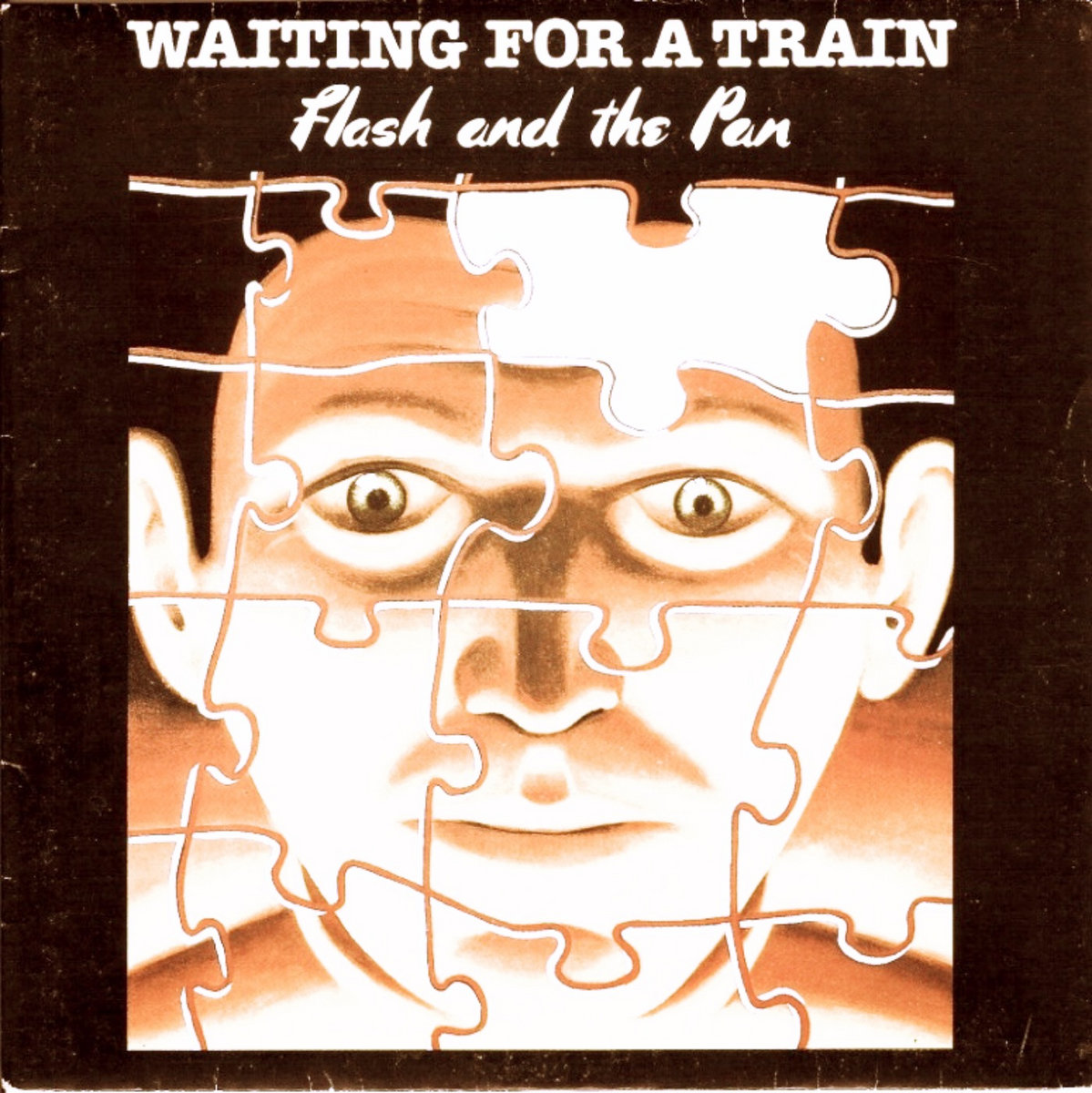
There are songs that sound as though they come from another world, and “Waiting for a Train” is a textbook example of this. It is a record that begins with a hypnotic rhythm, followed by a voice that sounds as though it is being shouted through a megaphone, and which nevertheless, or perhaps precisely because of that, drew millions of people to the dance floor and the record shop in 1983. Behind the song lies a story that is almost as elusive as the lyrics themselves: a studio project without permanent band members, two men who preferred to stand behind the controls rather than on stage, and a title that accidentally proved prophetic. For Flash and the Pan refers to the expression “a flash in the pan”, something that enjoys brief success and then disappears again. With “Waiting for a Train”, the men behind the project proved that name was anything but appropriate.
Flash and the Pan
Flash and the Pan was formed in Sydney in 1976 by Dutch Australian musician Harry Vanda and his Scottish Australian partner George Young. The two men had known each other for years, as they had made a name for themselves together in The Easybeats, one of the most important Australian bands of the 1960s. As a songwriting duo, Vanda and Young wrote worldwide hits such as “Friday on My Mind”, and after The Easybeats split up, they built an impressive reputation as producers, including for the first albums by AC/DC, the band in which George Young’s younger brothers, Angus and Malcolm, played guitar.
Flash and the Pan was primarily a studio project. Vanda and Young handled all the instruments and vocals themselves, with occasional help from session musicians, and rarely performed live. The music was later described as a kind of transitional form between post-disco and the emerging house sound, with much emphasis on rhythm, repetition and atmosphere rather than classical song structures. The debut track “Hey, St. Peter” became an immediate hit in their home country and set the tone for what followed. On the third album, Headlines, Stevie Wright also rejoined them, their former singer from The Easybeats, which for a while made the project almost feel like a reunion of the old band.
Waiting for a Train
“Waiting for a Train” was released in 1983 as a single from the 1982 album Headlines and became the biggest success in Flash and the Pan’s discography. In the United Kingdom, the song reached number seven in the charts, while in their home country, Australia, it remained much more modest, peaking at around number sixty in the Kent Music Report. Elsewhere in Europe, however, the song caught on widely: it reached the charts in countries such as the Netherlands, where it entered the Top 40 in the summer of 1983, and it also managed to establish itself in the upper regions of the charts in other European markets.
What stands out about “Waiting for a Train” is the production. The vocals, provided by Stevie Wright, sound distorted and distant, almost like a radio message from a distant future, while the lyrics tell little of a linear story and instead evoke loose fragments of imagery. That combination of raw repetition, electronic rhythms and an alienating vocal style fitted seamlessly into the early 1980s, when synthesisers, drum machines and new wave were radically rewriting pop music. There are several versions of the song: the album version, a single version known as the French Take with a different intro and shortened lyrics, and various twelve-inch mixes, including a disco version and an instrumental performance, all of which found their own way into the clubs of the time.
Moonbase
One of the most striking reinterpretations of the song came in the same year as the original release. Italian producer Tony Carrasco recorded his own version of “Waiting for a Train” under the name Moonbase, released in the style that by then had become known as Italo disco. This cover retained the recognisable repetition and ominous bass tones of the original, but put the whole thing into a tighter, more danceable package, exactly as many Italian producers were doing at the time with new wave and post-punk tracks from Northern Europe and Australia.
The existence of this cover, released on different labels and in several edits, clearly shows how transnational the dancefloor culture of the early 1980s was. A song conceived in Sydney by two former rock musicians could be reinterpreted in an Italian studio within a few months and thus be given a second life in discos throughout Europe. It also demonstrates how strong the core of the song was: even without Stevie Wright’s original voice, the recognisable tension remained intact.
Headlines
The album “Headlines”, released in August 1982, was Flash and the Pan’s third studio album and was produced by Vanda and Young themselves at Albert Studios in Sydney. Alongside “Waiting for a Train”, the album also produced singles such as “Where Were You” and “Love Is a Gun”, and was described by critics as more direct and rawer than its two predecessors, without losing any of the project’s idiosyncratic character. While the group’s second album, “Lights in the Night”, had even reached the number one position on the album chart in Sweden, “Headlines” remained just below the top twenty there, showing how variable the project’s international success was over the years.
For “Headlines”, Stevie Wright returned as a guest vocalist, giving the album an additional dimension. Fans of The Easybeats heard an echo of the past in the collaboration, although there is debate over how much Wright actually contributed to the recordings themselves. His health was fragile at the time, and his name was even omitted from later pressings of the album. Yet it is precisely this tension between nostalgia and renewal that makes “Headlines” an interesting historical document within the synthpop wave of the early 1980s.
Hey, St. Peter
Before Flash and the Pan broke through worldwide with “Waiting for a Train”, Vanda and Young had already proved that their studio project appealed to the public. Their debut single “Hey, St. Peter” was released in Australia in 1976 and quickly became one of the project’s most notable hits there, before the single was also released internationally two years later through the British label Ensign. The song contained the same ingredients that would later make “Waiting for a Train” so recognisable: repetitive rhythms, an atmospheric, almost cinematic production and vocals that functioned more as an instrument than as the narrator of a clear story.
While “Waiting for a Train” would ultimately become the group’s commercial peak, “Hey, St. Peter” had already sent an important signal at the time: that a project without a permanent line-up, without live performances and without the usual band dynamics could nevertheless grow into an established name within international pop music.
Almost half a century after its release, “Waiting for a Train” remains one of those songs that immediately transports you back to a specific moment in pop history, somewhere between the final throes of disco and the rise of new wave and synthpop. The song’s success was actually a surprise within a surprise for Harry Vanda and George Young, because Flash and the Pan had never been intended as their main project, but rather as a creative outlet alongside their busy lives as producers and songwriters.
George Young died in 2017, and was commemorated worldwide as one of the most important architects of Australian popular music, while Harry Vanda remained active in the music industry well into old age. The story of “Waiting for a Train” therefore remains not only the story of an unexpected hit, but also of two men who, almost by chance, managed to create one of the most distinctive sounds of their time.


