
Precious Pop Pearls: The Story Behind Wild Cherry – “Play that funky music”
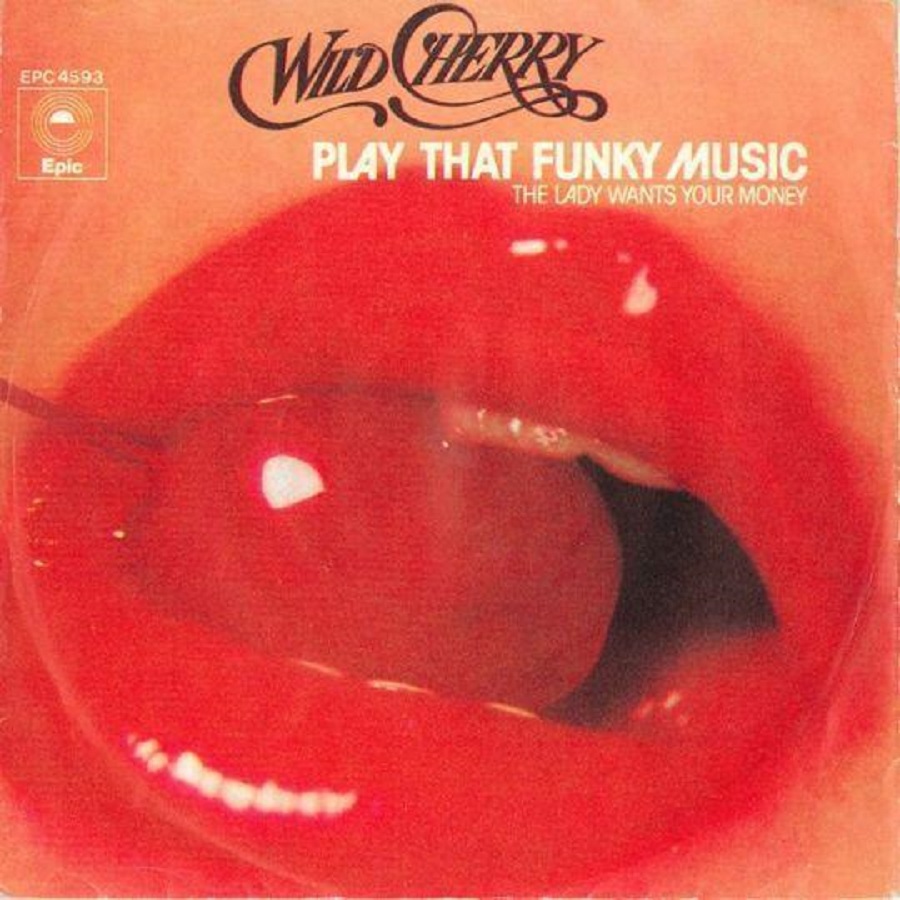
In the 1970s, pop music was changing at a furious pace. Genres began to merge, the boundaries between rock, soul, funk and early disco blurred, and the audience became an increasingly important driving force behind what became a hit. It was no longer only the studio or the record label that determined what worked, but above all the dance floor and the club. It was in that world that a song emerged that had not been conceived as a revolutionary statement, but ultimately became one. “Play That Funky Music” by Wild Cherry is a textbook example of how chance, adaptation and a feel for the audience can together produce a timeless classic.
Wild Cherry
Wild Cherry was founded in the United States around guitarist and vocalist Rob Parissi. The band started with a clear rock background, playing mainly hard guitar music in their early years that fit in with the hard rock scene of the time. Their performances were energetic and aimed at an audience accustomed to volume and direct rock structures.
Yet something began to shift in the musical world in which they operated. The clubs where the band played were slowly changing from rock venues into dance spaces where rhythm and groove became increasingly important. Audiences responded less to long guitar solos and more to basslines and percussion that literally got people moving. Wild Cherry noticed that their original style was having less and less effect.
Rather than clinging to their rock identity, the band decided to adapt to what was happening on the floor. The choice was not theoretically worked out or strategically planned, but arose from direct observation of the audience and its response. It was precisely that flexibility which would set them on an unexpected path.
Play That Funky Music
“Play That Funky Music” grew out of that change in approach. The song tells the story of a musician who lets go of his rock style in order to keep a dancing audience happy. What begins simply as an observation of club dynamics grows into a powerful mix of funk and rock in which rhythm takes centre stage.
The music itself is built around a striking bassline that is immediately recognisable. The drums maintain a tight and repetitive rhythm that invites movement, while the guitars are not dominant but instead move with the groove. The vocals have an almost narrative quality, making the song feel like a story unfolding in real time.
The single became an international success, reaching the top position in the American charts. In Europe and other markets, the song also grew into a widely played radio favourite. What is remarkable is that the song was played on both rock stations and dance-oriented stations. That dual reach made it unique in its time.
Compared with other music from the same period, it stands out that many artists chose strictly defined genres. Disco acts focused entirely on dance floors and rock bands tended to stay faithful to guitars and traditional song structures. Wild Cherry sat precisely in the middle and was therefore able to build a bridge between two worlds that normally remained separate.
Vanilla Ice
One of the better-known later interpretations of “Play That Funky Music” came from Vanilla Ice, who recorded the song in 1990 for his album “To the Extreme”. In his version, the Wild Cherry original is completely rearranged to fit the aesthetic of early 1990s hip hop and pop rap. The solid funk-rock foundation makes way for a tighter, electronic drum sound and a production clearly tailored to the radio trends of that moment. Where the original still leaned heavily on a live band feel and organic groove, here the choice was made for a more programmed and stylised approach.
Vanilla Ice approaches the song less as a traditional cover and more as a reinterpretation within his own style. The recognisable elements of the original, such as the groove and the chorus, remain present, but are embedded in a completely different musical context in which rap takes the leading role. In doing so, “Play That Funky Music” is transformed into a crossover between funk rock and commercial hip hop, which demonstrates how strong the foundation of the song is. It can adapt to a different decade, a different genre and a different audience without entirely losing its recognisable core.
Wild Cherry, the Album
The success of the single led to the band’s debut album, entitled “Wild Cherry”. On this album, the group further explores the combination of rock and funk, with several tracks heading in the same direction as their big hit. The record shows a band in search of a new identity within a changing musical landscape.
Although the album contains several strong moments, attention remained focused primarily on the single that started it all. Nevertheless, the album is important for understanding the context in which the band was working. It shows a transitional phase in which rock bands increasingly began to incorporate elements of dance music.
The tracks on the album vary in style, but all revolve around rhythm and groove as a connecting element. As a whole, it forms a document of a band that was in the middle of a musical shift.
Baby Don’t You Know
“Baby Don’t You Know” reveals a different side of Wild Cherry. Where “Play That Funky Music” leans heavily on rhythm and energy, this song opts for a more melodic and traditional pop structure. The emphasis here is on vocal lines and emotional accessibility rather than danceable groove.
Although the song did not have the same impact as the big hit, it does show that the band was trying to look beyond a single successful formula. There is clearly a search for balance between commercial appeal and musical identity.
Within the context of the band’s history, this song is interesting because it shows that Wild Cherry had no desire to be entirely fixed in the public imagination as a one-hit phenomenon, even if that is ultimately what happened in public perception.
Wild Cherry remains associated in music history above all with a single moment in which rock and funk found each other in a club environment that demanded movement. “Play That Funky Music” thereby became more than just a hit. It became a symbol of how music can adapt to an audience and a context, and how that adaptation can sometimes lead to something that transcends generations.


