Album review overview: Michael Arbenz, Nia Archives and more

Dozens of new albums arrive at Maxazine’s editorial staff every week. There are way too many to listen to them all, let alone review them. It ensures that too many albums are left behind. And that’s a shame. That is why today we post an overview of albums that arrive at the editors in short reviews.
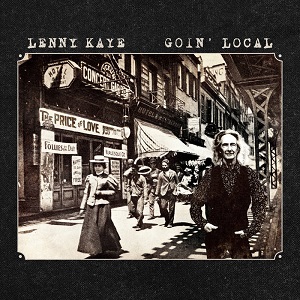
Lenny Kaye – Goin’ Local
With “Goin’ Local”, Lenny Kaye presents his first true solo album, a record on which the guitarist and writer reflects on a lifetime of musical experiences without descending into nostalgia. Best known as the guitarist of the Patti Smith Group, Kaye uses his extensive knowledge of rock, folk and American roots music to create a collection of songs that sounds personal and thoughtful. Songs such as ‘Little Wings’, ‘Uncle Sam’s House’ and ‘Ponderosa’ reveal a musician who is primarily searching for stories, atmosphere and character. The production keeps the focus on the lyrics and guitar playing, meaning that the album sometimes remains deliberately understated. This does not work equally well everywhere, as some compositions lack the sharpness that Kaye demonstrates at his best. Nevertheless, “Goin’ Local” has a clear identity, and the album proves that experience can still lead to interesting musical choices. It is not a record that attempts to rewrite history, but rather an honest portrait of an artist who continues to follow his own path. (William Brown) (8/10) (Yep Roc)
Nia Archives – Emotional Junglist
With “Emotional Junglist”, Nia Archives takes the next step in her development as a musician who combines jungle and drum-‘n-bass with influences from pop, R&B and alternative music. The album follows “Silence Is Loud” and presents an artist who further opens up her sound without abandoning its electronic foundation. The record moves between energetic breakbeats and more personal moments in which love, loss and uncertainty take centre stage. Songs such as ‘Feelingz Go Numb’, ‘Around Tha Bend’ and ‘Dance With Me 2Nite’ demonstrate her sense of melody and rhythm, while collaborations with Jorja Smith on ‘Get Me Down’ and Sampha on ‘Tender’ add extra colour. The production is carefully constructed and provides space for both danceable passages and vulnerable lyrics. At times, the more accessible pop approach makes the rough edges of her earlier work less noticeable, but her musical identity remains intact. “Emotional Junglist” is a mature album on which Nia Archives continues to shape her own direction within modern jungle. (Elodie Renard) (8/10) (Island)

Robert Laidlow – Reality Eaters
With “Reality Eaters”, Robert Laidlow presents an ambitious debut album in which classical music, technology and scientific ideas come together. The composer uses themes such as artificial intelligence, the laws of nature and the limits of human creativity as the starting point for three substantial works: ‘Gravity’, ‘Silicon’ and ‘Warp’. The piano concerto ‘Warp’ in particular demonstrates how Laidlow is able to translate complex concepts into a musical form that remains accessible. The performances by, among others, the BBC Philharmonic, the Piatti Quartet and pianist Joseph Havlat give the compositions a clear and powerful character. Nevertheless, the album demands a great deal from the listener. The ideas behind the music are impressive, but the sometimes lengthy structures and intellectual approach mean that the emotional impact does not come across equally strongly throughout. Laidlow clearly opts for innovation and exploration rather than straightforward melodic familiarity. This makes “Reality Eaters” particularly interesting for listeners who are open to contemporary classical music with a technological perspective. The album presents a composer with a clear vision, but could have benefited from more balance between concept and musical directness at several moments. (William Brown) (8/10) (NMC Recordings)
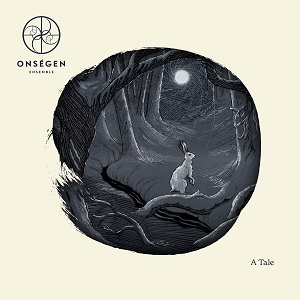
Onségen Ensemble – A Tale
Onségen Ensemble is a Finnish progressive collective. It consists of a permanent core, supplemented each time by different musicians. As a result, every album features different voices, instruments and perspectives. This is also the case on “A Tale”, the fifth album, where the intuitive sounds remain. This thematic album is about peace. Parts of the wordless vocals sound dreamy or gentle, and at these moments the music is usually calm. In addition, the tracks are sometimes spiritual in tone, creating a relaxed hippie atmosphere. This feeling is reinforced when you have the impression that you are listening to singing bowls. At other moments, the instrumental sections in particular are somewhat louder and faster, and they contain quite a lot of repetition. On the one hand, this can draw you into a flow, while on the other hand the repetitions are somewhat excessive. Occasionally, the sound is ‘gritty’; as a result, the remarkable combination of musical instruments and/or vocals comes across less effectively. “A Tale” does not manage to keep me engaged throughout. Nevertheless, it offers a great diversity of instruments, and there are remarkable blends of sounds. (Esther Kessel-Tamerus) (6/10) (Karisma Records)
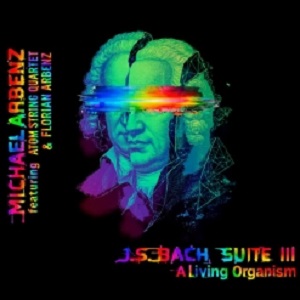
Michael Arbenz featuring Florian Arbenz and Atom String Quartet – J.S. Bach Suite III
If there is one genre that gratefully makes use of, or even exploits, Johann Sebastian Bach, it is jazz. This dates back to 1959, when Jacques Loussier released “Play Bach No. 1”, in which he borrowed Bach’s themes, invariably followed by a jazz improvisation. Chick Corea once described Bach as one of his greatest sources of inspiration. Just listen to his “Children’s Songs”. It is therefore a tried and tested formula, but that would do Michael Arbenz a real disservice. The strength of “J.S. Bach Suite III” lies in the fact that the composer is neither copied nor literally quoted. This is not a literal arrangement of the third orchestral suite. Arbenz, assisted on drums by his brother Florian, adds numerous elements to it. The pieces become dialogues between the jazz of Arbenz and the orchestral works performed by the Atom String Quartet. Naturally, you recognise Bach, but you are also constantly surprised by the swing, the modern melodies and the outstanding improvisations that blend seamlessly with the classical pieces. Bach can quickly become overly grandiose, but Arbenz succeeds in keeping the compositions accessible and simply ‘a pleasure to listen to’. A more than successful attempt to bring Bach and jazz together. (Jeroen Mulder) (8/10) (Michael Arbenz)