
Precious Pop Pearls: The Story Behind a-ha – “Take On Me”
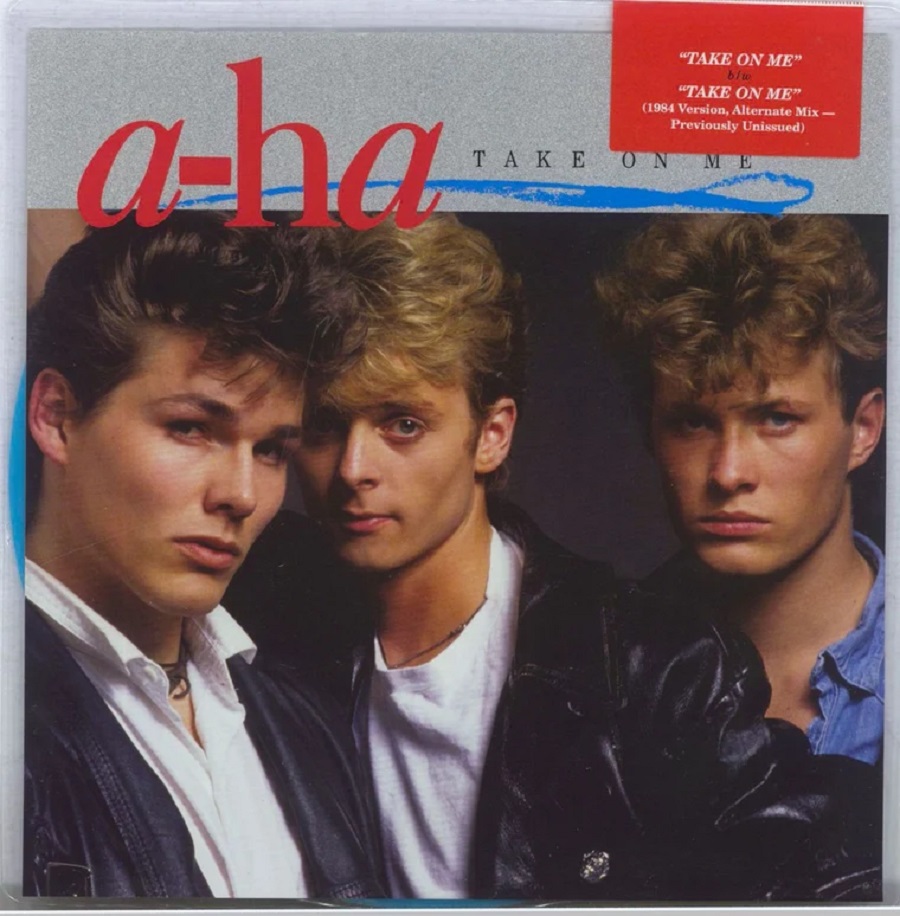
There are songs you recognise before the first note has finished playing. A shimmering little keyboard riff that starts up like a small engine, a drum machine that relentlessly drives up the tempo, and then that voice climbing higher than you would have thought possible. “Take On Me” belongs to that handful of songs that now seem to belong to everyone. It is sung at weddings, in stadiums, in the shower and in karaoke bars from Tokyo to Buenos Aires.
What many people do not know is that this song was a failure for a long time. It was recorded, re-recorded, released, ignored, released again and ignored once more. Only on the third attempt, with a music video that looked like nothing television had shown up to that point, did the world begin to listen. It is the story of three young men from a suburb of Oslo, a string of missed opportunities and a group of people at a record company who refused to give up. It is also the story of a song that, forty years later, still does not sound old.
a-ha
It begins in Manglerud, an ordinary residential neighbourhood in south-eastern Oslo, where two teenagers grew up with a guitar, a keyboard and a dream that was far too big. Pål Waaktaar and Magne Furuholmen had known each other since childhood and played together in all kinds of school bands whose names changed from month to month. Eventually, this became Bridges, a quartet with a preference for psychedelic rock from the sixties. Furuholmen played the keyboards and drew inspiration from the organ playing of The Doors. In 1980, the album “Fakkeltog” appeared, even receiving a few favourable reviews. A year later, however, the band called it a day.
For Waaktaar and Furuholmen, a sobering journey to London followed, where nobody had been waiting for two Norwegian boys. They returned home empty-handed and with a clearer idea of what they wanted to create. Meanwhile, in another part of the city, a singer had caught their attention: Morten Harket, a theology student from nearby Asker with a voice that seemed to come from an entirely different world. He had sung in blues bands and had mastered a falsetto that many a rock singer would kill for. In the autumn of 1982, the two asked him to join them. The three discovered that their differences brought them together. Waaktaar wrote bittersweet, sometimes rather dark songs. Furuholmen brought colour, humour and a talent for melody. Harket gave the whole thing a face and a voice that you never forgot.
The name came from a notebook belonging to Waaktaar, where there was a short, easily pronounced word that also worked in every language. In the winter of 1983, the three of them left for London and moved into a modest flat that later became almost legendary because of its dilapidated condition. It was cold there, and the money kept running out. Nevertheless, they met people who believed in them, such as music entrepreneur John Ratcliff and experienced manager Terry Slater. At the end of that year, they signed a contract with Warner. The dream was finally within reach. What nobody could have imagined then was how much effort it would take to make it come true.
Take On Me
The origins of the song lie at the band’s own beginnings. An early version had already been played during the Bridges years, when Waaktaar and Furuholmen were still experimenting with it under a different title. When Harket first heard the two of them play it, this was the very piece that convinced him. The song was subsequently rewritten and given a new chorus, which would later become the most famous chorus of the eighties. For a while, it was still called “Lesson One”, until it found its definitive form.
Then the long road begins. The first recording, made with producer Tony Mansfield, appeared in late 1984. It achieved modest success in the band’s home country, but did not make it beyond the border. In Britain, it disappeared without a trace. The band and the record company decided to try again. Producer Alan Tarney, who was known for his clear, powerful pop productions, rebuilt the song from the ground up. He gave it more speed and more sheen. That version appeared in Europe and America in the spring of 1985. The result was even more painful than the first time: in Britain, it reached only number 137, the lowest point in the band’s entire singles history.
At that point, a less persistent record company would have closed the file. But two people at Warner in America, Jeffrey Ayeroff and John Beug, had seen a short film they could not forget. “Commuter” had been made by animators Michael Patterson and Candace Reckinger and used a technique in which real film footage is traced frame by frame, making living people appear to move through a drawn world. Director Steve Barron, who had already made a name for himself with groundbreaking music videos shortly beforehand, was commissioned to turn this into a love story. A young woman reads a comic book in a café, a drawn hand pulls her inside and suddenly she finds herself in the story, right next to a singer being chased by racers wielding spanners. The story is about the boundary between two worlds, and about what you are willing to give up to be with someone.
It took months of work by a team of artists and cost a fortune at the time. It paid off. When the new video aired on MTV, things moved quickly. The song climbed to the top of the American Billboard Hot 100 and reached number one in October 1985, the first time a Norwegian band had achieved that feat. It remained in the chart for almost seven months. In the United Kingdom, it reached number two and, for several weeks, had to settle for second place behind Jennifer Rush’s ballad “The Power of Love”. In Germany, it reached number one, in France number two, and it occupied the upper reaches of the charts in numerous other countries. An estimated seven to nine million copies were sold worldwide. The video won six MTV Video Music Awards in 1986, a record for the young awards ceremony, and has now been viewed more than a billion times.
The song itself is difficult to fit into a single category. It is synthpop, but with a raw, almost rock-like energy and a melody that refuses to be dictated by fashion. In 1985, it stood alongside a wave of artists embracing electronic sounds on a massive scale. Tears for Fears made polished, philosophical pop music with a hint of menace with “Everybody Wants to Rule the World”. With “A View to a Kill”, Duran Duran sent a Bond theme out into the world that exuded glamour above all else. Dire Straits showed with “Money for Nothing” that computer animation could also make an impact on MTV. Madonna turned pop music into a lifestyle. Amid all that polished self-assurance, a-ha sounded different: more vulnerable, more frantic, almost pleading. The chorus is an invitation that sounds like a cry for help, written by someone who barely dares to speak the words. It is also notorious for the difficulty of its vocal part. The singer starts the chorus low and then has to climb considerably higher without revealing the effort involved. Few pop stars could imitate him.
A1
It is hardly surprising that such a song was picked up again, sometimes reaching an entirely different audience. One of the best-known covers came from the boy band A1, a mix of British and Norwegian musicians. The group was put together in London in 1998 and consisted of Ben Adams, Mark Read, Paul Marazzi and Norwegian singer Christian Ingebrigtsen. From their debut in 1999 onwards, they managed to reach a substantial audience with polished, melodic pop songs and a carefully cultivated image. For their second album, they looked for a well-known song from the eighties to revive, something that would introduce the band to a new generation.
They chose “Take On Me”, and it worked well. Their version appeared in the summer of 2000, produced by Graham Stack and Mark Taylor. The sound is more modern and tighter, with more reverb on the vocals and a drum pattern suited to the turn of the millennium. In September, the song topped the British chart for a week, giving the group their first number one. In Norway, it remained in the chart for fourteen weeks, reaching number one. The single also made the top ten in France, Sweden and Japan. The album on which it appeared, “The A List”, performed better than its predecessor. In February 2001, the group won a Brit Award for British Breakthrough Act.
It was a time when many eighties classics returned as hits, often in lighter, more streamlined versions. Among music lovers, this divided opinion. For many young listeners, this was their first encounter with the song, and therefore also their route to the original.
Other adaptations prove that A1 were not alone. An American ska-punk band released a hyperactive version with horns and all the trimmings in the mid-nineties, which later featured in a comedy film. In 2019, the rock band Weezer recorded the song for an album full of covers of eighties and nineties classics, earning a respectable placing on the American album chart. Every generation seems to find its own way of making the song sound as though it belongs to them.
Hunting High and Low
The album on which it all comes together appeared at the end of October 1985 and is called “Hunting High and Low”. It was remarkably mature for a debut. The band wrote almost all the songs themselves and worked with several producers, including Tarney, Mansfield and Ratcliff. It shows: some tracks gleam like an expensive car showroom, while others feel like a late-night walk through an empty city. Waaktaar was responsible for most of the compositions. His lyrics deal with longing, uncertainty and the difficulty of saying something genuine, in a language that was not his mother tongue and which consequently acquired something naïve and new.
The album sold astonishingly well. In Norway, it went straight to number one, in the United Kingdom to number two and in the United States to number fifteen. Worldwide sales exceed eight million copies, with some estimates putting the figure as high as eleven million. In Britain, it remained in the charts for months in 1986 and was among the year’s best-selling records. The American music industry nominated the band for a Grammy in the Best New Artist category, an award that ultimately went to someone else. Almost all the hits came from the album: alongside the major breakthrough, there was the title track, the sombre “Train of Thought” and a series of other singles that each found their own audience.
What makes the album special is its range. Between the fast synthpop tracks are restrained, almost chamber-musical pieces featuring piano and strings. Only when you listen to it in its entirety do you understand that a-ha were more than a band with one irresistible video. Critics at the time were keen to dismiss the group as a teenage craze. The albums that followed did not bear out that judgement.
The Sun Always Shines on T.V.
Anyone who follows a massive hit has a problem: everything that comes afterwards is compared with its predecessor. For a-ha, the answer arrived in December 1985 with “The Sun Always Shines on T.V.”, a song Waaktaar had written on a gloomy day. It is slower, bigger and more dramatic than its predecessor, with heavy synthesizers that feel almost orchestral. The lyrics deal with a feeling of emptiness and the screen as an escape route. It is hardly the kind of song with which to win over a teenage audience, and yet that is exactly what happened.
In the United Kingdom and Ireland, it reached number one, higher than the previous song had managed, and remained there for several weeks. In Norway, Denmark and Sweden, it reached number two, in Germany the top five and in France the top ten. In the United States, it stalled at number twenty. That was also the last time the band reached the top forty there, which is why many Americans still know a-ha primarily for that one video to this day. Elsewhere in the world, the story unfolded in the opposite direction: their success only continued to grow.
What followed the major breakthrough was not a fairy tale, but it was a long and distinctive career. “Hunting High and Low” was followed in 1986 by the darker “Scoundrel Days”. In 1987, Harket sang the title song of a Bond film, “The Living Daylights”, and in 1988, “Stay on These Roads” appeared. In the late eighties and early nineties, tensions grew between the three members, while their music became more mature and less predictable. An adaptation of an old Everly Brothers song found its way into the charts on their 1990 album. In 1994, they went their separate ways. Harket started a solo career, Furuholmen became a celebrated visual artist and film music composer, and Waaktaar built a distinct reputation with his own group.
After performing at a major peace prize ceremony in 1998, the three reunited. New albums and sold-out tours followed. In 2009, they announced that they were stopping, and in 2010, they concluded a lengthy farewell tour. But the trio proved not to be finished for good. A new album appeared in 2015, followed by a world tour, and in 2017 they performed their old hit in a restrained acoustic version for a television special. In 2021, a documentary about their career was released.
Perhaps that is the most beautiful thing about this story. “Take On Me” was born in a time when you could set an idea aside and pick it up again, and instead of disappearing, it grew stronger. A band released the same song three times, and on the third occasion, with pencils and a comic book, the world began to sing along. It remains a song about daring to ask, about vulnerability wrapped in a danceable melody. As long as people want to sing higher than they can manage, the song will continue to ring out.


