
Precious Pop Pearls: The Story Behind Martika – “Toy Soldiers”
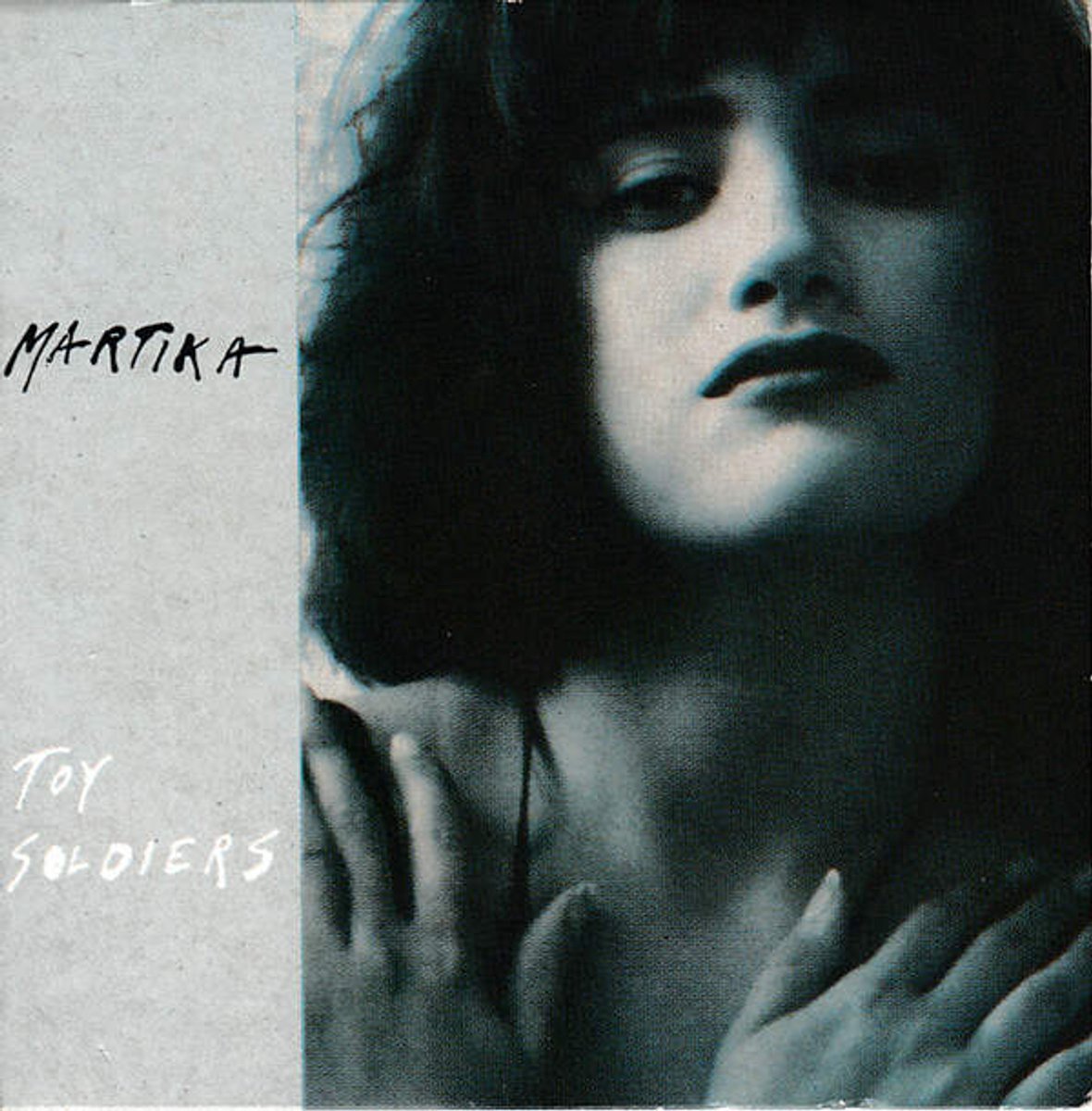
In the summer of 1989, the same childish chorus could be heard from radios all over the world. Step by step, heart to heart, left, right, left. What began as a simple, almost naïve refrain turned out on closer inspection to be one of the most disarming pop songs of the late eighties. Behind the playful melody of “Toy Soldiers” was a personal and painful story about addiction, written by a young singer who at that moment was only just taking her first steps as a solo artist. The song would grow into a worldwide hit, continue to be covered and sampled to this day, and change Martika’s career forever.
This is the story behind one of the most underrated pop gems of the eighties, a song that began as a personal message to a loved one and grew into a collective memory for an entire generation.
Martika
Marta Marrero, better known as Martika, was born on 18 May 1969 in Whittier, California, as the daughter of Cuban parents. At a young age she was already standing in front of the camera. She played a small role in the feature film “Annie” and was subsequently cast as Gloria in the popular children’s series Kids Incorporated, in which a group of singing neighbourhood children gradually gains local fame. The role not only brought her name recognition, but also her first experience of singing for a large audience.
After her years with Kids Incorporated, Martika signed a record deal with Columbia Records. Her first solo project remained mainly limited to success in Japan, but that changed radically when she released her self-titled debut album in 1988. Together with producer Michael Jay, she developed a sound that was firmly rooted in the pop music of the time, while at the same time daring to experiment with more serious themes than most of her peers. While many teenage stars of that period focused mainly on light-hearted love songs, Martika chose to also address personal and sometimes heavy subjects.
Later in her career, Martika withdrew from the music industry, partly because of the pressure of sudden success. She returned in the early two-thousands with the project Oppera, together with her husband. Her biggest hit from the eighties, however, would never completely disappear from collective memory, partly thanks to an unexpected second life that the song would receive years later.
Toy Soldiers
“Toy Soldiers” was released on 26 April 1989 as the second single from Martika’s debut album. The song was written by Martika herself, together with producer Michael Jay, and was about the struggle of a loved one with cocaine addiction. Martika later explained that she initially hesitated to address the subject, because until then she had only written lighter songs. Nevertheless, she decided to take the step and wrote lyrics that compare the devastating cycle of addiction with the endless, mechanical game of toy soldiers that keep falling down and getting back up again.
Musically, “Toy Soldiers” is a typical product of its time, with a production that combines pop sensibility with a touch of rock. It was precisely the contrast between the childish, almost playground-like singing in the chorus and the heavy subject matter of the lyrics that created a unique tension which distinguished the song from other hits of that period.
The commercial success of “Toy Soldiers” was considerable. In the United States, the song reached the top position of the Billboard Hot 100 and remained there for two weeks, making it the only number-one hit of Martika’s career. The song also reached number one in New Zealand. In the United Kingdom, Ireland, Germany and Australia it became a top-five hit, and the single also scored highly in the charts of countries such as Norway, Sweden and Switzerland. In the Netherlands, the song reached number seventeen in the Top 40, while it did not break through in the Flemish charts. On Billboard’s year-end chart for 1989, “Toy Soldiers” finished at number twenty-nine, and the single was awarded a gold record in the United States.
Compared with other major hits from 1989, a year in which new jack swing, glossy dance-pop and the first wave of teenage bands such as New Kids on the Block dominated the charts, “Toy Soldiers” stood out precisely because of its restrained, almost melancholic character. While contemporaries often focused on festive, danceable production, Martika chose vulnerability and a narrative lyric, an approach that gave the song a more timeless quality than many of the fleeting radio hits of that moment.
Silversun Pickups
One of the most notable covers of “Toy Soldiers” came more than thirty years after the original, from the American alternative rock band Silversun Pickups. In 2020, the Los Angeles band released their own version, produced by the renowned Butch Vig, known for his work with, among others, Nirvana. Whereas Martika’s original mainly relies on a clear, almost childlike vocal style, Silversun Pickups chose a more intimate, restrained approach, with less bombast and more room for vulnerability in the performance.
Singer Brian Aubert explained that the band deliberately chose a song that had been a major radio moment during their youth and that had since become part of a shared cultural memory. The choice of this particular song gained extra meaning because the original lyrics are about the fight against addiction, a theme that was personally sensitive for the singer. A new, atmospheric music video was also released with the cover, which visually translated the melancholic undertone of the song. Besides Silversun Pickups, various other artists and bands also attempted their own interpretation of the song over the years, demonstrating how enduring the appeal of the composition has proven to be.
Martika
Martika’s self-titled debut album was released on 18 October 1988 through Columbia Records and was produced by Michael Jay. The album contained a mix of danceable pop songs and more restrained, lyrically heavier songs, thereby showing that the young singer had more to offer than just light-hearted teenage pop. The album was certified gold in the United States and platinum in both the United Kingdom and Canada, while it even achieved double platinum status in Australia. Worldwide, an estimated more than three million copies have been sold.
Besides “Toy Soldiers”, the album contained three other singles, including a Spanish-language nod to Martika’s Cuban heritage in the song “Water”. That choice to sing partly in Spanish was quite unusual for a mainstream American pop act at the time and emphasised how Martika tried to give her own identity a place within the polished pop productions of that era. The album remained the singer’s calling card for years and still forms the basis of her reputation as a one-time, but highly memorable hitmaker.
Martika’s Kitchen
A few years after the success of her debut, Martika took a completely different direction. On her second and at the same time final studio album, also titled Martika’s Kitchen and released in 1991, she largely left polished teenage pop behind in favour of a mix of gospel, jazz, funk, r&b and traditional Cuban influences. A striking detail is that the title track of the same name, “Martika’s Kitchen”, was written and produced by none other than Prince, who wrote a total of four songs for the album. He recorded those songs himself first and then sent them to Martika, who recorded her vocals.
“Martika’s Kitchen” was released in November 1991 as the second single from the album. In the United States, the song did not match the success of its predecessor “Love… Thy Will Be Done” and remained stuck at number ninety-three on the Billboard Hot 100. Internationally, however, the single performed considerably better, with top-thirty positions in countries including Australia, Ireland, New Zealand, Sweden and the United Kingdom. The album itself was certified gold in both the United Kingdom and Australia, partly thanks to the success of “Love… Thy Will Be Done”, which reached number one in Australia and reached the top ten in the United Kingdom, Ireland and New Zealand.
Where “Toy Soldiers” still fully fitted within the polished pop productions of the late eighties, “Martika’s Kitchen” shows an artist who consciously distanced herself from that image and searched for a more mature, more adventurous sound. The fact that an artist such as Prince connected his talent to her project underlines how much Martika was seen at that moment as a serious musical force, far beyond the image of the one-hit maker that some had attached to her after “Toy Soldiers”.
More than three decades after its release, “Toy Soldiers” remains one of those rare pop songs that function both as a time capsule and as a timeless story. It is a song that combines the light-hearted packaging of the late eighties with lyrics that still feel relevant, about the pain of watching someone you love fight against an addiction. The fact that the song reached an enormous audience again years later thanks to a sample by a major rapper, and that artists from completely different musical backgrounds continue to cover it time and again, proves that the power of this song extends beyond the era in which it was created. “Toy Soldiers” is and remains, in the most literal sense of this column, a true gem of pop music.


Don't forget to follow our Spotify Playlist:
Related Posts
-
 Precious Pop Pearls: The Story Behind Donald Fagen – “I.G.Y.”
-
 Precious Pop Pearls: The Story Behind Rupert Holmes – “Escape (The Piña Colada Song)”
-
 Precious Pop Pearls: The Story Behind Wild Cherry – “Play that funky music”
-
 Precious Pop Pearls: The Rock Steady Crew – “(Hey You) The Rock Steady Crew”