
Madonna announces “Confessions II”
Madonna has, with the announcement of her new album “Confessions II”, not only evoked nostalgia, but also set out a clear artistic direction that builds on one of the most influential phases of her career. The record will be released on 3 July via Warner Records and is presented as a spiritual and musical continuation of “Confessions on a Dance Floor”, the album with which she in 2005 brought electronic dance music back to the centre of pop culture.
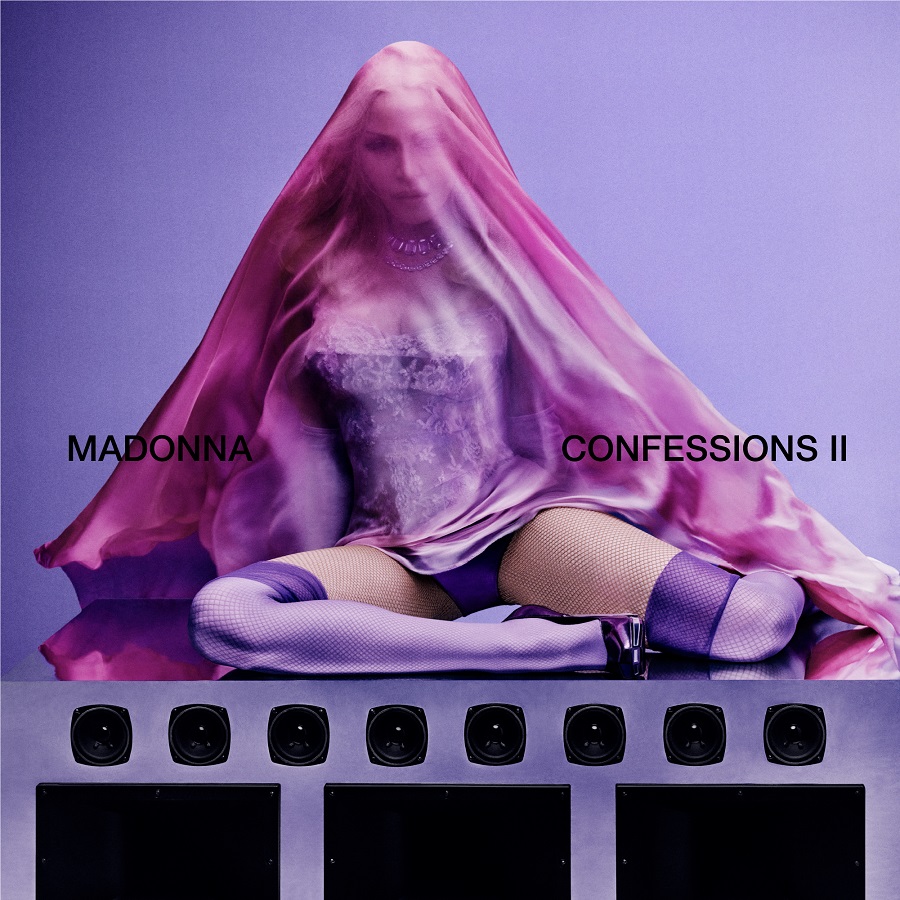
Where that earlier album leaned heavily on disco and electronic pop, ‘Confessions II” appears to take a step further towards trance, techno and more hypnotic club influences. The first visual teaser, built from pulsing lights, abstract club imagery and an almost meditative atmosphere, suggests a sound that is less focused on hits and more on experience. In doing so, Madonna aligns herself with the current reappraisal of underground dance culture, in which collectivity, escapism and introspection come together.
Central to this new project is once again her collaboration with Stuart Price, the producer who was also responsible for the sound of the original “Confessions” album. Price, who is known for his work with, among others, Dua Lipa and The Killers, has, together with Madonna, developed a conceptual framework that goes beyond music alone. Their shared manifesto positions the dance floor as an almost sacred space, in which physical expression becomes a form of communication and even transformation.
The quoted lines from “One Step Away” underline that vision. Dance music is no longer presented as superficial entertainment, but as a deeply rooted human practice. According to Madonna, the dance floor is a threshold between the everyday and the spiritual, a place where identity temporarily dissolves and makes way for collective experience. That idea connects with historical and anthropological insights in which rhythmic movement and music play a central role in rituals and community formation.
Striking is that, Madonna also taps into contemporary club culture, in which concepts such as safe space, inclusivity and self-expression are central. The concept of raving as an art form, in which sound, light and physicality come together, gains in “Confessions II” an almost philosophical dimension. The repeating bass lines and building structures of trance and techno are thereby not only used as musical elements, but as tools to evoke an altered state of consciousness.
With this approach, Madonna once again appears to do what she has done for decades, not only follow trends, but redefine and reshape them. Just like “Ray of Light” once brought electronic music and spirituality together in a mainstream context, “Confessions II” seems a new attempt to elevate club culture into something that feels both personal and universal.
Expectations around the album are therefore high. Not only because of the legacy of its predecessor, but also because Madonna is once again positioning herself as a bridge between pop and underground. If the teaser and the manifesto are representative of the final result, “Confessions II” could well become less a collection of separate songs and more a continuous, almost ceremonial listening experience, an album that is not only heard, but undergone.


