
Precious Pop Pearls: The Story Behind Patrice Rushen – “Forget Me Nots”
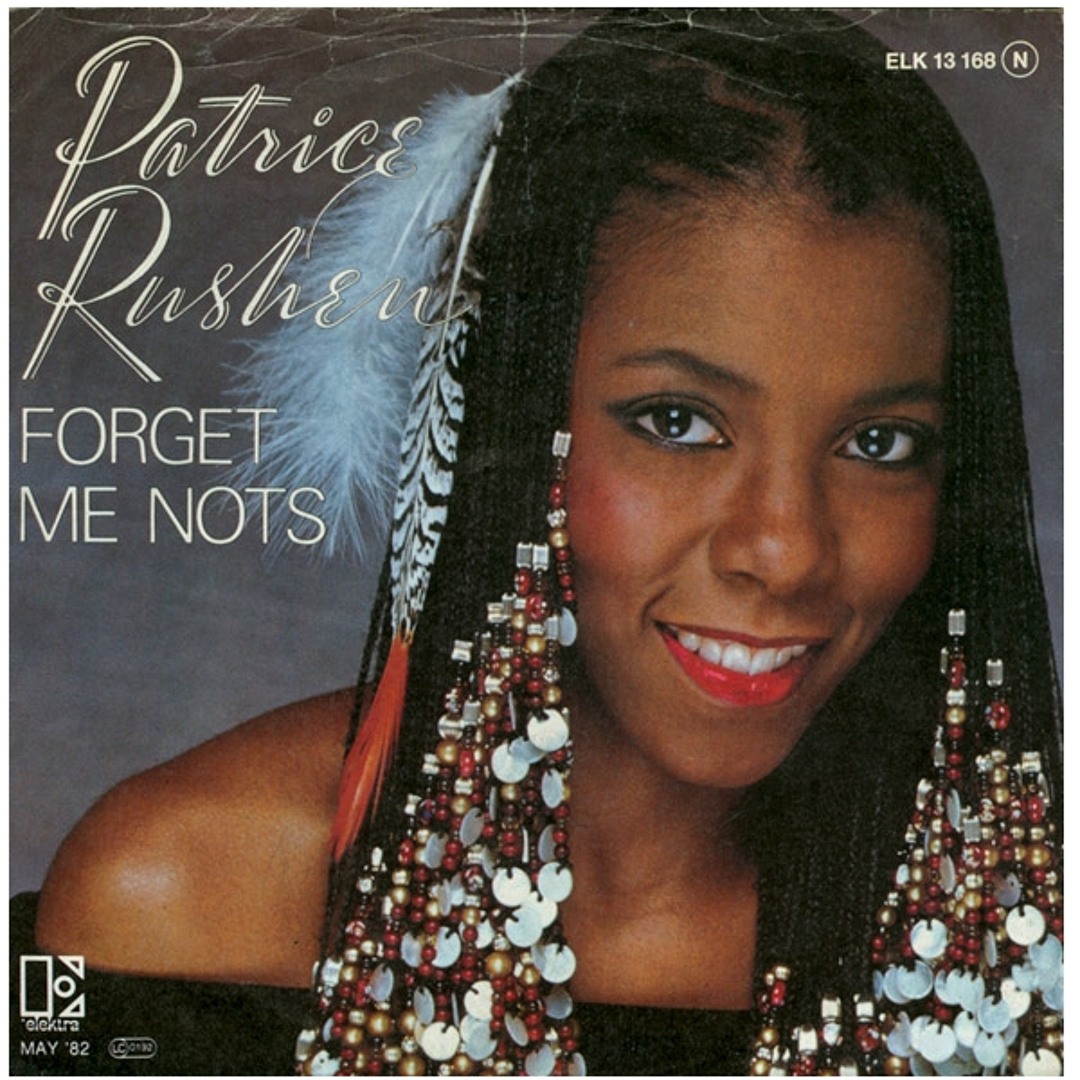
There are songs you recognise instantly from the very first bar. Even before a single word has been sung, you know where you are: on the dance floor, somewhere in the early nineteen-eighties, amid the glittering basslines and loose funk guitars of the post-disco era. “Forget Me Nots” is one such song. The song grew into the trademark of a woman who already had an established name in a completely different world of music, and decades later it kept turning up in films, on the radio and in the studios of young producers who built new hits with it. This is the story behind one of the most timeless gems of pop music.
Patrice Rushen
Patrice Louise Rushen was born on 30 September 1954 in Los Angeles. She began piano lessons at the age of three and was already giving classical recitals at six, an early indication of the talent that would later influence an entire music industry. Rushen grew up as a musical prodigy and was already noted as an exceptional pianist during her teenage years at Locke High School.
At seventeen she won a competition that allowed her to perform with her band at the renowned Monterey Jazz Festival, a milestone that opened the door to a recording contract with Prestige Records. At the University of Southern California she studied music education and piano, and that classical, jazz-oriented training would continue to colour her entire career, even later when she turned her focus to R&B and pop.
At Prestige, Rushen released three instrumental jazz albums between 1974 and 1977, including her debut. Those records were steeped in fusion and revealed a pianist who was just as much at home in complex jazz harmonies as in groovy, rhythmic arrangements. During those years she also worked as a session musician for renowned artists from the jazz world, which further established her reputation as a versatile instrumentalist.
In 1978 Rushen moved to Elektra Records, a label with which she gradually shifted her sound towards a more sung, poppy and funky R&B style. That transition, from instrumental jazz wonder to singing hitmaker, was anything but self-evident in a music industry that tends to keep artists in a single box. Yet Rushen managed to keep combining both worlds throughout her career, even long after she became world-famous as a pop singer.
Forget Me Nots
“Forget Me Nots” was released on 2 April 1982 as the first single from Rushen’s seventh studio album. The song was written by Rushen together with Freddie Washington and Terri McFaddin, and she produced it herself, with co-production by Charles Mims Jr. What began as a song to which record label bosses initially attributed little potential grew into the greatest success of her entire body of work.
The lyrics of the song tell of a woman who wants to send her beloved forget-me-nots, the small blue flowers that have symbolised enduring love despite distance or separation since the Middle Ages. That romantic, somewhat melancholic message is put in stark contrast with an uptempo, danceable production full of sharp basslines, funky guitar parts and an unmistakably recognisable synthesizer line.
Commercially it became one of the bigger hits of that year. In the United States “Forget Me Nots” reached number 23 on the Billboard Hot 100, number 4 on the R&B chart and number 2 on the dance charts. In the United Kingdom the single climbed to number 8, and in other countries too, including the Netherlands, the song managed to reach the charts. It also earned Rushen her first Grammy nomination, for Best Female R&B Vocal Performance, at the 1983 ceremony.
Compared to contemporaries from the same period, such as the later disco of Chic, the funky soul of Rick James or the smooth R&B sound of artists like Change, “Forget Me Nots” distinguished itself through the jazz-like suppleness with which it was arranged. Where many post-disco records mainly relied on repetition and groove, Rushen’s jazz training brought an extra layer of harmonic refinement to the song, something critics already noted at the time as the distinguishing feature of the song within the genre.
Decades later the song remained relevant. It was prominently used in the film Big with Tom Hanks, and it appeared on the soundtrack of Spider-Man: No Way Home. On TikTok too, the song found new life in the twenty-twenties thanks to a dance challenge that attracted millions of views, a sign of how timeless the composition has remained.
Will Smith
Fifteen years after the release of “Forget Me Nots”, the song took on a second, even bigger form in the hands of Will Smith. For the soundtrack of the 1997 science fiction film Men in Black, producers Poke and Tone, better known as Trackmasters, built a completely new song around the recognisable bassline and chorus of Rushen’s hit. The result, “Men in Black”, became Smith’s first solo single and grew into a worldwide number one hit.
To be precise, “Men in Black” is not a cover in the classic sense of the word, but a song built on a sample and a newly recorded chorus. The lyrics of the chorus were subtly adapted from the original line about remembering a loved one to a line about erasing memories instead, a nod to the memory-erasing devices from the film. The female vocals on that chorus were provided by Coko, singer of the R&B group SWV. Thanks to the use of their composition, Rushen and her co-writer Terri McFaddin received a writing credit on the new record.
“Men in Black” became one of the biggest hits of Smith’s career and earned him a Grammy Award in 1998 for Best Rap Solo Performance. It also let a completely new generation of listeners hear where the recognisable bassline originally came from, and ensured that “Forget Me Nots” once again entered the charts and popular culture by a roundabout route.
Straight from the Heart
“Forget Me Nots” appeared on the album “Straight from the Heart”, which was released on 14 April 1982 by Elektra Records. The album was recorded between October 1981 and February 1982 at Conway Studios in Hollywood and was produced by Charles Mims Jr., with Rushen herself as executive producer.
Besides the title hit, the album also contains the instrumental track “Number One”, which likewise received a Grammy nomination, and the widely sampled “Remind Me”, which would later take on a life of its own in the hip hop and R&B of later decades. “Straight from the Heart” is often regarded as the album on which Rushen most convincingly managed to unite her jazz background with her poppy, funky R&B side.
Musically, the album marked a turning point. In the years that followed, Rushen built on the style she had established on this record, and the sound world of “Straight from the Heart” continued to resonate in her later work, right up to her next album two years later.
Haven’t You Heard
Even before “Forget Me Nots” became her biggest hit, Rushen had already found success with “Haven’t You Heard”, released in October 1979 as the first single from her fifth album “Pizzazz”. The song became her first international hit and reached number 42 on the American Billboard Hot 100, number 7 on the soul chart and even number 5 on the disco chart. In the United Kingdom it reached number 62. It showed that even without her later signature hit, Rushen was already capable of making appealing, danceable pop music.
“Haven’t You Heard” got a second life years later after being sampled by other artists, including the gospel artist who used it for a track on a film soundtrack. That pattern, a Rushen composition resurfacing decades later in new music, would repeat itself with several of her songs and underscores how influential her sound from that period has been for later generations of producers.
“Forget Me Nots” is more than a joyful dance record from 1982. It is proof of how a classically trained jazz pianist found her way to the charts without denying her musical roots. The song survived the decades thanks to an irresistible bassline, lyrics that remained universally recognisable, and a production that still sounds fresh generations later. From the dance floors of the nineteen-eighties to the cinemas and TikTok feeds of today: the small blue flowers from Patrice Rushen’s lyrics have, fittingly enough, never been forgotten.


