Thomas Dolby Through the History of Pop Music at Shepherds Bush Empire
On Thursday evening, May 21, the Shepherd’s Bush Empire hosted a concert that immediately demonstrated why Thomas Dolby has been regarded as one of the most distinctive and versatile musicians of his generation for more than four decades. As a producer, composer, and performer, he managed to combine electronic pop with cinematic ambition, and that combination sounded just as fresh and convincing on this evening as it ever did. With Martin McAloon of Prefab Sprout as the support act and a setlist cutting straight through a decade of pop history, it became an evening that exceeded expectations with ease.
Prefab Sprout
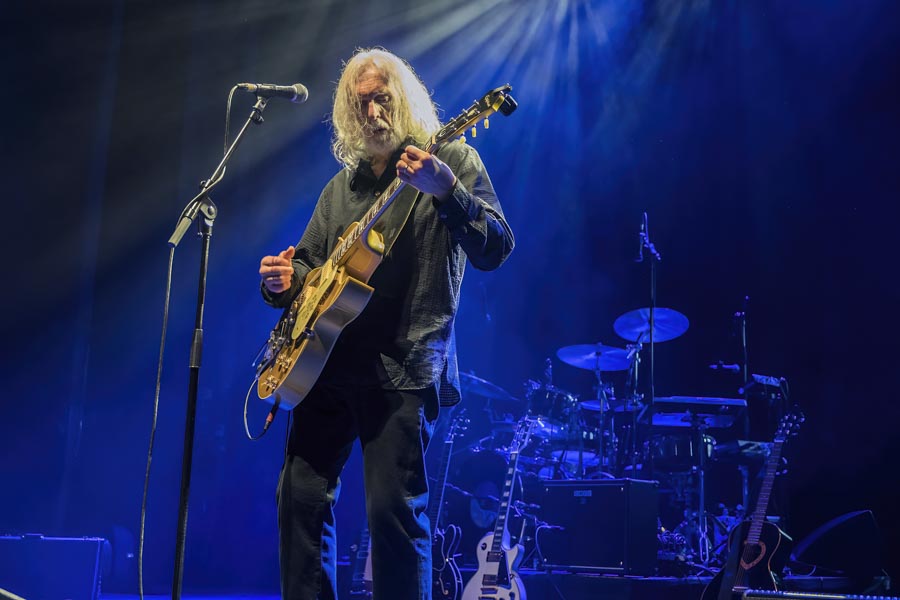
The choice of Martin McAloon as support act was no coincidence. Thomas Dolby produced several Prefab Sprout albums and remained close friends with the band’s only remaining member long after the eighties. McAloon may not be the most technically gifted singer or guitarist, something he openly admitted to himself, but his natural charm turned the opening set into a warm and thoroughly enjoyable beginning to the evening. Alone on stage, performing a selection of songs from the past, he immediately tapped into a strong sense of recognition among the not-so-young audience. The fact that Shepherds Bush Empire was already completely packed by the start of the support set said enough.
When someone in the crowd shouted for “Appetite”, McAloon laughed: ‘Don’t worry, that one will come soon.’ A few songs later he delivered on that promise, earning a generous response from the audience. Before that came the lovely “Life of Surprises”, introduced after he jokingly asked whether Mickey was present, only for someone in the crowd to dryly answer: ‘No.’
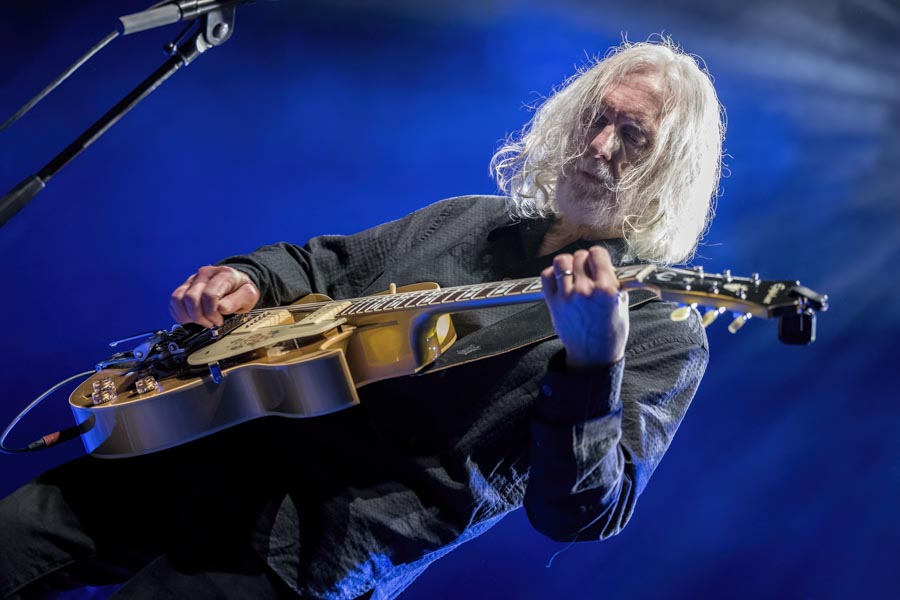
“Appetite” was followed by “When Love Breaks Down”, which received an equally enthusiastic reaction. Remarkably, during almost every song, most of the audience was already singing along in full during the support act itself, making it all the clearer just how beloved Prefab Sprout still is in England. The final songs turned into pure sing-alongs, while McAloon also found time to poke fun at Coldplay: ‘Glad I’m not Chris Martin.’
The absolute highlight was “The King of Rock ‘n’ Roll”, during which the entire hall sang the line ‘hot dog, jumping frog, Albuquerque’ straight towards the ceiling. A more than successful warm-up.
Thomas Dolby
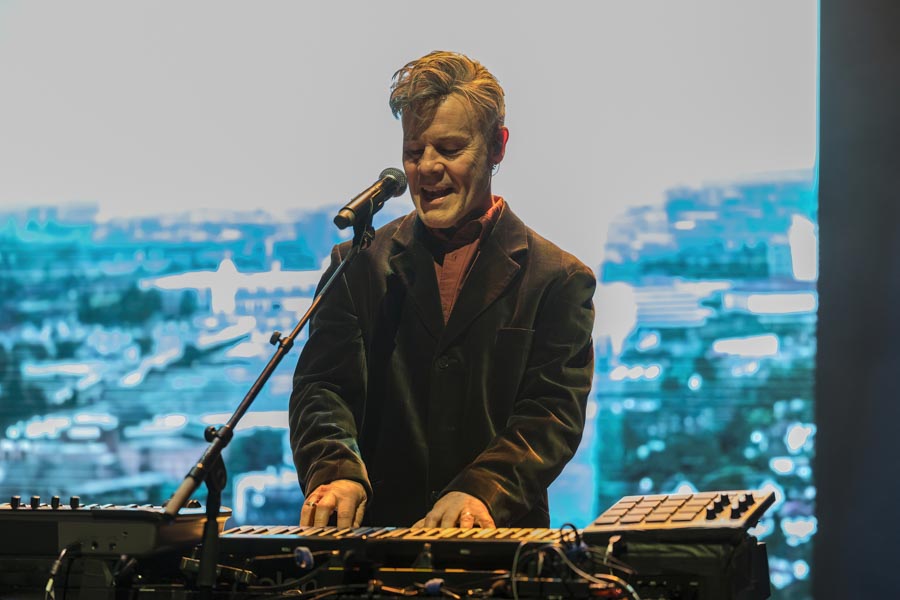
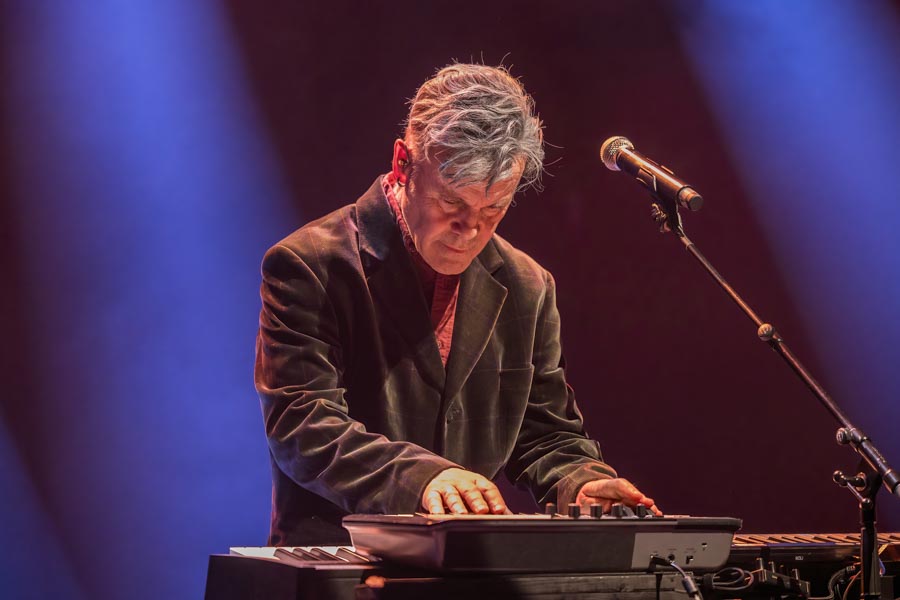
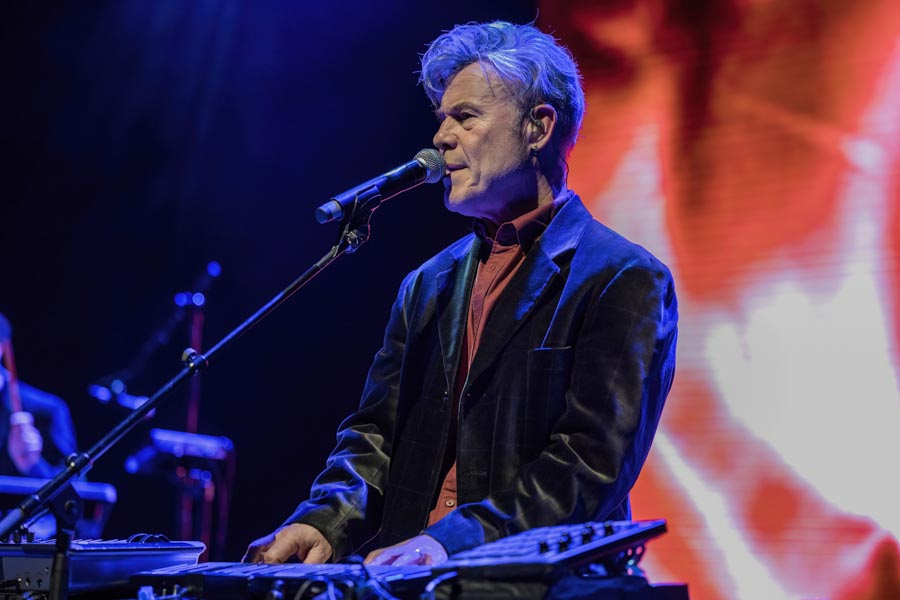
Thomas Dolby walked on stage without ceremony, initially by himself, announcing that he would play several songs solo before bringing the band on. The opening came with “The Flat Earth”, preceded by a joke about the Flat Earth Community, and complete with samples of Martin Luther King Jr.. He mentioned that he had been born only a mile away from the venue and attended his first concert in 1964, when The Beatles performed at the nearby Hammersmith Odeon. London was very much his home crowd. That insight was followed by “Evil Twin Brother”, featuring pre-recorded vocals by Regina Spektor as Yelena, while Dolby stood behind his synthesiser and sampler like a teacher in a classroom.
During “One of Our Submarines”, it became increasingly clear that one of synth pop’s pioneers still sounds entirely contemporary. Old submarine footage played in the background, occasionally interwoven with more recent images of Dolby himself inside a submarine, while the song incorporated a fragment from “Cars” by the equally legendary Gary Numan. At that point, Dolby stepped away from his deck and walked further onto the stage with a miniature synthesiser in hand.
One of the evening’s highlights arrived soon afterwards, when he returned to 1985, the year he met David Bowie on the helicopter platform of Battersea Power Station. Bowie had insisted that no photographs should be taken, yet Dolby secretly snapped one anyway. That picture was shown to the audience, followed by footage from Live Aid, as it had been the helicopter flight to Wembley for that legendary concert where Dolby performed in Bowie’s band. “Heroes” then followed as a heartfelt tribute to the man he had met that day.
He also explained that he now teaches in the United States, and that the strange thing is that all his students were born in this century, yet still somehow discover his old music. His reflections on the eighties themselves were nuanced: not only glitter and glamour, but darker times as well. The Falklands War, a strange Royal Wedding, he listed several less flattering memories and explained that it was during that period that the idea first emerged to write a symphony. Without any formal orchestration training, he nevertheless composed a symphony in his own style for this tour. Next year, he hopes to perform it with a real symphony orchestra. For now, however, it came in the form of a taped orchestra and a band made up of friends.
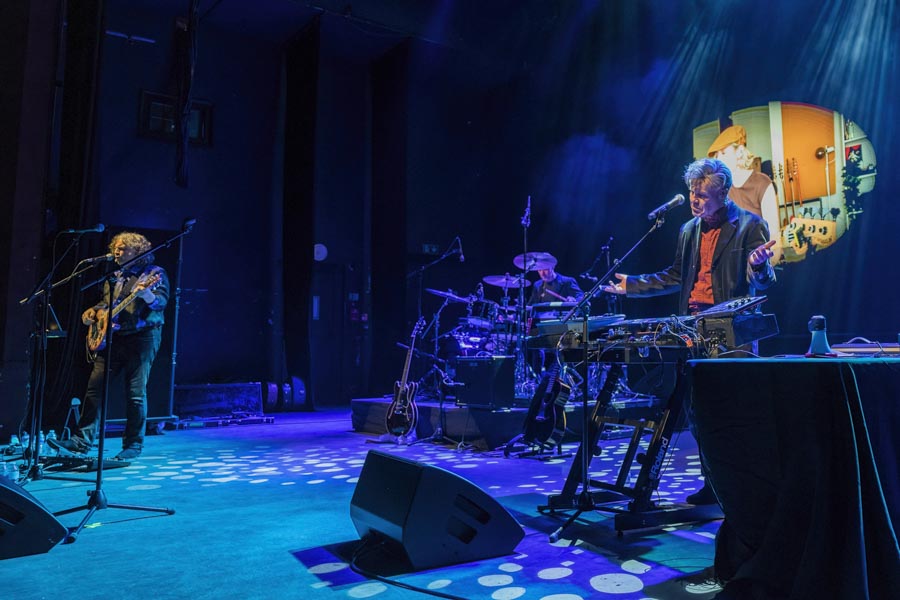
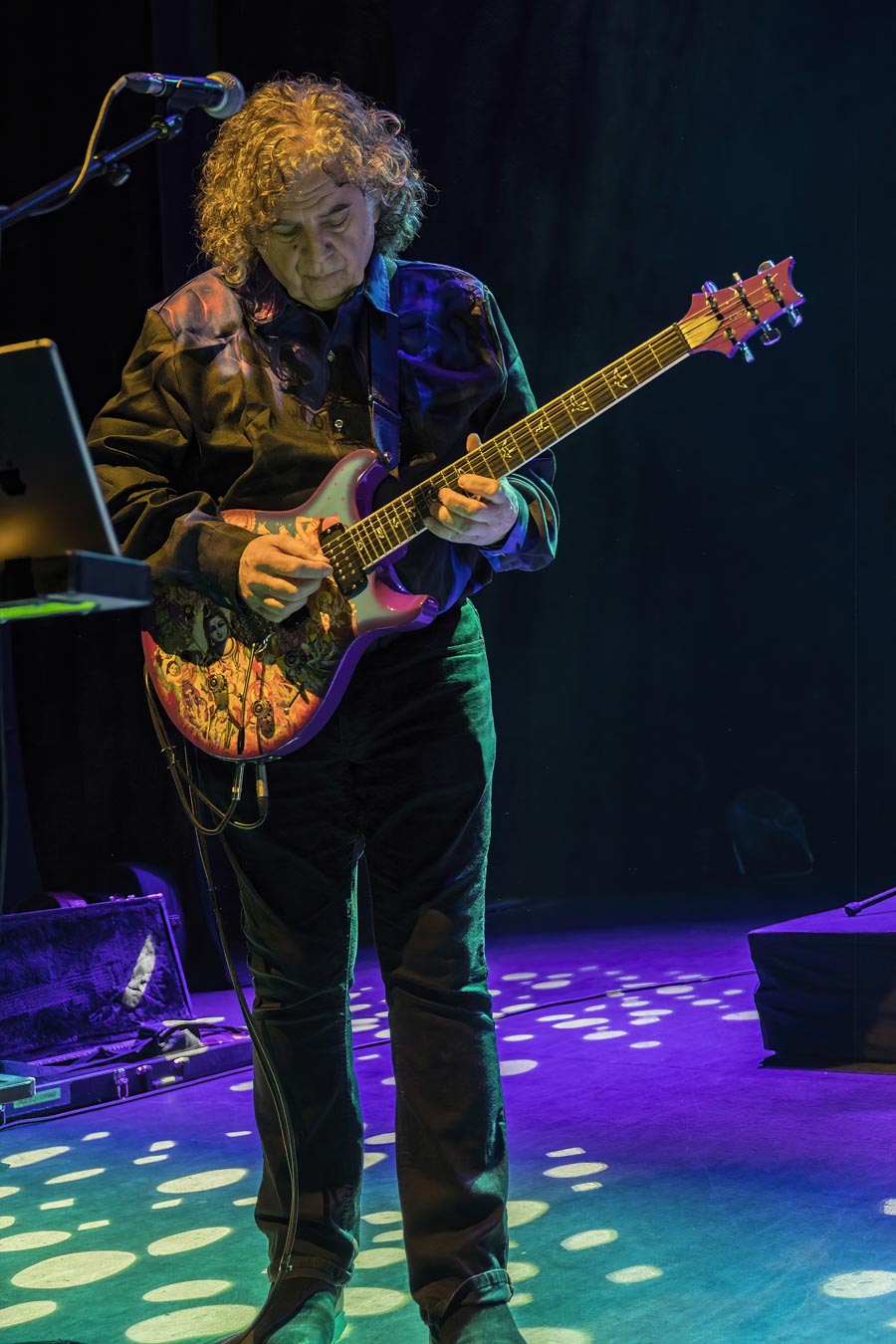
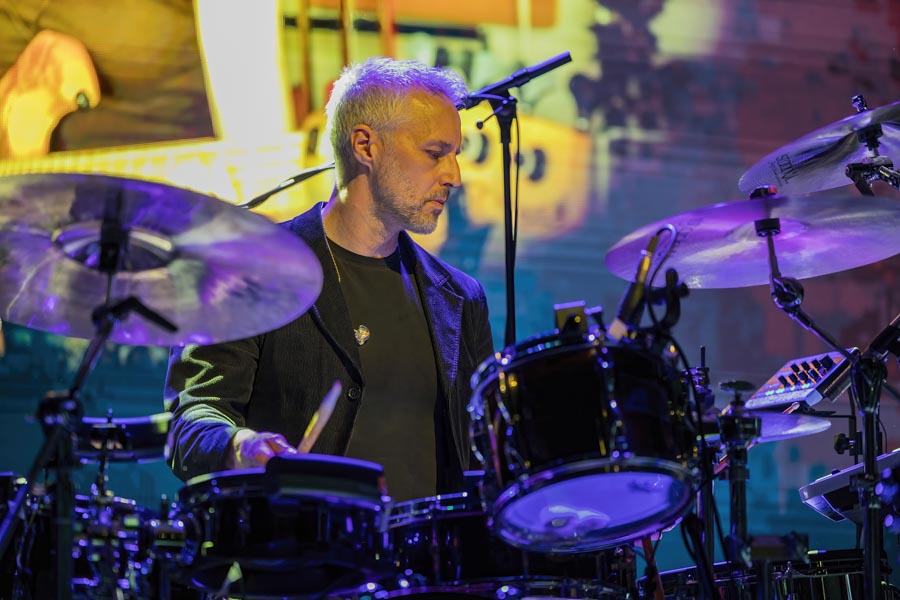
Dolby then introduced that band. On guitar stood Jakko Jakszyk, known from King Crimson and Level 42, an old childhood friend with whom Dolby used to play football. Behind the drum kit sat Mat Hector, known for his work with Iggy Pop. Ukrainian bassist Ana Pshokina should also have been on stage, but had been denied entry into the United Kingdom the previous Saturday after her work permit was revoked. She performed through a TikTok video on the screen instead, giving the evening an unexpectedly political undertone.
After briefly mentioning his early work with Foreigner on “Waiting for a Girl Like You”, Dolby conducted the orchestra on the video screen and launched into an extended medley beginning as the iconic Eighties Symphony, Second Movement. Dolby’s own humorous way of finally writing a symphony. The audience was taken through classics such as “Comfortably Numb”, “Here Comes the Rain Again”, and “Red Rain”, before continuing with “Sign Your Name”, “Little Red Corvette”, “Billie Jean”, and “Thriller”. Via “This Must Be the Place (Naive Melody)” and his own “Cajun Moon”, the sequence eventually concluded with “With or Without You”. During “Little Red Corvette”, he danced exuberantly across the stage, while during “Billie Jean”, he spoke in the style of Orson Welles as he used his sampler to ‘call’ Michael Jackson and ‘visit’ him, which really happened in the 80’s. It offered a fascinating glimpse into Dolby’s musical past.
For the third movement of the symphony, Martin McAloon was invited back on stage to join him for “Bonny”, the famous Prefab Sprout song. As the track began, the cover artwork of “Steve McQueen” appeared on the screen, provoking laughter throughout the venue. McAloon turned around and feigned surprise in the uniquely charming way only McAloon can manage. The medley then continued through Grace Jones’ version of “Libertango” and “New Year’s Day” into “The Killing Moon”, during which Dolby picked up his guitar, before concluding with “The Things That Dreams Are Made Of”, “Sweet Dreams (Are Made of This)”, and “Ordinary World”. During the Grace Jones section, McAloon quietly left the stage again, making his guest appearance all too brief, for now.
Following the band introductions came “Set the Controls for the Heart of the Sun”, “How Soon Is Now?”, “Head Over Heels”, and “Shout”, with the audience enthusiastically clapping along. Without interruption, “Shout” seamlessly drifted into the famous bassline of “Don’t Give Up”, upon which Ana Pshokina appeared on screen, saying: ‘For all the people of our home,’ accompanied by the Ukrainian flag. The atmosphere suddenly turned emotional. In the background appeared images and quotations of Michael Douglas, the wedding of Charles III and Diana, Princess of Wales, riots, and marching brass bands, all flowing seamlessly into a final symphonic section featuring “White Wedding”, “Love Will Tear Us Apart”, “Dancing with Tears in My Eyes”, “Vienna”, and “Don’t Dream It’s Over”.
Afterwards Dolby recalled memories of Jason Mraz, who once wanted to cover one of his songs. Mraz appeared on the screen during “My Brain Is Like a Sieve”, turning it into a duet with Dolby. “Europa and the Pirate Twins” then steered the set firmly back toward electronics before the evening reached another peak with the massive hit “She Blinded Me with Science”. Large portions of the original music video appeared on screen, naturally including Magnus Pyke, the famous scientist, who was later replaced by a succession of other scientists singing along with the word ‘science’. The sequence concluded hilariously with Hillary Clinton saying: ‘I believe in science.’ It is, after all, Thomas Dolby, and with him absolutely anything can happen.
For the encore, Martin McAloon, Jakko Jakszyk, and Mat Hector returned for “Hyperactive”, which was naturally sung word for word by the nearly two-thousand-strong audience. The band then left the stage once more, leaving Thomas Dolby alone for the magnificent “Airwaves”. After one final bow, it was over, but the impression left behind was that of an artist who cherishes his past without ever becoming trapped by it. Dolby remains a brilliant eccentric, and perhaps one who can already claim the best concert of 2026.