
Royal Albert Hall falls for the timeless class of Zucchero
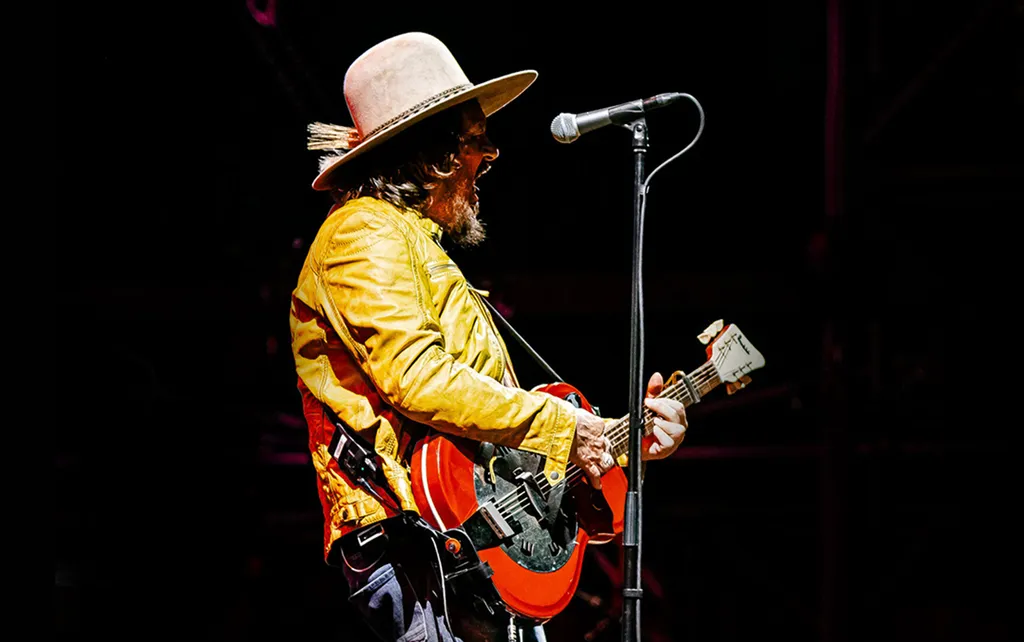
Without any doubt, one of the greatest Italian singers of all time is Adelmo Fornaciari, affectionately known since childhood as Zucchero (Sugar). Born in Reggio Emilia in northern Italy, he has, since his breakthrough at the Festival di Sanremo in 1985, stood alongside Luciano Pavarotti and Andrea Bocelli as part of the top three musical ambassadors of Italian song. While the latter two represent the classical repertoire, Zucchero covers virtually every other musical genre on his own. On Monday and Tuesday night, he performed to a sold-out audience at the Royal Albert Hall in London.
The support act was the still relatively unknown Billy Lockett. Twelve years ago, after a cheeky tweet, he was invited on tour with KT Tunstall, while before that he played in pubs for audiences sometimes as small as three people. Now, as support for Zucchero Fornaciari, he was promoting his new album, due out this Friday. Lockett focused on direct sales, using keycords with chip cards containing his album, and he had a reason for it. ‘With only 500 albums sold, I’ll land a top 10 chart position next week, so with 5,000 people tonight it should work. I’ll be at door 6 after the show,’ he cleverly noted. His enthusiasm was infectious, and musically he fully won over the Royal Albert Hall.
Before the music even began, a poem was played through the speakers. On the screens appeared the text: “The Poet Is A Faker, Who Is Good At His Act. He Even Fakes The Pain, Of Pain He Feels In Fact.” (Fernando Pessoa). Few openings for a Zucchero concert could be more fitting. Pessoa describes how an artist not only experiences emotions but shapes and transmits them. Pain that is truly felt is recreated and amplified so that it becomes tangible for the audience. In doing so, the poem captures the essence of art: not the literal display of emotion, but its transformation into a form that can move others.
The concert then began with “Oh Doctor Jesus”, with backing vocalist Oma Jali first stepping onto the stage in a gospel-like opening. Zucchero entered last, walking between the two drum kits, and launched into “Spirito nel Buio”, continuing the gospel atmosphere. The full band joined in and the audience immediately came alive.
Things quickly took off. The singer came in hard with “Partigiano Reggiano” as the first major highlight, giving plenty of space in its extended version to his two outstanding guitarists, Mario Schilirò and Kat Dyson. From that moment on, it fully ignited with “Black Cat”, where nobody could remain seated and the keys came into their own.
During “Felice”, Oma Jali stepped forward in her role as seductress, playfully attempting to charm Zucchero. The interaction between singer and backing vocalist was not only musically compelling but also a visual delight. “Baila (Sexy Thing)” then shifted the atmosphere and lifted the entire Royal Albert Hall to its feet.
Zucchero’s versatility became clear with the first trumpet notes from James Thompson. “Scintille” received a jazzy interpretation, accompanied on the screens by images of Miles Davis. A clear demonstration of Fornaciari’s range. This was further underlined at the end of “Iruben Me”, which dissolved into a long guitar solo in which both guitarists alternated and reinforced each other.
Halfway through, Zucchero took a seat on stage to greet the audience. He thanked the crowd and responded to calls from the audience. Throughout the show, visitors frequently shouted requests and encouragement in Italian. He spoke back in Italian several times. He noted that this was his 29th performance at the Royal Albert Hall and referred to a previous concert in 2004 with, among others, Eric Clapton, Brian May and Luciano Pavarotti. It highlighted how significant Zucchero’s reputation already was at the time.
The middle section included, among others, “Un Soffio Caldo”, “Oltre Le Rive” and “Nella Casa C’era”, with Keba Williams elevating the latter with a beautiful clarinet solo. The magnificent “Miserere” gained extra emotional weight as Luciano Pavarotti opened the piece via the screens and later returned as a vocal presence. It became an interactive dialogue between two of the greatest names in Italian music. Zucchero asked for respect for Pavarotti, which was met with prolonged applause. Rightly so.
This was followed by “Per Colpa di Chi?”, immediately embraced by the audience and turning into a loud communal moment. The song is not always included in the setlist, making it a very welcome surprise for those present.
It was then bassist Polo Jones who lifted the room back into a gospel atmosphere leading into the controversial closing track “Diavolo in Me”; ‘The Devil in Me’. It built towards a euphoric climax and an explosive applause that was fully deserved for the now 70-year-old legendary singer.
Zucchero then came forward to shake hands with the audience at the front of the hall, but was stopped by security at the Royal Albert Hall. Not really necessary, as singer and audience were in complete mutual respect, confirmed by a standing ovation that brought him back once more for the major hit “Senza Una Donna”.
A fully rounded evening programme was what the audience came for at the Royal Albert Hall. A fully rounded evening programme was exactly what they received. And perhaps even more than that. Zucchero Fornaciari, 70 years old, but with enough energy to go on for another 70. If anything, he is not slowing down; and neither is his audience.


