
Precious Pop Pearls: The Story Behind Deee-Lite – “Groove Is in the Heart”
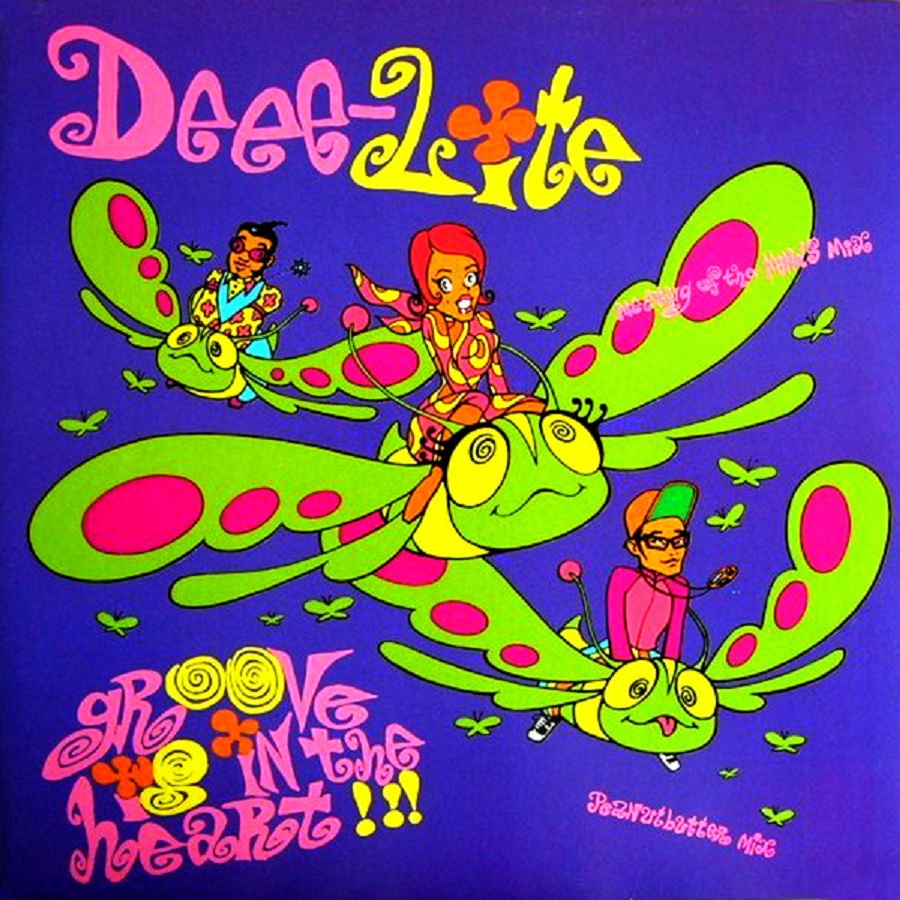
In the summer of 1990, it was almost impossible to escape it. On the radio, in nightclubs, on music television, in shops: everywhere, the same bassline, the same infectious laugh, the same voice telling you to dance. “Groove Is in the Heart” was a track that sounded as though someone had thrown an entire record collection into a blender and somehow produced something irresistible. Seventies funk, the tight beat of house, the swing of hip-hop and a generous helping of playfulness.
The success was enormous. The track reached number one on the dance club charts in the United States and Canada, number one in Australia and Luxembourg, and the top five in America and the United Kingdom. The latter is a story in itself, because the number one spot in the UK slipped through their fingers at the very last moment, in circumstances that led to an official change in the rules.
Behind it was a group that fitted into no particular box. A singer with a colourful style, a DJ born in Kyiv and a DJ from Japan met in New York’s clubs and created a sound that drew as much from the streets as it did from the record collection. This is the story of a perfect pop song, the people who made it and the question of why the same group so quickly disappeared from view after this one worldwide hit.
Deee-Lite
The group began in New York in 1986 as a duo. Singer Lady Miss Kier, born Kierin Kirby in Youngstown, Ohio, met Supa DJ Dmitry, born Dmitry Brill in Kyiv, then part of the Soviet Union. Together, they performed every month in clubs in the city centre. In 1987, Kier bought an Akai sampler, a small device that allowed snippets of sound from old records to be recorded and played back. It completely transformed their music. It was the beginning of a working method they would later call Sampladelic, which was also the name of their production company.
In 1988, Japanese DJ Towa Tei, born in Yokohama, sent the duo a homemade demo. They realised that, like them, he was fascinated by the combination of funk and techno, and invited him to join them. The trio was born. Kier wrote the lyrics and melodies, Dmitry played guitar, keyboards and bass, and Towa collected the samples and grooves used to build the tracks. Kier also designed the posters, flyers and record sleeves herself, giving the group its own distinctive visual world.
That world was open and colourful. They played in hip-hop clubs and house clubs, gay clubs and ordinary nightlife venues, as well as at New York’s drag festival Wigstock. They performed as the support act for De La Soul and the Jungle Brothers. The audience was mixed in every respect, and that was reflected in the name too: Deee-Lite is a deliberately misspelt version of the English word for delight.
An important turning point came when Bootsy Collins joined the recording sessions. The bassist, who had made his name in James Brown’s band and later in the world of Parliament and Funkadelic, brought the group into contact with horn players Fred Wesley and Maceo Parker, as well as keyboardist Bernie Worrell. Suddenly, a group that had grown up with samples also had a collection of genuine funk legends in the studio. Collins later helped assemble the band with which they went on tour.
The group signed to Elektra Records and released the album “World Clique” in 1990. The rest of the story follows below, but one thing is already clear: Deee-Lite scored six number ones on the American dance club chart over a career spanning just a few years. It later became apparent that almost the entire run of hits remained largely confined to the clubs, while the general public mainly remembered that one track from 1990.
Groove Is in the Heart
The track originated in the late 1980s and was already being performed live in 1989, long before the definitive version was recorded in 1990. Its foundation is a construction made from samples. The pumping bass loop comes from “Bring Down the Birds”, an instrumental piece by Herbie Hancock from the soundtrack to “Blowup”. The drums and the build-up of the break featuring the slide whistle come from “Get Up” by Vernon Burch. Kier added her vocals on top of this foundation. Bootsy Collins provided the background exclamations, a rapper from the group A Tribe Called Quest delivered the rap verse in the middle, and Fred Wesley and Maceo Parker supplied the horns.
The result is not a copy of anything that already exists. The track moves effortlessly between funk, house, hip-hop and disco without ever becoming heavy or serious. The music press was overwhelmingly convinced in 1990: a British music magazine and an annual American critics’ poll chose it as the best single of the year, while another British magazine placed it at the top of its year-end chart.
The music video contributed greatly to that image. Director Hiroyuki Nakano placed the band members, and Kier in particular, in a psychedelic world that seemed to come straight from the 1960s, with vivid colours, dancing figures and plenty of humour. The video was nominated for several MTV Video Music Awards in 1991, but did not win any.
The charts tell a worldwide story. In the United States, the track reached number four on the Billboard Hot 100 and topped the American dance club and twelve-inch single charts. In Australia, it spent a week at number one in November 1990, and it also reached number one in Luxembourg. In Europe, it made the top ten in countries including Finland, Greece, Ireland, Italy, the Netherlands and Spain, and peaked at number five on the European chart. In Belgium, Germany and Switzerland, it reached the top twenty. In the United States, it was awarded gold for sales of half a million copies, platinum in Australia, and platinum in the United Kingdom for sales of 600,000 copies.
Then came the British drama. In September 1990, the track was released as a double A-side, together with a reworked version of “What Is Love?”, and was tied with “The Joker” by the Steve Miller Band in the week of 15 September. Both records had the same rounded sales figures. Under a rule that applied at the time, in the event of a tie, the record that had increased its sales the most compared with the previous week would take the top spot. That turned out to be Steve Miller. Deee-Lite finished second. The record company protested, and the rule was abolished. The exact figures later emerged: 44,118 against 44,110 copies sold. Just eight copies, then. It is the only case affected by the rule.
How does the track fit into its time? The year 1990 was a crossroads. Madonna brought the house club sound into the charts with “Vogue”, MC Hammer and Vanilla Ice proved that rap could explode commercially, and rave culture was sweeping across Europe. At the same time, the so-called Daisy Age was growing in New York and beyond: a playful branch of hip-hop featuring flowers, cheerful colours and samples from funk and soul, of which De La Soul was the best-known representative. Deee-Lite stood precisely at the intersection of all these movements. They had the beat of the club, the cheerfulness of the Daisy Age and the atmosphere of a 1960s party. That made them difficult to categorise, but equally difficult to ignore.
The track continued to feature in rankings in later years. It regularly appears among the greatest dance tracks of all time, and in 2025 an American music magazine even placed it at number two on such a list. In 2017, a reissue on pink vinyl appeared for Record Store Day. The fact that a track more than thirty years old is still played so often says enough.
Client Liaison
A track so closely associated with a particular moment is difficult to cover. Nevertheless, numerous artists have attempted it over the years, particularly on stage. The most notable recorded version came from Australia in August 2021, a country where the original had reached the top of the charts at the time. Australian duo Client Liaison performed “Groove Is in the Heart” in the studio of radio station Triple J for its weekly feature ‘Like A Version’. In this segment, artists choose someone else’s track and put their own spin on it.
It was a well-chosen moment. The performance appeared during a period of COVID restrictions, when many people were staying at home and an upbeat dance track seemed more valuable than ever. The duo was also shortly before the release of their album “Divine Intervention”, which was due to come out on 1 October 2021. The cover stood out because of the flute and the high-pitched vocals of one of the two band members, elements that are not quite so prominent in the original. The slide whistle in the break, one of the most recognisable sounds in the original recording, received all the attention in the coverage of the cover.
Client Liaison are a good fit for the track. The duo are known for their polished, playful synth-pop, which looks back at the past with great enthusiasm, making a cover of a 1990 dance classic almost inevitable. It is a fine example of what happens to a track like this as it gets older: it becomes less of a hit and more of a shared piece of memory, a song that a new generation knows from parties, videos and playlists.
The track also continued to provide enjoyment on stage. In 2015, singers Jenny Lewis and St. Vincent performed it live in Texas while the entire band danced along. It shows that the track also works beyond the dancefloor: as a party song for a room full of people who simply want to sing along.
World Clique
The album “World Clique” was released on 7 August 1990 on Elektra Records. The group had spent more than three years working on it: recording sessions ran from January 1987 to May 1990 in two studios in New York. The group produced everything themselves. The end result is a record that sounds like a party with too many guests, in the best possible sense. House and psychedelia form the foundation, but funk, hip-hop, soul and disco crop up everywhere.
Alongside “Groove Is in the Heart”, there are tracks such as “Good Beat”, “What Is Love?” and “Try Me On… I’m Very You”, on which Bootsy Collins plays guitar and Wesley and Parker provide the horns. “E.S.P.” contains a fragment featuring actor Bela Lugosi from the 1934 film “The Black Cat”, a typical example of the playful way the group approached sound. The CD contains two additional tracks, “Deee-Lite Theme” and “Build the Bridge”, which are absent from the LP.
The reception was overwhelmingly positive, with a few critical exceptions who felt that the record tried too hard to sound innovative. Meanwhile, the public was mainly listening to the singles. In the United Kingdom, the album peaked at number 14 in September 1990. In the United States, it gradually climbed during the autumn, driven by the successful single, reaching number twenty in November. It remained on the American album chart for 41 weeks and was awarded gold in December 1990. In Canada, where it reached number fifteen, it went platinum, while it received gold in the United Kingdom. In Australia, it reached number 33.
It is the group’s most successful album. The two subsequent records performed progressively less well in the charts, however interesting they may have been. That makes “World Clique” a snapshot of its era in a single album: a moment when the New York club scene was briefly able to speak to the entire world.
Power of Love
Deee-Lite chose “Power of Love” as the album’s second single, towards the end of 1990. The track followed the worldwide hit and did what many follow-up singles do: it was almost as strong on the dancefloor, but attracted less attention outside the clubs. It became the group’s second number one on the American dance club chart, where it remained at the top for two weeks. On the main American chart, it stalled at number 47, while it reached number 25 in the United Kingdom and number 21 in Ireland. In that respect, it followed precisely the pattern the group would continue to experience: a strong position in the clubs and a modest place in the charts.
The rest is quickly told. In 1991, the run of dance club hits continued with “Good Beat”, a number one, and “E.S.P.”. In 1992, the second album “Infinity Within” followed, a record with a clear political edge that finished lower in the charts than the first. With “Runaway” and “Pussycat Meow”, the group nevertheless returned to the top of the American dance club chart. Meanwhile, the distance between the band members was growing. Towa Tei had not toured with them and preferred to work at home on the second album, where his records and samples were kept. For the third album, “Dewdrops in the Garden”, released in 1994, he was replaced by DJ Ani. Around the same year, the relationship between Kier and Dmitry also came to an end, and with it the group.
What remained? A catalogue featuring six number ones in America’s dance clubs, and a reputation resting largely on one track. That is no small legacy, but it is an unusual career. Towa Tei built his own solo career and became involved with a Japanese supergroup. Dmitry was named DJ of the Year in Ibiza and made remixes for artists including Sinéad O’Connor and Ziggy Marley. Kier became a style icon who is still mentioned in fashion magazines.
Especially in the years following the worldwide hit, it seems as though the group never quite managed to reinvent itself. The combination of so many influences was refreshing as long as it was new, but the music industry of the 1990s moved quickly. Techno, grunge and gangsta rap took over the attention. Nevertheless, “Groove Is in the Heart” continues to surface wherever people want to dance. Perhaps that is the finest ending a group could wish for: a track that the entire world knows and that still sounds as though it was played for the very first time yesterday.
Sometimes a single track is enough to remain part of pop history forever. Deee-Lite proved that with a bassline from a film soundtrack, a rap by an American hip-hop group and a laugh you never forget. The groove is in the heart, as the title says, and decades later, it is still there.


