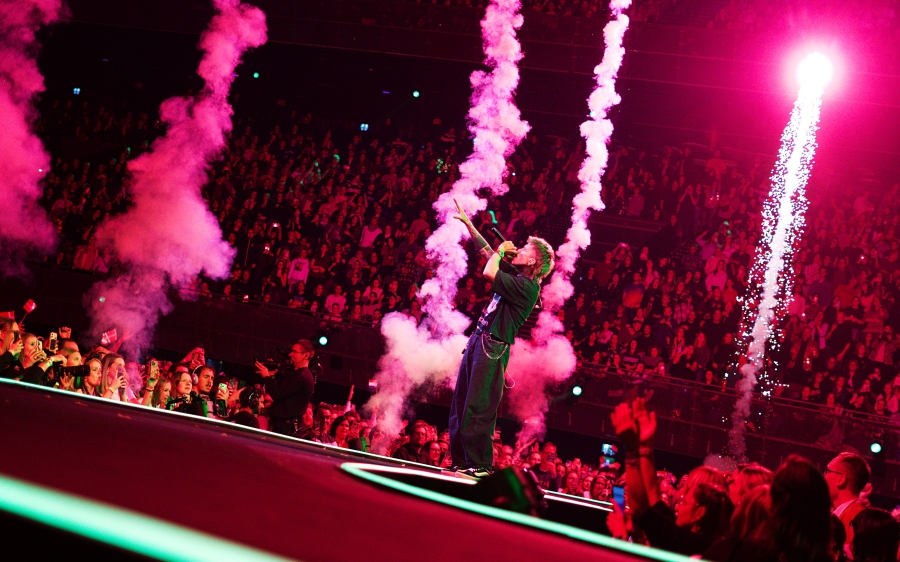
Amsterdam becomes Eurovision city for one evening during The Big Eurovision Party
An audience of around 17,000 people, singing along to virtually every song, dancing and jumping as if it were the actual Eurovision Song Contest. That was how The Big Eurovision Party unfolded on Friday 13 November at Amsterdam’s Ziggo Dome. Across 34 performances, artists from sixteen countries took to the stage, from winners such as Johnny Logan and Sandra Kim to the finalists from last spring’s contest in Vienna.
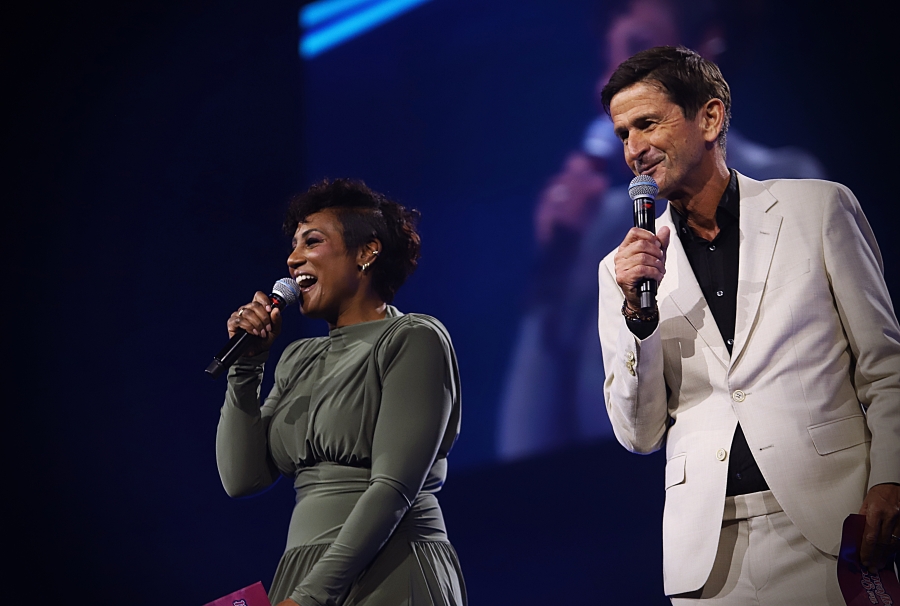
Edsilia Rombley and Cornald Maas, the regular presenters of the yearly event, guided the audience through the evening. Sometimes they did so together, sometimes with one of the artists by their side, and Cornald even ventured out into the audience. Rombley also took a moment to sing a snippet of “Hemel en Aarde”, the song with which she came fourth for the Netherlands in Birmingham in 1998. At the time, this was the Netherlands’ best result since Teach-In’s victory in 1975, and the audience had clearly not forgotten the song.
The evening opened with a medley of short instrumental excerpts, accompanied by eight dancers according to the running order. Danish performer Søren Torpegaard Lund then took to the stage with “Før Vi Går Hjem”, the song with which he brought Denmark seventh place in Vienna this spring. He was accompanied by eight dancers, flames and comets, as well as the entire audience.
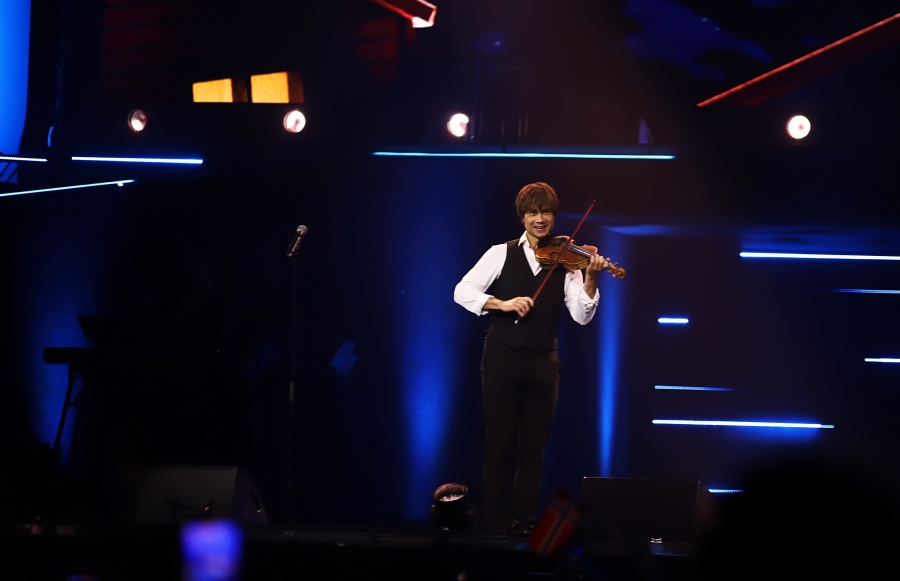
A succession of familiar faces followed. Norway’s Alexander Rybak sang “Fairytale”, with which he won the Eurovision Song Contest for Norway in 2009. This year, he tried to make a comeback through the Norwegian national selection, but came second with “Rise”, which was left out of the programme. The Viennese brother-and-sister duo Abor & Tynna, who represented Germany in 2025, performed “Baller”. They came fifteenth in Basel, but in Amsterdam they certainly managed to get the entire audience involved. Charlotte Perrelli sang the big hit “Take Me to Your Heaven”, the song with which she won for Sweden in 1999, still under her maiden name Nilsson. Estonia’s Stefan, who came thirteenth in 2022 with “Hope”, kept things stripped back, performing with just an acoustic guitar. Australia’s Andrew Lambrou, who came twelfth for Cyprus in 2023, sang “Break a Broken Heart”, with flames shooting up from the stage. He was followed by Latvian folk group Tautumeitas, who came thirteenth in 2025 with “Bur Man Laimi”. The group enveloped itself in a low curtain of smoke and overwhelmed the audience with its wonderful voices.
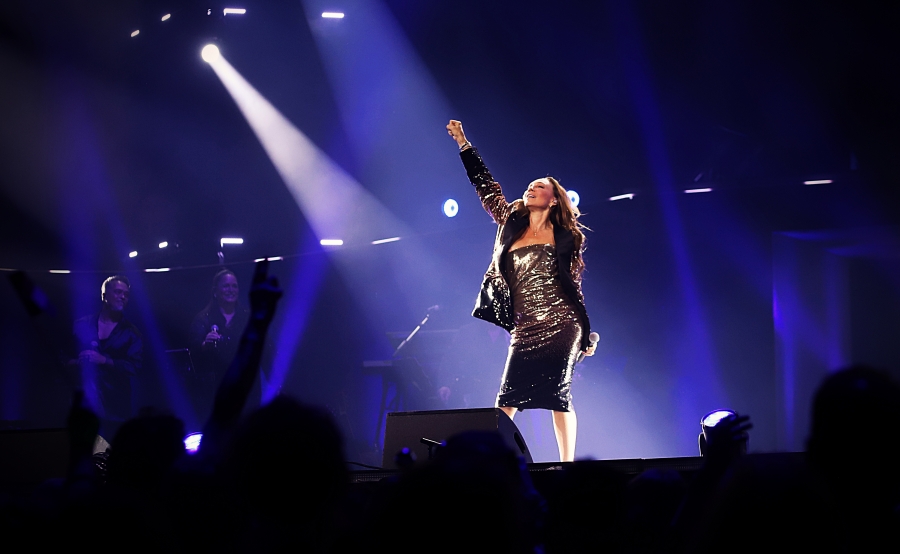
Senhit, who represented San Marino in 2021, performed “Adrenalina” with eight dancers, flames and sparks. In 2021, she sang it alongside Flo Rida, but in Amsterdam she had to do it alone. Afterwards, Senhit was draped in a green cape, followed by a cover of “Ding-a-dong”, the song with which Teach-In secured the Netherlands’ last Eurovision victory in 1975 before Duncan Laurence triumphed in 2019. Four drag queens joined her on stage for the song, although the dance beat considerably diminished its power.
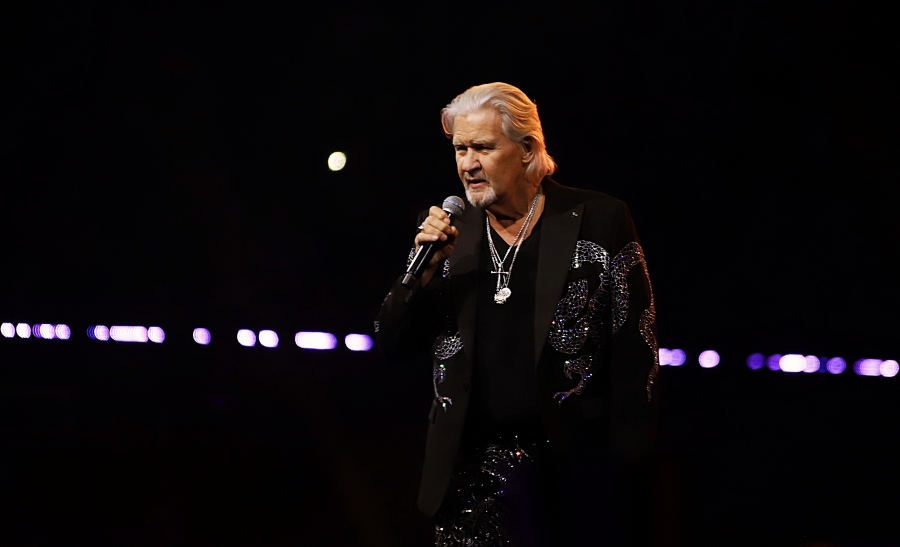
The Irish winners then had a section of their own. Johnny Logan sang “What’s Another Year”, with which he won in 1980, and “Hold Me Now”, with which he won again in 1987. He is the only person to have won three times: twice as a singer and once as the songwriter of “Why Me?”, which brought Linda Martin victory in 1992. Although Logan is now quite a few years older, the singer was undoubtedly one of the highlights of the evening. Linda Martin sang the song alongside him this time, one of the few occasions on which the two performed it together. Belgium’s Sandra Kim followed with “J’aime La Vie”, with which she won in 1986 at the age of thirteen. She remains the youngest winner ever, and is still hugely popular, despite her voice having dropped considerably in pitch over the years.
Norway’s Jonas Lovv, who came fourteenth in Vienna in 2026, performed his own “Ya Ya Ya” with a drum kit on a rolling riser, two guitars, comets and mines. Cornald Maas then ventured into the audience to gauge its opinion, making it clear that people had travelled to Amsterdam from far and wide and from many different countries for the evening. Azerbaijan’s Efendi sang “Cleopatra”, her entry for the cancelled 2020 Eurovision Song Contest, and “Mata Hari”, with which she came twentieth in Rotterdam in 2021, accompanied by a kilometre-long winding snake on the screens. The latter song is, of course, about the world-famous Dutch dancer. Denmark’s Sissal, the first Danish finalist of this decade in 2025, performed “Infinity” with four dancers in the background. That song was not an actual Eurovision entry, as she came third with it in the Danish national selection in February 2026.
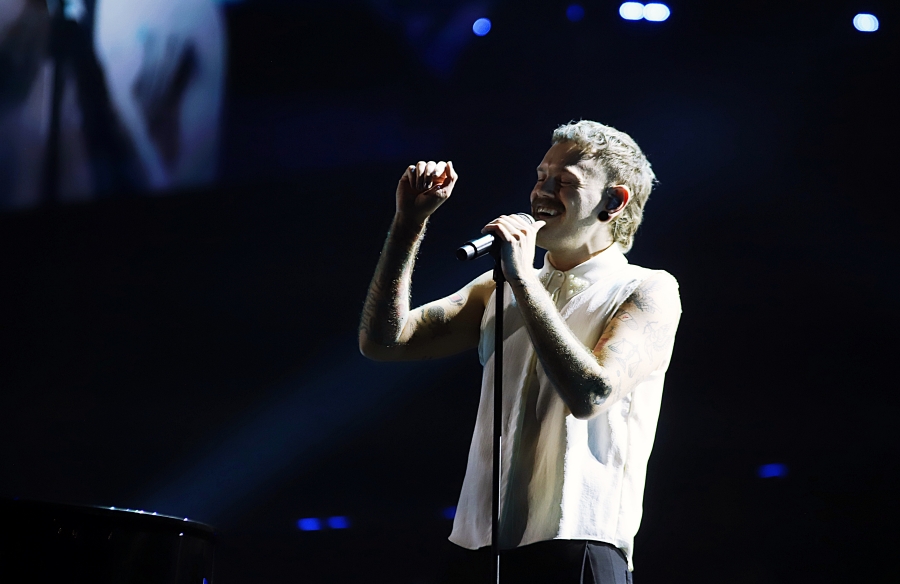
Sweden’s John Lundvik, who came fifth in Tel Aviv in 2019, sang “Too Late for Love” with his gospel-infused pop. After a brief chat with Cornald, the Eurovision party looked back at Duncan Laurence, leading into a cover of his “Arcade”. Lovv sang the song, accompanied by piano, just as understatedly as Duncan himself had once performed it. However, the goosebumps never came, even by the end of the song. Australia’s Dami Im, who narrowly came second behind Ukraine in 2016 with “Sound of Silence”, sang her song from that year. Wiwibloggs called it one of the most iconic performances of recent years. Our own Maggie MacNeal then sang “Amsterdam”, with which she brought the Netherlands fifth place in 1980. She had already come third with Mouth & MacNeal in 1974, and in Amsterdam the audience sang “Amsterdam” along at the top of their voices.
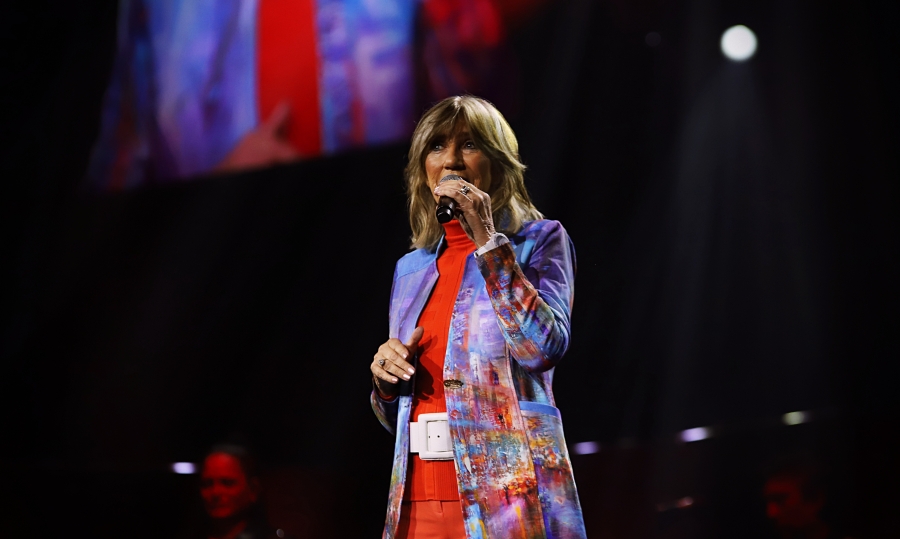
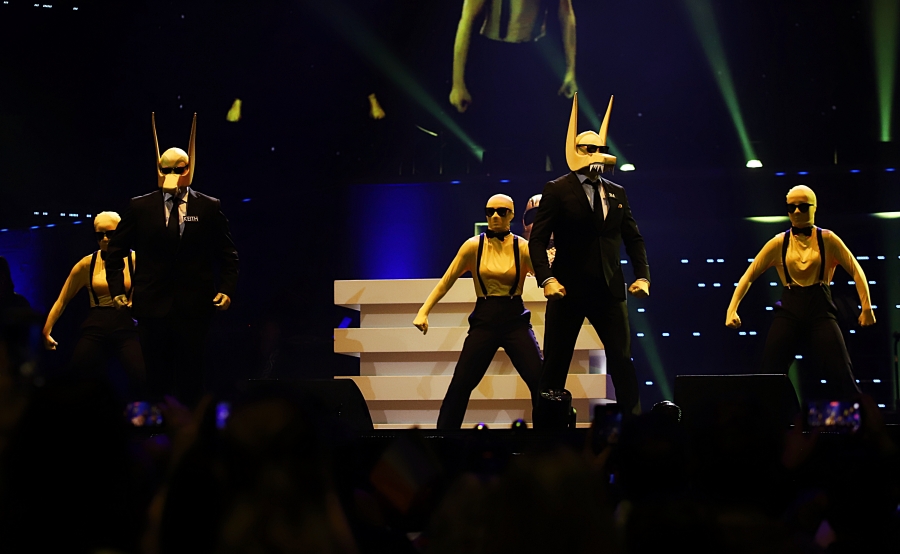
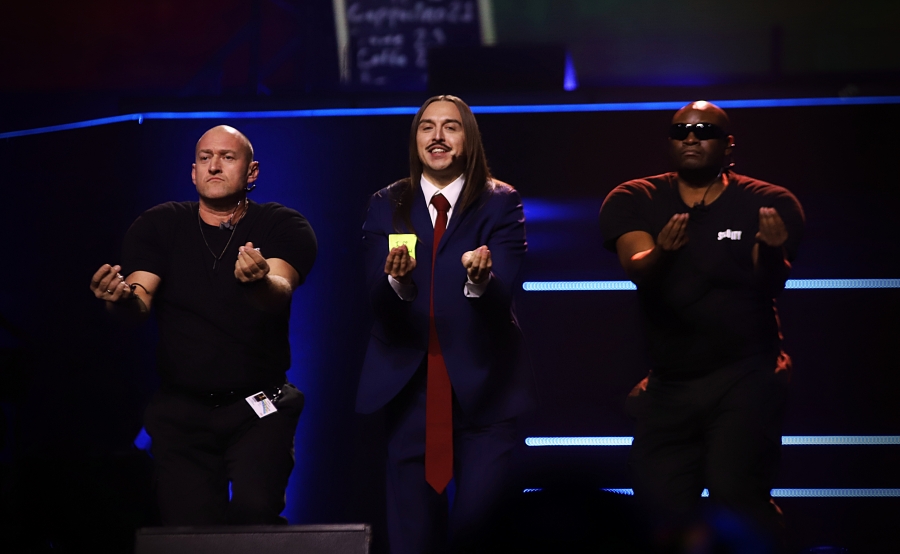
Later in the evening, a short video featuring Dara was shown. Unfortunately, she could not be there, but promised to attend next year. Bulgaria’s Victoria did perform “Growing Up Is Getting Old”, with which she came eleventh in 2021. Sweden’s Herreys, the three brothers, performed “Diggi-Loo Diggi-Ley”, with which they won in 1984. A huge hit from the past, it was warmly received, coming from one of the first boy bands of all time. Cornelia Jakobs came fourth in 2022 with “Hold Me Closer”, which she performed with great passion, and Charlotte Perrelli returned with “Hero”, with which she came eighteenth in 2008. Norway’s Subwoolfer, who came tenth in 2022 with their famous yellow wolf masks, performed “Give That Wolf a Banana” and handed out sunglasses to the audience during Emmy’s “Laika Party”. Estonia’s Tommy Cash, who came third in Basel in 2025, sang “Espresso Macchiato” accompanied by four bodyguards. Given the popularity of the song, that was probably necessary.
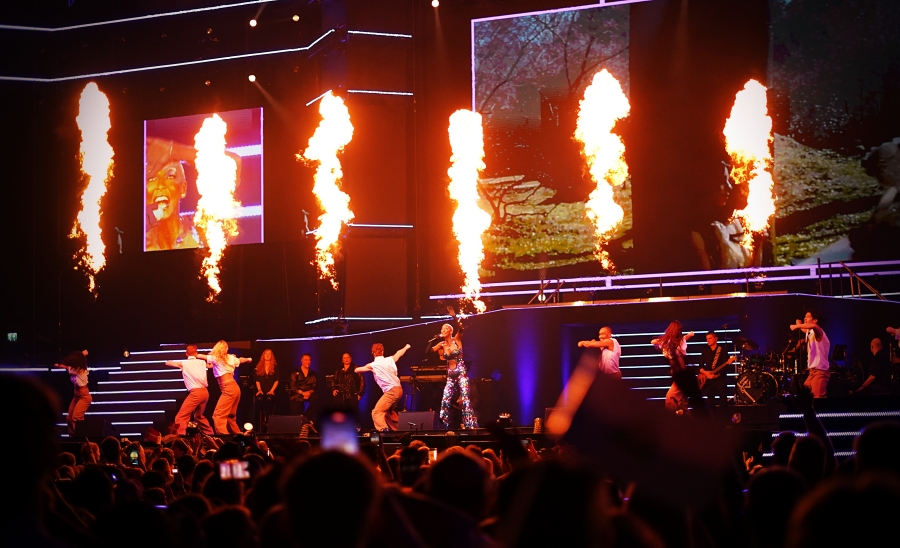
The final section was devoted to the party songs. Antigoni, who came nineteenth for Cyprus in 2026, performed “Jalla” with dancers and flames. Sissal returned with “Hallucination”, with which she reached the final for Denmark in Basel in 2025, and her performance was once again a huge success. Croatia’s Baby Lasagna, who came second behind Nemo in 2024 but won the public vote, sang “Rim Tim Tagi Dim”, and everything was thrown into the mix for this audience favourite, including drums, a DJ booth, guitar, flames and CO₂. Finland’s Käärijä, who also came second in 2023 and won the public vote, then joined him for “Eurodab”, a collaborative song that was not a Eurovision entry but had become a hit in its own right and was well received. Käärijä did eventually perform “Cha Cha Cha”, which ultimately became the highlight of the evening. At the beginning, the hugely popular artist got the entire Ziggo Dome to sit down, after which the place went absolutely wild.
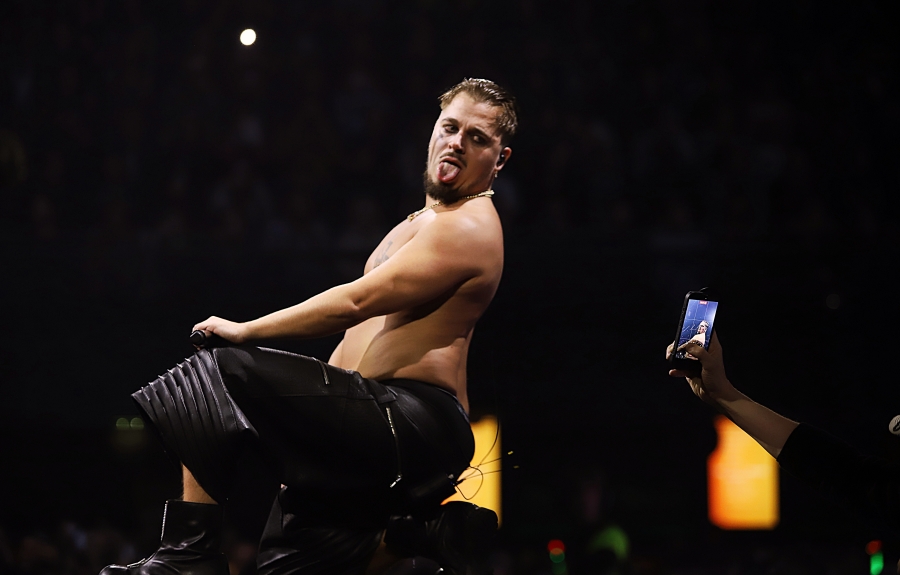
Erika Vikman, who came eleventh for Finland in 2025, brought the evening to a close with “Ich Komme”, complete with every effect imaginable. A spectacular finale to a wonderful evening, ending with an impressive fireworks display. A party that looked back on decades of the Eurovision Song Contest. A delight for all fans.