
Jazz legend Sonny Rollins has died
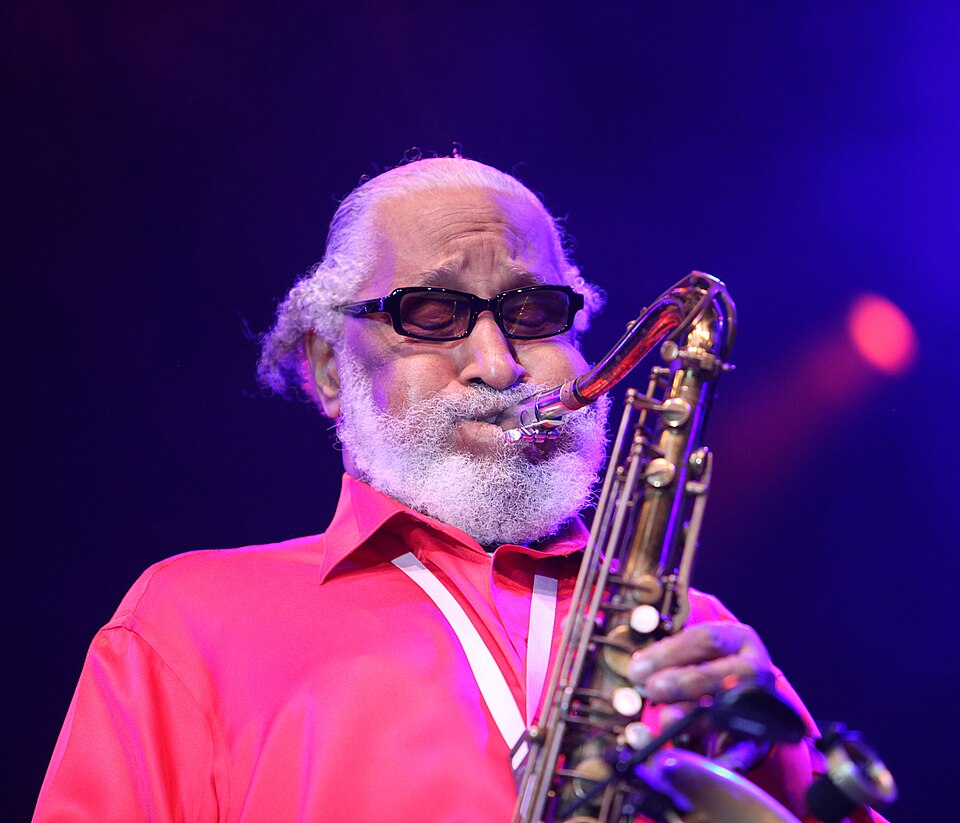
Sonny Rollins, whose authoritative tenor saxophone and unmatched gift for spontaneous invention defined an entire jazz era, died on Monday at his home in Woodstock, New York. His family confirmed the death, and no cause was given. Spokesperson Terri Hinte said that Rollins had been largely confined to his home in recent years due to various physical ailments.
Rollins was one of the last surviving members of the golden jazz generation of the 1950s and 1960s. He played with Miles Davis, Thelonious Monk and John Coltrane. Across more than 60 albums and seven decades, he established himself as one of the most important figures in American music. His original compositions, including ‘St. Thomas’, ‘Oleo’, ‘Doxy’ and ‘Airegin’, became jazz standards performed by generations of musicians. He won Grammy Awards in 2001 and 2005, plus a Lifetime Achievement Grammy in 2004.
Rollins was born on 7 September 1930 in New York. He grew up in Sugar Hill, an affluent part of Harlem known for its vibrant cultural life, where legends such as Count Basie and Duke Ellington were based. Speaking about his youth, Rollins said: ‘Growing up in Harlem gave me a sense of pride and identity. It was a lively community where Black culture was celebrated, and I carried that throughout my career.’ At high school he played in a band with future greats such as Art Taylor and Jackie McLean. Pianist Thelonious Monk took the young Rollins under his wing and regularly sneaked him into jazz clubs while he was still underage.
In those clubs Rollins met icons such as Billie Holiday and Charlie Parker, and with them the temptation of narcotics. In the early 1950s he was imprisoned twice, and in between he worked in studios with Miles Davis and Thelonious Monk among others. In 1956, after an experimental methadone treatment that finally helped him overcome heroin addiction, he released the album that made his name: ‘Saxophone Colossus’. That same year he faced John Coltrane in an unforgettable duel on ‘Tenor Madness’, a recording that became part of jazz history.
Between 1959 and 1961 Rollins withdrew from New York jazz clubs and recording studios for a self imposed break to refine his technique. He practised daily on the Williamsburg Bridge, hidden within the steel structure of the bridge. ‘I played on that bridge every day, sometimes for 15 hours,’ he later said. ‘When it was cold, I played with gloves on, no problem.’
In 1968 Rollins again withdrew for several years and travelled to an ashram in India to study yoga, Zen meditation and the Hindu philosophy of Advaita Vedanta. Speaking about his friendship with John Coltrane, he said: ‘John and I exchanged books on spirituality. We talked a lot about Buddhism and religion. He was a dear friend.’
When two planes struck the Twin Towers on 11 September 2001, Rollins, who lived nearby, had to evacuate his apartment in haste, carrying only his saxophone. Five days later he travelled to Boston and performed a concert that was later released as ‘Without a Song: The 9/11 Concert’, which won a Grammy Award. Rock fans also knew him from the Rolling Stones: on the 1981 album ‘Tattoo You’, Rollins can be heard playing a saxophone solo on the ballad ‘Waiting on a Friend’.
He attributed his declining health after 9/11 to the toxic clouds that filled the streets of Manhattan at the time. From 2014 onwards, the long term effects of pulmonary fibrosis kept him permanently sidelined. Rollins seemed to accept the approaching end with philosophical calm. ‘My body will turn to dust, just like everything on this planet,’ he said. ‘But it is not about my body; it is about my mind, my soul. Who knows how many lives I have lived? I am certain that one life is not enough.’
Sonny Rollins was 95 years old.


