
Shintaro Sakamoto – Yoo-Hoo
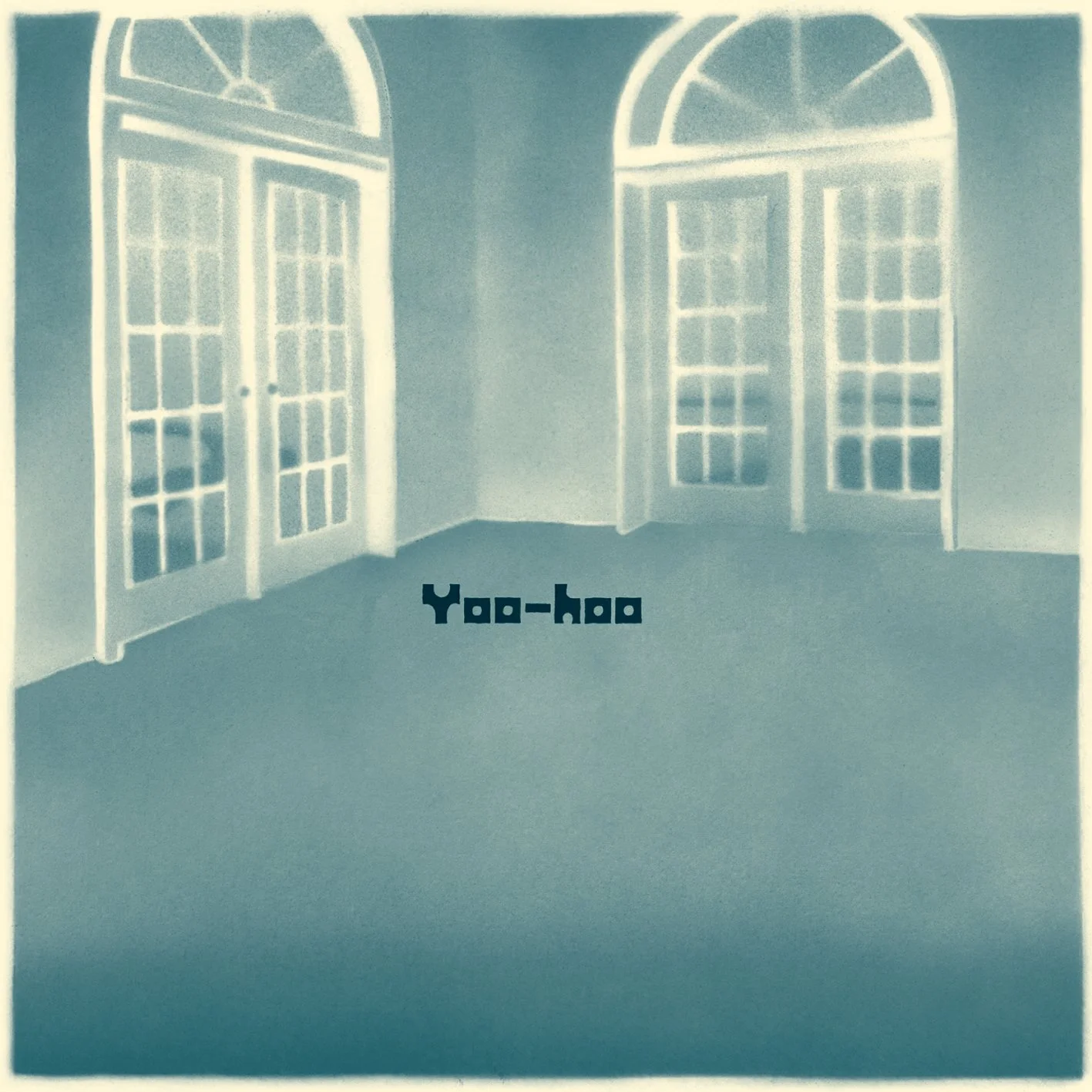
Three and a half years after ‘Like A Fable’, Shintaro Sakamoto returns with an album that feels like listening to a musical fever dream from Tokyo in 1967, yet the signal drifts through decades of global sounds, picking up Latin rhythms, Hawaiian slide guitars and Philly soul along the way. ‘Yoo-Hoo’ is Sakamoto’s fifth solo effort since the 2010 dissolution of the legendary psych-rock group Yura Yura Teikoku, confirming what devoted fans have known for over ten years: he has become a master curator of vintage grooves, filtered through a distinctly modern, delightfully skewed sensibility.
Where Yura Yura Teikoku thrived on volcanic psychedelic eruptions, Sakamoto’s solo work operates on a lower, subtler level, full of hypnotic repetition, textual details and grooves that deliberately refuse to climax. Think the cooler moments of Stereolab meeting the sophisticated playfulness of Shibuya-kei, with a healthy dose of Mood Kayō, the Japanese mid-century style heavily borrowing from Latin and Hawaiian traditions. If you have ever wondered how Air’s ‘Moon Safari’ would sound remixed by a time-travelling Japanese funk scholar with a fetish for marimba and wah-wah guitar, you are close.
The album unfolds in two distinct movements, though Sakamoto never announces the shift. Opening track ‘Dear Grandpa’ sets expectations for what initially feels like an exercise in sublime suspension. ‘Is There A Place For You There?’ follows, with stripped-down vocals melting lazily against Yuta Suganuma’s beckoning drums, establishing what The Skinny aptly described as an atmosphere of controlled slowness. The rhythm on ‘Protect Your Brain’ circles rather than progresses, built around a skeletal guiro scratch that becomes almost meditative in its insistence. These early tracks prioritise space and texture over conventional song structure; it is music that breathes rather than hurries.
Around the midpoint, something shifts. ‘On The Other Side Of Time’ reconnects with Sakamoto’s psychedelic past, the motoric pulse freed and partially darkened, as if newly heard through a haze of tropical humidity. ‘The Clock Began to Move’ continues this gradual acceleration through repetition and muted groove, while ‘Numb’, a standout track that charmed audiences during Sakamoto’s recent North American tour, finally brings the album’s latent funk sharply into focus. Built on minimalist riffs and piercing horn lines by Tetsu Nishiuchi, it is the kind of track that could comfortably feature in a playlist between early Talking Heads and Os Mutantes.
Recorded at Peace Music Studio in Tokyo with his live band—AYA on bass, Suganuma on drums, and Nishiuchi on flute and sax—with guest Manami Kakudo adding marimba to two tracks, the album bears the fingerprints of engineer Soichiro Nakamura, who worked with Boris and Guitar Wolf. The production balances crystal-clear clarity with deliberately tape-warped textures, creating a musical world that feels simultaneously vintage and futuristic. Sakamoto himself handles vocals, keyboards, and an arsenal of guitars including lap steel, while also designing the album artwork—a reminder that he is as much a visual artist as a musician.
Lyrically, Sakamoto’s observations remain characteristically indirect, offering fragments that feel like warnings woven into everyday observations. There is a subtle unease beneath the album’s light surface, appropriate for music written in an era of increasing global anxiety, even though it sounds as if it came from sunnier times.
If there is any criticism to be made of ‘Yoo-Hoo’, it is that Sakamoto’s commitment to understatement may frustrate listeners seeking more dynamic peaks and valleys. This is music that resists emphasis and release, maintaining balance even as the grooves tighten in the album’s second half. Some will find that restraint hypnotic; others might wish he would erupt occasionally as he did in his Yura Yura Teikoku days. And with 43 minutes spread over ten tracks, one could argue that a little more editing might have sharpened the album’s trajectory.
But that would miss the point. Sakamoto is not interested in conventional song dynamics or immediate gratification. He constructs immersive music where time moves differently, where a five-minute track can feel like a short meditation or an extended trance depending on your mood. It is music for late nights and long drives, for moments when you want something sophisticated enough to reward attentive listening, yet relaxed enough to fade into the background when needed.
For reference points, imagine Cortex, the French jazz-funk ensemble behind the groove sampled in ‘Tout Doucement’, collaborating with Haruomi Hosono during his exotica phase, with arrangements by David Axelrod, and vocals delivered in Sakamoto’s characteristically flattened, almost affectless style. Or more simply: it is the sound of a deeply knowledgeable record collector who has internalised decades of global pop, filtered through a singular, lightly surreal vision.
‘Yoo-Hoo’ will not convert sceptics of Sakamoto’s deliberately understated approach, but for those already attuned to his wavelength, it is another refined statement from an artist who has carved out a unique space in contemporary music. In an era of algorithmic playlists and disposable singles, Sakamoto continues to make albums that demand patient, attentive listening—and reward it generously. (8/10) (Zelone Records)


