
Peter Gabriel – o\i
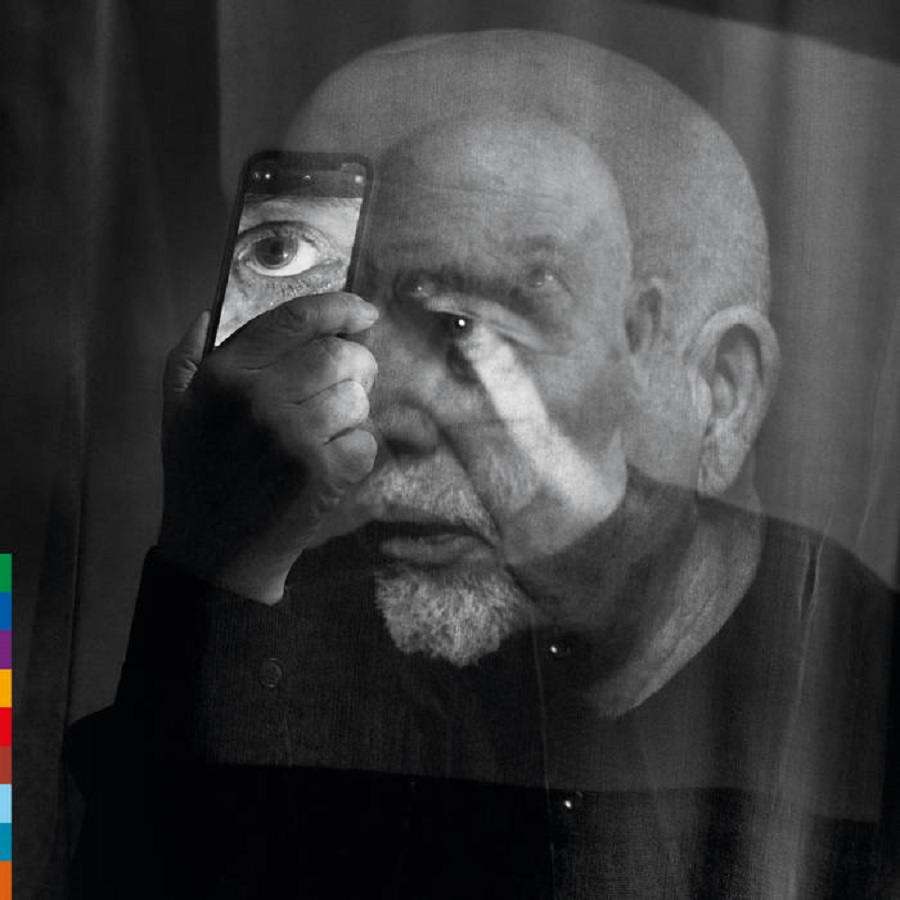
Peter Gabriel is doing things at his own pace again. Three years after “i/o”, a second instalment is ready, which by his standards is almost a sprint. On 27 November, “o\i” will be released, a thirteen-track album which, together with its predecessor, forms a project comprising twenty-five songs. Anyone who thought that the man who left Genesis in 1976 and later scored hits with “Solsbury Hill” and “Sledgehammer” had run out of ideas was wrong.
The concept is familiar. Throughout the year, Gabriel released a track with every full moon, and now the complete collection is here. Each track comes in two mixes, the Bright-Side by Spike Stent and the Dark-Side by Tchad Blake. That makes listening a little more demanding than necessary. The cleverness lies mainly in the arrangement. Almost every song begins with little more than a ticking cymbal, a burst of synthesiser or a fragment of melody, then gradually develops into something that fills the room. With Tony Levin, David Rhodes, Manu Katché and Brian Eno around, you know the musicianship is in good hands.
Opening track “Been Undone” demonstrates this immediately. It begins softly, with a tonal blanket beneath Gabriel’s voice, and ends as a mature synth groove. The lyrics list the things that can tear a person apart, from the universe to the cell. “Put the Bucket Down” is the cinematic centrepiece. A stripped-back, funky rhythm with plenty of cymbal work, layer upon layer, until after almost five minutes it suddenly opens up into an airy interlude with horns, or synths pretending to be horns. That is simply very well done. “Won’t Stand Down” delivers the political message and is far from subtle. Gabriel looks at a planet in distress and at elected representatives who have forgotten what serving others means. The message is clear and sincere, but the song lacks the detail needed to do anything substantial with it. It would certainly work at a demonstration.
Fans of the eighties will find themselves at home with “Who Are We Talking To?”, a groove full of percussion, scratchy guitar and a question-and-answer exchange about who holds the power. The answer is everyone. “A Hard Lesson” shifts from ominous electronic blips to a modern synth version of a blues riff. “Looking for the Happy” begins with gentle piano playing before the horns come in and the chorus sounds as sunny as a summer’s day in California. In contrast, there is “Face the Wall”, a song about growing older and death, sung by a seventy-six-year-old man who refuses to shy away from it.
Is there no friction, then? There is. Two lengthy records sit uneasily with the minimalism Gabriel advocates, and the message is sometimes rather heavy-handed. But the music and ideas grow on you the more often you listen. Gabriel is no museum piece. He does what he has always done, reflecting on what we have to do with one another and with the world, and he does so with a band that knows exactly what it is doing. “o\i” proves to be a rich, thoughtful and accessible album that is well worth the wait. (8/10) (Real World Records)


