
Precious Pop Pearls: The Story Behind The O’Jays – “Back Stabbers”
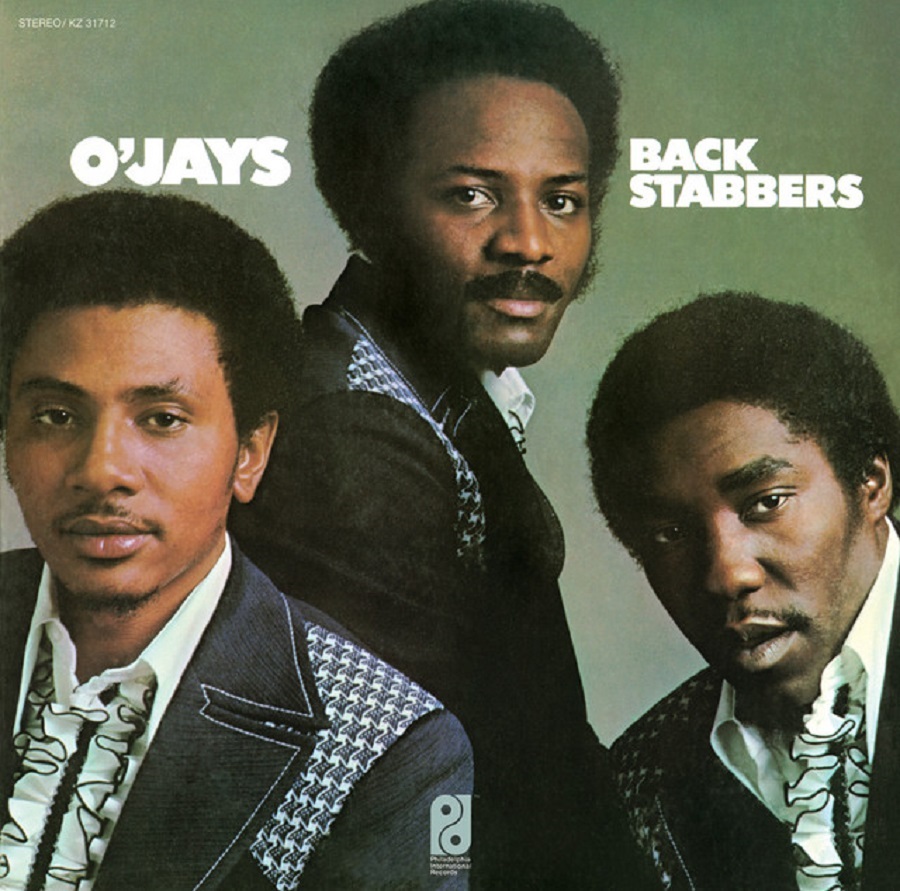
Everyone knows the feeling. A friend who drops by just a little too often, laughs a little too loudly at your jokes and lingers a little too long around your partner. In 1972, a trio from Ohio turned that uncomfortable feeling into a soul single that travelled around the world. “Back Stabbers” sounds like a celebration, with sweeping strings, a driving rhythm section and a group singing along with almost cheerful enthusiasm. But beneath the gloss lies a warning, and it proved to be understood all over the world.
The single reached number three on the US Hot 100, topped the R&B charts and also became a hit in Britain, Canada and the Netherlands. For The O’Jays, it was the moment when fourteen years of hard work were finally rewarded. For the music world, it was one of the definitive exclamation marks of Philadelphia soul, the smooth, richly orchestrated sound that would colour the seventies. This is the story of a song that saved a group and gave a city a voice.
The O’Jays
It began in 1958 in Canton, Ohio, in the corridors of Canton McKinley High School. Eddie Levert, Walter Williams, William Powell, Bobby Massey and Bill Isles found common ground in singing and initially called themselves The Mascots, later The Triumphs. In 1963, they adopted their definitive name, as a tribute to Eddie O’Jay, an influential Cleveland disc jockey who had recognised their talent and given the group a helping hand.
That same year, “Lonely Drifter” was released, earning them their first entry on the US Hot 100, although it stalled at number 93. A long series of singles followed. “Lipstick Traces” achieved modest success and reached the Canadian top twenty, but in the United States the group never made the top forty during the sixties. They fared slightly better on the R&B charts, although even there only one single reached the top ten. It was the kind of career familiar to many groups of that era: working hard, performing extensively, but never quite breaking through.
By 1972, the group was at a turning point. Isles and Massey left the line-up, leaving Levert, Williams and Powell as a trio. Serious consideration was given to calling it a day. What the three could not have known during those weeks was that producers Kenneth Gamble and Leon Huff, with whom they had already been working for several years, had just established their own record label. Philadelphia International Records would become one of the most important soul labels of the decade, and The O’Jays were offered a contract. What happened next was something they could barely have dreamed of.
Back Stabbers
The single was the group’s first release on the new label, and immediately hit the mark. The song was written by Leon Huff together with Gene McFadden and John Whitehead, a songwriting duo who would later score a worldwide hit of their own. Gamble and Huff produced it, and it was recorded at the famous Sigma Sound Studios in Philadelphia, where a regular core of outstanding session musicians shaped the city’s distinctive sound.
The story told in the song is as clear as a perfectly cut diamond. The narrator warns men about their friends, the smiling faces sitting at the table while secretly plotting to steal their wives or girlfriends. The immediate inspiration was an earlier hit with a related theme, “Smiling Faces Sometimes” by The Undisputed Truth from 1971. Towards the end of “Back Stabbers”, that song is even briefly referenced, a nod to its source of inspiration.
Musically, it is a lesson in contrasts. The strings swell like the soundtrack to a villain’s film, the horns cut sharply through the arrangement and the drums keep driving relentlessly forward, while the three voices lend the whole thing their warmth. The song lasts barely three minutes and wastes not a second. You can dance to it, you can brood along with it, and after one listen you know exactly what it is about.
In the United States, the single climbed to number three on the Hot 100 in October 1972 and spent one week at the top of the soul singles chart. It even reached number one on the Cash Box Top 100. In Britain, it reached number fourteen, in Canada number thirty-nine and in Australia number ninety-two. The Netherlands responded enthusiastically: the single reached number eleven in the Top 40 and number eight in the Daverende Dertig. It was the group’s first record to sell a million copies, and by September 1972 it had already been awarded gold status in the United States.
Anyone comparing the song with the music of its time will understand just how special it was. With his 1971 album “What’s Going On”, Marvin Gaye had shown that soul could address social issues. In 1972, Curtis Mayfield wrote the soundtrack to “Superfly”, while The Temptations experimented with lengthy, psychedelic soul epics. On the other side of the Atlantic, the charts were dominated by glam rock and flashy pop singles. Against that backdrop, “Back Stabbers” sounded remarkably fresh: richer and smoother than the raw funk coming out of Memphis or Detroit, but with a message sharper than much of what occupied the top ten. The fact that Philadelphia International also took Billy Paul to the top of the American charts during the same period with “Me and Mrs. Jones”, a song about another kind of forbidden love, demonstrates how strongly the city was telling the story of sensual, bitter and simultaneously elegant soul at that moment.
The song continued to make appearances, too. In 1977, it was used in the film “Looking for Mr. Goodbar”, where it intensified the oppressive atmosphere of nightlife, and it has since been heard on countless soundtracks and in television series. In the Netherlands, it also remains a regular fixture in the Radio 2 Top 2000.
Stephen Cummings
A soul song with such a strong melody invites cover versions, but the best-known reinterpretation did not come from the United States. Stephen Cummings, an Australian singer-songwriter who began his career with the group The Sports, released his own version in December 1983 as the third single from his solo album “Senso”.
It is a pleasantly unusual interpretation. Cummings removes the strings, replaces the rhythm section with a Drumulator-style drum machine and lets the guitars and synthesisers do the work. A cornet solo by Vince Jones gives the whole thing a gentle jazz glow, while the backing vocals are performed by a group of backing singers who preserve the swinging character of the original. The result sounds like an Australian new wave summer rather than a winter evening in Philadelphia, but the biting lyrics remain intact. An extended mix lasting more than five minutes was also released on twelve-inch single for the dance floors.
The version reached number forty on the Australian chart, a modest result that mainly demonstrates how well the material withstands a completely different interpretation. The original would also be used as a source of inspiration later on. In 2002, R&B singer Angie Stone sampled the song in her single “Wish I Didn’t Miss You”, introducing a new generation to it for the first time, without them knowing where it had come from.
Back Stabbers
The album featuring the single was released on 1 August 1972 and is the sixth studio album by The O’Jays. It was recorded at Sigma Sound Studios under the direction of Gamble and Huff, with contributions from producer and composer Bunny Sigler. The band behind the singers consisted of the city’s finest musicians, including drummer Earl Young, while the arrangements were provided by professionals such as Thom Bell and Bobby Martin. Together, they created the sweeping, orchestral sound with which Philadelphia established its reputation.
What makes the album special is that it goes well beyond a single hit. The opening track, “When the World’s at Peace”, drives forward with a groove that almost recalls James Brown’s funk. “Who Am I” is a moving ballad about doubt and an uncertain sense of identity, while “992 Arguments” is a magnificent portrait of a relationship falling apart in endless arguments. “Time to Get Down” is loose and cheerful, while “Sunshine” offers tenderness in triple time. The album closes with “Love Train”, a song that would later conquer the world in its own right.
Commercially, it was a breakthrough. The album reached number ten on the US pop album chart and number three on the soul album chart. Within a year, more than five hundred thousand copies had been sold, earning it gold status. Four singles were released, two of which became major hits. The album is regarded as one of the highlights of the early seventies and features on lists of the greatest records of all time. A remastered reissue with additional mixes followed in 2011, proof that the record continues to resonate with each new generation of listeners.
Love Train
If “Back Stabbers” was the warning, then “Love Train” was the answer. The single was released on 20 December 1972 as the third single from the album and was written and produced by Gamble and Huff. It is an almost naively optimistic song that invites the whole world to take one another’s hands and board a single train together, travelling across countries and continents. At a time of political tension and social unrest, it sounded like liberation.
The public responded with enormous enthusiasm. In the spring of 1973, the single reached number one on the US Hot 100, becoming The O’Jays’ only number one in the pop category, and it also topped the soul singles chart. In Britain, the song reached number nine, and in Canada number fifteen. The song was awarded gold status and was inducted into the Grammy Hall of Fame in 2006. Since then, it has become a kind of universal party anthem, played in every corner of the world, from weddings to sporting events.
The success opened the door to an impressive run of hits. “Put Your Hands Together” became a top-ten hit, “For the Love of Money” reached number nine in 1974 and was later inducted into the Grammy Hall of Fame in its own right, while “I Love Music” reached number five in the United States and number thirteen in Britain in 1975. In 1978, “Use ta Be My Girl” followed, reaching number four on the Hot 100 and number twelve in Britain. The albums “Ship Ahoy”, “Family Reunion”, “So Full of Love” and “Identify Yourself” achieved platinum status, and the group became the face of the label.
Success came at a price. In 1977, William Powell died of cancer at the age of thirty-five, a devastating blow to a group that had already been through so much together. Sammy Strain, known from Little Anthony and the Imperials, took his place, and The O’Jays continued to score hits on the R&B charts during the eighties. In 1987, “Lovin’ You” gave them another number one in that category. However, the pop success of the early seventies never returned.
Yet their legacy only grew. The group was inducted into the Vocal Group Hall of Fame in 2004, the Rock and Roll Hall of Fame a year later and the Rhythm and Blues Music Hall of Fame in 2013. One of the founding members, Bill Isles, died in 2019 at the age of seventy-eight. What has endured throughout all those years is the sound the group first discovered in 1972.


