
Precious Pop Pearls: The Story Behind Kajagoogoo – “Too Shy”
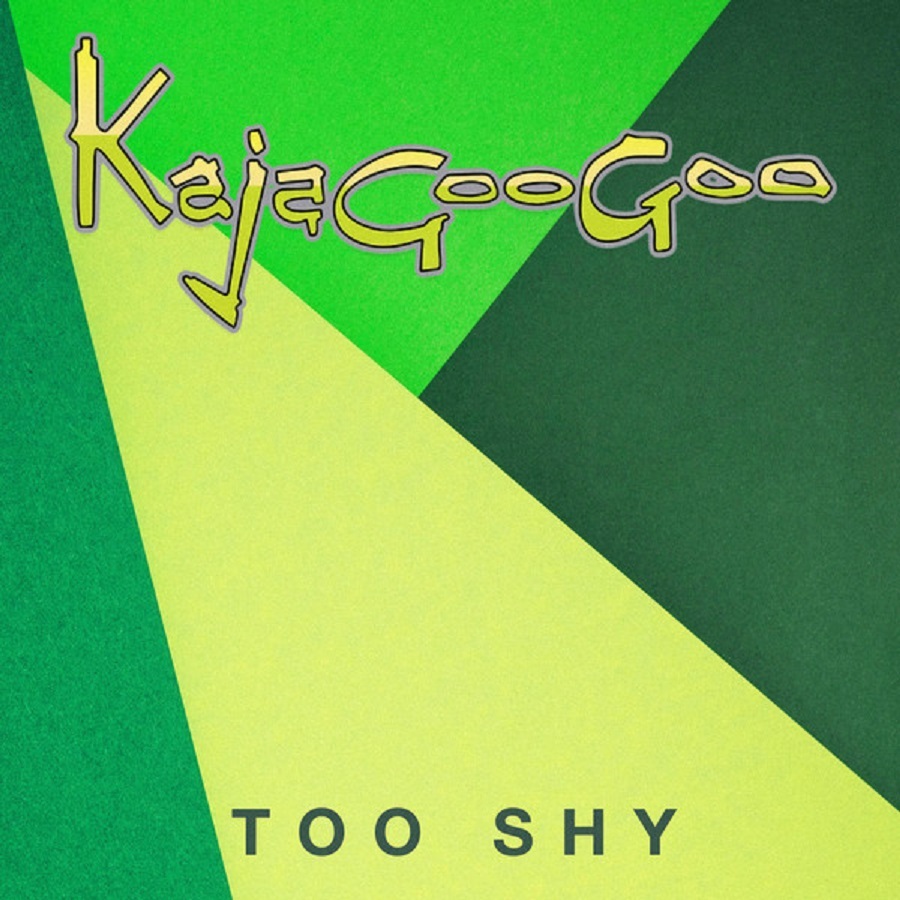
In January 1983, a single was released that stormed to the top of the British charts within three weeks. The opening note, a sustained tone by singer Limahl that began as a vocal warm up and accidentally ended up on the record, marked the beginning of one of the most recognisable pop songs of the decade. “Too Shy” by Kajagoogoo was not a gradual breakthrough but an explosion. The record reached number one in the United Kingdom, remained at the top for five weeks in Germany, conquered the number one position in Belgium and Ireland, and climbed to number five on the Billboard Hot 100 in the United States. For a debut single by an unknown band from Leighton Buzzard, that was a remarkable achievement. Yet behind that glittering success lay a story of chance, ambition, internal tensions and an inevitable downfall.
Kajagoogoo
It began in the late 1970s in Leighton Buzzard, a small town in Bedfordshire in the heart of England. Four young musicians, guitarist Steve Askew, bassist Nick Beggs, keyboardist Stuart Croxford Neale and drummer Jez Strode, formed a band they called Art Nouveau. The name revealed their artistic aspirations, although the music they made had little to do with the refined aesthetics of the Belle Époque. It was a raw, experimental group operating on the boundary between new wave and avant garde, and one of their early songs, “The Fear Machine”, sold only a few hundred copies.
In 1981, the band decided to find a singer through an advertisement in the music press. After a series of auditions, they selected Christopher Hamill, a young man with a striking appearance and a voice that suited the elegant yet energetic music the band envisioned. Hamill chose a stage name by respelling his surname. An anagram of Hamill became Limahl. It was a name as playful as the music the band began to write.
The new band name was equally eccentric. Kajagoogoo, derived from the sounds babies make, sounds absurd, but it stuck, and that was exactly the intention. The group wanted to stand out in an era already crowded with bombastic rock stars and cold electronic experimenters. They chose colour, freshness and a kind of cheerful shamelessness.
Their breakthrough into the professional music world came through a chance encounter. Limahl worked as a waiter at the Embassy Club in London, a legendary meeting place for the elite of British pop music. One evening in 1982, Nick Rhodes of Duran Duran was present. Rhodes became interested in the band, asked for a demo tape and passed it on to EMI Records. The label signed Kajagoogoo in July 1982. Rhodes, together with producer Colin Thurston, who had also produced Duran Duran’s first two albums, would guide the band’s debut album. The connection with Duran Duran was no coincidence. In 1983 that band was on its way to becoming the biggest in the world, and Rhodes brought some of that shine to his new protégés.
The band moved effortlessly within the New Romantic era, the movement that dominated the British pop landscape in the early 1980s. Bands such as Duran Duran, Spandau Ballet, Culture Club and ABC made music that sounded just as good on the dance floor as it did in the charts, and looked as good as it sounded. Kajagoogoo had the same ingredients: flamboyant hairstyles, colourful outfits, a music video that could compete on MTV with those of their contemporaries, and a musical style combining synth pop, new wave and a touch of funk.
Too Shy
The song “Too Shy” was essentially a collaboration between Nick Beggs and Limahl. Beggs had been experimenting at home in his council flat with a bass riff and a chorus that had already taken shape. The repetition of “too shy, shy, hush hush, eye to eye” had an instantly memorable singalong quality. Limahl found the lyrics in their rough form too cumbersome and rewrote large sections, after which the song took its final form.
The fact that the single was released at all was not a certainty. EMI International initially hesitated and preferred another song they considered more cheerful and accessible. The introduction also caused debate because it was too long. Yet it was precisely that introduction, Limahl’s sustained opening note, originally intended as a vocal warm up, that gave the song its character. Producer Colin Thurston suggested keeping the recording and seeing how it felt. It proved to be a stroke of genius.
The production of “Too Shy” fitted perfectly into the sound of 1983. Tight electronically programmed drums provided the song with its solid backbone. Stuart Neale’s synthesisers gave it a glossy, futuristic character. Then there was Nick Beggs’ prominent bass guitar, an instrument that usually remained in the background in new wave but here stepped forward as one of the song’s most recognisable elements. The combination of that sly bass riff and the infectious melody created a track that worked equally well on radio and on the dance floor.
The music world of early 1983 was ready for “Too Shy”. During the same period, bands such as Culture Club were scoring with “Do You Really Want to Hurt Me” and “Church of the Poison Mind”, while Duran Duran themselves were highly visible in the charts. New wave had fundamentally changed pop music. It was no longer just about guitars and drums, but also about imagery, style and how a record looked in a music video. “Too Shy” had a video that received heavy rotation on MTV, allowing the single to break through in the United States as well, a market that was crucial for many British bands of that generation.
The chart performances were impressive for a debut. In the United Kingdom, the song spent two weeks at number one and became the thirteenth best selling single of 1983. In Germany, the single dominated the top of the charts for five weeks. In 2006, VH1 placed “Too Shy” at number 27 in its list of the one hundred greatest songs of the 1980s. Decades later, the song appeared in films such as “The Wedding Singer” and “24 Hour Party People”, in the television series “Gilmore Girls”, and in the Netflix film “Black Mirror: Bandersnatch”, confirming the record’s lasting recognisability.
Midnite String Quartet
Not only pop music benefited from the compelling character of “Too Shy”. The Midnite String Quartet, an ensemble specialising in arranging pop music for strings, released an instrumental cover version of the song. The quartet is known for similar adaptations of rock songs and pop classics, focusing on preserving the melodic strength of the original in a new acoustic context.
What stands out in a string arrangement of “Too Shy” is how well the song’s melodic structure survives when all electronic elements are removed. The bass riff, which plays such a central role in the original, translates surprisingly well to the cello. The chorus, already effective in a pop context because of its simplicity, sounds almost classical in construction when performed by a quartet. It demonstrates that the songwriting behind “Too Shy” was more solid than its fleeting new wave packaging sometimes suggested.
White Feathers
On 18 April 1983, three months after the release of “Too Shy”, Kajagoogoo’s debut album appeared. It was recorded at the Chipping Norton studios in Oxfordshire and Utopia in London, produced by Nick Rhodes and Colin Thurston. The album contained ten songs and offered a broader picture of the band’s capabilities than the single alone had revealed.
White Feathers produced two further Top 20 singles in the United Kingdom besides “Too Shy”: “Ooh to Be Ah”, which reached number seven, and “Hang on Now”, which finished at number thirteen. The album itself peaked at number five on the British album chart, an excellent result for a debut. In the Netherlands, the album reached number seven.
The instrumental title track “Kajagoogoo” from the album was used by director John Hughes as the opening theme for his 1984 film “Sixteen Candles”, a popular teen comedy that captured the spirit of the mid 1980s and gave the name Kajagoogoo an additional layer of cultural recognition in the United States.
Following renewed attention for the band through the VH1 programme “Bands Reunited” in 2003, EMI decided to reissue the album on CD in the United Kingdom, including eight bonus tracks. That reissue introduced White Feathers to a new generation of listeners and confirmed the album’s status as a time capsule of the early 1980s sound.
Big Apple
While the success of White Feathers and “Too Shy” carried the band to the top, cracks began to appear behind the scenes. Limahl and the rest of the band disagreed about the musical direction. In mid 1983, the remaining members of Kajagoogoo decided to dismiss Limahl, a move the singer himself experienced as a betrayal. Nick Beggs, who had previously been a vocalist in the band’s predecessor, took over the lead vocals.
The fact that the band still scored a fourth Top 20 hit after Limahl’s departure is remarkable. “Big Apple”, released on 5 September 1983 as the first single from the second album Islands, reached number eight in the British charts and also performed strongly across Europe, reaching number one in Iceland, number seven in Switzerland and number ten in the Netherlands. The music video was filmed in New York, literally anchoring the title.
The sound of “Big Apple” was deliberately different from that of “Too Shy”. Whereas the debut single sparkled with energy, “Big Apple” was cooler and more rhythm driven, with a leaner production that traded the synth pop glitter of its predecessors for something leaning towards the funk and jazz the band would further explore on Islands. It demonstrated that Kajagoogoo was more than a one hit wonder, although nothing could match the success of their debut.
The history of Kajagoogoo illustrates a pattern that frequently recurs in pop history: the debut single as a perfect storm of timing, production and luck, followed by the question of whether that moment can be repeated. “Too Shy” was more than a hit. It was a crystallisation point of an era, a moment when British new wave encountered its own reflection in a record that was simultaneously playful and polished, danceable and melodically strong, fleeting and yet unforgettable.
Limahl would continue as a solo artist after his dismissal and in 1984 achieved his greatest international success with “The NeverEnding Story”, the title song of the film of the same name directed by Wolfgang Petersen. Nick Beggs went on to become a respected session musician and bassist, working with artists such as Steven Wilson, Anthony Phillips and Tears for Fears. The other band members each followed their own paths.
In 2008, Kajagoogoo reunited, including Limahl. A year later, EMI released the compilation “Too Shy: The Best of Kajagoogoo & Limahl”, featuring two newly recorded songs. That reunion was perhaps no surprise. Pop history does not forget its high points, and “Too Shy” is one of those high points: a record whose very first note is enough to bring back an entire era.


