
Top 10 Greatest Live Performances of All Time
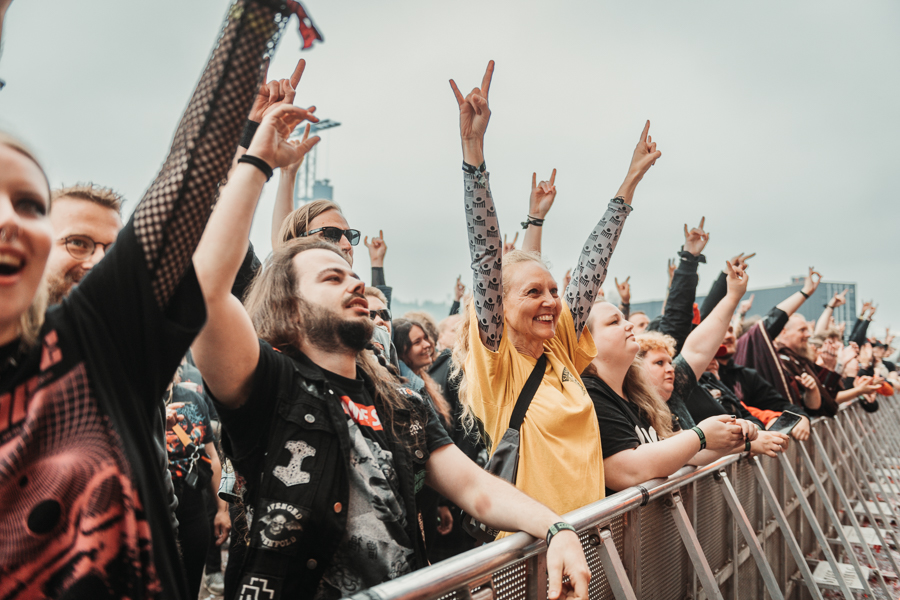
What makes a concert one of the greatest of all time? Is it the size of the audience, the technical brilliance of the performance, the cultural impact it leaves behind, or the unforgettable connection between artist and crowd? The most celebrated live shows in music history are rarely defined by a single factor. Instead, they represent a unique combination of timing, talent, atmosphere and significance. From landmark festival appearances and record-breaking stadium spectacles to intimate performances that captured a generation’s imagination, these concerts transcended entertainment and became defining moments in popular culture. Decades later, they continue to be discussed, analysed and remembered as benchmarks against which all other live performances are measured.
Top 10 Greatest Live Performances
Jimi Hendrix at Woodstock (1969)
Jimi Hendrix’s closing set at Woodstock remains one of the most iconic moments in live music history. His rendition of “The Star-Spangled Banner” transformed a national anthem into a raw, electrified statement of its era, blending protest, chaos and technical mastery in a way that still feels unmatched. The performance unfolded in a context of cultural upheaval, and that tension is audible in every note he bends and distorts. Rather than simply playing songs, Hendrix seemed to reshape the language of the electric guitar in real time, pushing feedback, sustain and tonal chaos into something expressive and deeply symbolic. Decades later, the set is still studied not only as a concert, but as a defining artistic moment that captured the spirit of the late 1960s with unsettling clarity.
Queen at Live Aid (1985)
Queen’s performance at Live Aid is often described as the greatest live set in rock history, and its impact is rooted in both precision and instinct. From the opening moments, Freddie Mercury asserts complete control over Wembley Stadium, guiding hundreds of thousands of people as if they were a single instrument. The setlist is tightly constructed, moving through “Bohemian Rhapsody”, “Radio Ga Ga” and “We Will Rock You” with almost theatrical pacing, yet it never feels mechanical. Instead, it builds a sense of collective release, where audience participation becomes part of the arrangement itself. The performance is remembered not just for its technical excellence, but for its ability to transform a massive, chaotic event into something intimate and unified.
Nirvana on MTV Unplugged in New York (1993)
Nirvana’s MTV Unplugged session revealed a version of the band that felt exposed, fragile and unexpectedly tender. Stripped of distortion and volume, the songs took on a different emotional weight, with Kurt Cobain’s voice carrying a sense of restraint that contrasted sharply with the band’s usual sonic aggression. Covers like “The Man Who Sold the World” and interpretations of their own catalogue created an atmosphere that felt closer to confession than performance. The staging, candlelit and understated, reinforced the sense that this was less a televised concert and more a private moment captured in front of an audience. In hindsight, the performance has taken on an even heavier significance, often viewed as one of the most haunting live documents of the 1990s.
Beyoncé at Coachella (2018)
Beyoncé’s Coachella headline show, widely referred to as “Beychella”, was a meticulously constructed cultural statement disguised as a festival performance. The show incorporated a full marching band, choreographed formations on a monumental scale and references to historically Black colleges and universities, all woven into a seamless narrative of identity, legacy and power. Every element, from costume design to set transitions, was controlled with near-operatic precision, yet the energy remained immediate and alive. The performance also redefined what a modern pop headline set could achieve, shifting expectations from entertainment alone to something closer to large-scale artistic authorship. Its impact extended far beyond the festival itself, influencing how live pop shows are conceived and executed.
The Rolling Stones at Altamont Free Concert (1969)
The Rolling Stones’ set at Altamont Free Concert is remembered as one of the most chaotic and unsettling moments in live music history. Intended as a West Coast countercultural answer to Woodstock, the event quickly deteriorated due to poor organisation, escalating tensions and inadequate security. By the time The Rolling Stones took the stage, the atmosphere had already become volatile, and the performance unfolded against a backdrop of visible danger and unpredictability. The music itself is overshadowed by the sense of instability, where the boundary between performer and crowd feels increasingly fragile. Altamont is often cited not for its musical achievements, but as a turning point that exposed the darker edges of the festival era.
David Bowie as Ziggy Stardust Farewell (1973)
David Bowie’s final performance as Ziggy Stardust at the Hammersmith Odeon is one of the most dramatic reinventions in live music history. Midway through the show, Bowie announced that this would be the last time he would embody the Ziggy persona, effectively ending the character in real time in front of an audience that had not expected it. The concert then transforms into something more than a performance, becoming a documented act of artistic shedding and rebirth. Musically, the set carries the glam rock energy associated with “The Rise and Fall of Ziggy Stardust and the Spiders from Mars”, but emotionally it feels like a deliberate closing of a chapter. The moment has since become emblematic of Bowie’s ability to treat identity itself as a performative medium.
Prince at the Super Bowl Halftime Show (2007)
Prince’s Super Bowl halftime performance is often cited as one of the most complete live displays of musical skill, showmanship and control. Performing in heavy rain, he turns what could have been a technical disaster into a defining aesthetic element of the show. His guitar playing is sharp and expressive, shifting between explosive solos and tightly arranged medleys that include “Purple Rain” as its emotional peak. The staging, lighting and weather combine into a surreal visual experience that enhances rather than distracts from the music. What makes the performance endure is its balance of virtuosity and spontaneity, where every element feels both planned and dangerously alive.
The Beatles at Shea Stadium (1965)
The Beatles’ performance at Shea Stadium represents a pivotal moment in the evolution of live music as a large-scale cultural phenomenon. The sheer volume of the crowd, combined with the limitations of sound technology at the time, created a situation where the audience reaction often overwhelmed the music itself. Despite this, the band delivered a focused set that demonstrated the extraordinary reach of Beatlemania at its peak. The image of tens of thousands of screaming fans reacting as one organism became one of the defining visuals of 1960s popular culture. More than a concert, it functioned as a blueprint for the stadium rock era that would follow.
Radiohead at Glastonbury (1997)
Radiohead’s Glastonbury performance came at a moment of transition for the band, following the release of “OK Computer”, an album that had already shifted their artistic identity. The live set reflects this evolution, balancing precision with a growing sense of atmospheric experimentation. Songs are delivered with both emotional urgency and a willingness to stretch into more abstract, textured territory. The performance feels tightly controlled yet subtly unstable, as if the band is testing the boundaries of its own sound in front of a massive live audience. It has since become one of the key reference points for understanding Radiohead’s emergence as a major live force.
Kanye West at the Glow in the Dark Tour (2008)
Kanye West’s Glow in the Dark Tour redefined what a hip-hop live show could look like by treating it as a conceptual, narrative-driven experience. The staging and visual design create a science fiction-inspired environment in which the music unfolds as part of a larger storyline. Rather than relying solely on performance energy, the show integrates theatrical elements, character arcs and carefully constructed transitions between songs. This approach elevated the concert format into something closer to immersive theatre, where hip hop was presented on a cinematic scale. The tour marked a turning point in how rap performances could be imagined within large arena settings.
The Evolution of Live Performances
Live performance has evolved from a straightforward reproduction of recorded material into a fully integrated multimedia and cultural experience. Where concerts once functioned primarily as a way to present songs to an audience in real time, they now operate as complex productions that combine sound, visual design, narrative structure and technological innovation. Advances in lighting, staging, sound reinforcement and digital production have expanded what is possible on stage, allowing artists to construct immersive environments rather than simply perform within them. As a result, the boundary between concert, theatre and installation has become increasingly blurred.
At the same time, audience expectations have shifted dramatically. Modern live performances are often judged not only on musical accuracy or energy, but on conceptual coherence and emotional architecture. Festivals and stadium shows in particular have become platforms for large-scale artistic statements, where identity, politics and storytelling play as important a role as the setlist itself. This evolution reflects a broader change in how music is consumed and experienced, with live shows now serving as definitive moments of connection in an otherwise fragmented digital landscape.
In the end, the greatest live performances endure because they capture something that cannot be fully rehearsed, reproduced or reduced to a recording. They exist in a fleeting space where sound, atmosphere, audience and circumstance collide in a way that feels singular and unrepeatable. Whether defined by technical brilliance, emotional intensity or cultural impact, these moments remind us that live music is not just about songs being played in front of people, but about shared experience unfolding in real time. Long after the stages are dismantled and the crowds have gone home, what remains is the memory of having witnessed something that briefly felt larger than music itself.


