
Precious Pop Pearls: The Story Behind Deep Blue Something – “Breakfast at Tiffany’s”
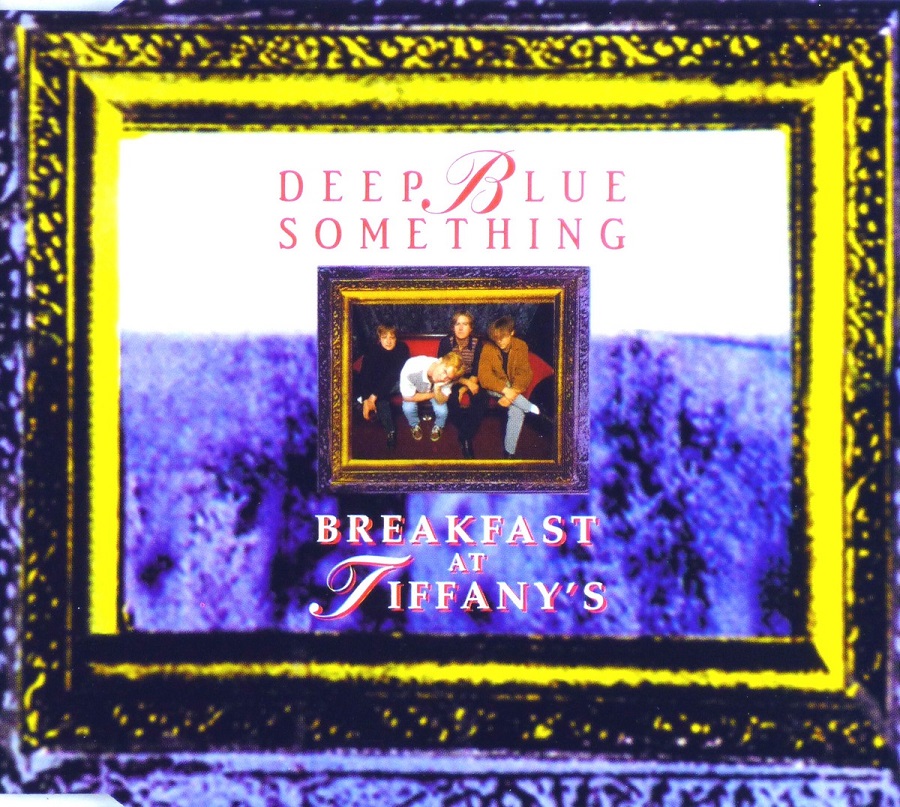
From the moment the acoustic guitar kicks in, and the breezy melody unfolds, you are taken back to the mid-nineteen-nineties, a time of flannel shirts, wandering guitar pop and radio shows that barely policed the boundary between alternative rock and mainstream. But behind that carefree sound lies a story of literary inspiration, unexpected success, legal disputes and a band that never fully received the recognition its debut hit might have deserved. “Breakfast at Tiffany’s” by Deep Blue Something is one such song.
Deep Blue Something
The band was formed in 1991 in Denton, Texas, by brothers Todd and Toby Pipes, who were studying at the University of North Texas. The brothers brought drummer John Kirtland and guitarist Clay Bergus on board. The group initially performed under the name Leper Messiah, taken from a line in David Bowie’s “Ziggy Stardust”. The final band name came from a long instrumental track on their setlist, a name that made no sense and therefore stuck.
Denton in those years was a fertile breeding ground for alternative music, and the Pipes brothers eagerly absorbed that culture. Unlike the grunge acts that defined the era, they chose a folk-rock approach. This set them apart from contemporaries such as Nirvana, Pearl Jam and Stone Temple Pilots, who dominated the landscape with heavy guitars and dark themes. Deep Blue Something sounded light, melodic and accessible, closer to the Gin Blossoms or Counting Crows than the harder edge of alternative rock.
Bergus left the band before the first album was recorded. The group independently released the album “11th Song” in 1993. After its release, Kirk Tatom joined as guitarist. The band grew organically, supported by the vibrant local music scene and a growing following in the Dallas-Fort Worth region.
Breakfast at Tiffany’s
The story of “Breakfast at Tiffany’s” begins with a sofa, a television and a glance at the clock. Todd Pipes was working on his master’s degree and taking a prose poetry course. He wondered whether it was possible to write a hit song that did not rhyme. At the same time, he had the phrase “Breakfast at Tiffany’s” in his head, without quite knowing why it sounded so right. One afternoon, he sat down at home, turned on the television and saw an Audrey Hepburn film. That sparked something, he picked up a guitar, the chords D, A and G came naturally, the chorus followed immediately, and before he knew it, he had to leave for his part-time job at the library. The film “Roman Holiday” inspired the lyrics, but Pipes felt another Hepburn film would make a better song title.
The result was a song about a dying relationship, where the narrator desperately searches for something that connects the two people. The only shared thing he can think of is that they both vaguely saw a film. It is an amusing yet touching premise, and it was exactly that everyday humanity that made the song timeless.
The track originally appeared on the album “11th Song” from 1993, but was later re-recorded for the album “Home” from 1994. When local radio stations began playing the new version heavily, the band signed to Interscope Records, which re-released “Home” with full promotional backing. Released as a single in July 1995, “Breakfast at Tiffany’s” reached number five on the US Billboard Hot 100 in January 1996. Outside the United States, it reached number one in the UK singles chart and the top ten in Australia, Belgium, Canada, Denmark, Germany, Iceland, Ireland and Sweden.
The music video strongly contributed to its success. In it, the band arrives at a breakfast table served by butlers outside Tiffany & Co in Midtown Manhattan. At the end, a young woman walks past dressed like Holly Golightly from the opening scene of the film, but in white instead of black. The video was heavily rotated on MTV and helped the single break worldwide.
The single fitted the era perfectly. In 1995 and 1996, songs like “Waterfalls” by TLC, “Gangsta’s Paradise” by Coolio and “You Oughta Know” by Alanis Morissette dominated the charts. In the middle of all that intensity, “Breakfast at Tiffany’s” sounded like a refreshing, almost innocent counterpoint. Critical reactions were divided. The British trade magazine Music Week gave it five stars and named it single of the week, praising its radio-friendly nature, surprising chorus and guitar work. On the other hand, VH1 and Blender placed it on a list of the fifty worst songs of all time. Rarely was a single so simultaneously loved and dismissed.
Andrea Begley
That “Breakfast at Tiffany’s” did not lose its impact after the nineties was shown by the cover recorded by Northern Irish singer Andrea Begley in 2013. The version appeared on her debut album “The Message”, released after she won the second series of The Voice UK.
Begley, who was officially registered as blind at the age of nine, grew up in the village of Pomeroy in County Tyrone, Northern Ireland, within a strong Irish musical tradition. She entered The Voice UK partly because the format of judges not seeing the audition appealed to her. Her interpretation of the song was stripped back and restrained, far removed from the energetic guitar pop of the original. Where Deep Blue Something delivered the lyrics playfully and lightly, Begley added a melancholic undertone, revealing a new dimension in a song many already knew. Her debut album reached number seven on the UK album chart, proving that “Breakfast at Tiffany’s” could transcend generations and genres.
Home
“Breakfast at Tiffany’s” was the undisputed jewel of the album “Home”, but the album deserves more attention than it received in the shadow of its own hit. In 1994, the band released “Home” through the independent label RainMaker Records, and it was reissued a year later via Interscope.
The album contains twelve tracks and spans a wide range of influences, from shoegaze to arena rock. It opens with the instrumental “Gammer Gerten’s Needle” and includes tracks such as “Halo”, “Josey”, “A Water Prayer” and “Red Light”. It also features a cover of The Beatles’ “Dear Prudence” as a B-side. Critics were ambivalent. Some praised its ambition and variety; others felt it did not live up to the promise of the hit. Nevertheless, “Home” achieved gold status in the United States, with more than five hundred thousand copies sold. It proved there was an audience for the band, even if that audience would ultimately be remembered as the sum of a single song.
Halo
Looking deeper into Deep Blue Something’s catalogue, one finds “Halo”, a track on the same album as the big hit, but showing a very different side of the band. Where “Breakfast at Tiffany’s” is direct and accessible, “Halo” sounds more mysterious and atmospheric, with lyrics circling desire, addiction and spiritual uncertainty. The song was released as a single but did not enter the main Billboard Hot 100, though it did appear on the Bubbling Under chart just below the official top hundred.
“Halo” illustrates why the label one hit wonder is somewhat unfair in the case of Deep Blue Something. The band had more to offer than the sometimes cartoonish image of a group lucky with one song. But the music industry and the wider public were less forgiving. The enormous success of the hit and the lack of follow-up success cemented their reputation.
The later history of the band was shaped by legal disputes. They worked on a third album, “Byzantium”, but ran into copyright issues concerning rights to previously released material. After the legal matters were settled, Interscope shelved the album to focus on other artists. It was eventually released in 1998, but only in Japan. The band split in 2001, before reuniting again at the end of 2014.
The story of Deep Blue Something is one of brilliant chance and difficult circumstances. A student wrote a song while rushing to a part-time job, and that song travelled the world. Thirty years later, “Breakfast at Tiffany’s” appears on almost every nineties playlist, plays in films and television series, and is sung by people who barely knew there was a band behind it.
After reuniting in 2014, all members signed to the independent label Kirtland Records, and the band continued touring and making new music. The Pipes brothers have remained active in music as producers and solo artists. By the thirtieth anniversary, the total had reached almost four hundred million streams. Those are not the numbers of a forgotten curiosity from the nineties. Those are the numbers of an evergreen pop classic.


