
Eric Clapton fairly anonymous in Amsterdam
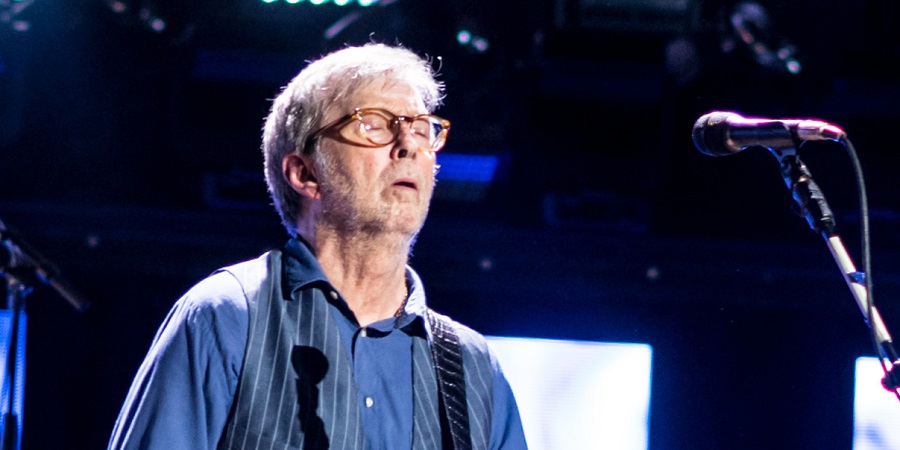
The Ziggo Dome in Amsterdam was on Friday evening arranged with a sober but atmospheric setup that fitted well with the character of the music of Eric Clapton. The decor consisted of warmly lit hanging lamps that created an intimate atmosphere above the stage, while screens in the background showed live images of the band in a visual setting with fitting projections. The whole performed a calm, almost club like appearance inside a large venue.
The evening revolved around music without much embellishment or extensive storytelling. Clapton, who has now reached an age where many artists have long since stopped touring, once again chose an approach in which the playing itself was central. His long career as a guitarist and songwriter, rooted in British blues rock and his work with, among others, Cream, was audible in the way the set was constructed.
The support act came from Jett Rebel, who delivered an energetic set with his band. The performance was sharp and direct, with a clear playfulness that formed a strong contrast with what would follow later in the evening. In a relatively short time, a high intensity was reached, which was less present for the rest of the night.
Clapton opened electrically with “Badge”, from the album “Goodbye” from his period with Cream. This was followed by “Key to the Highway” and “I’m Your Hoochie Coochie Man”. With “If I Don’t Be There by Morning”, from the album “There’s One in Every Crowd”, he brought a song from a long time ago back into the setlist. “I Shot the Sheriff”, originally by The Wailers, closed this first part.
In this early part of the show, it stood out that the audience was not equally attentive everywhere. While the band played tightly, there were moments on the floor where conversations remained clearly audible during the songs, which negatively affected the experience in some places, as if people did not realise that Slowhand was already on stage. The extremely disrespectful treatment of music and artists today is simply an insult to hear, and one may wonder whether such an audience is actually worth performing for.
The transition to the acoustic set brought a different atmosphere. The band left the stage and it was prepared for an acoustic setting. It had some effect on the audience, which in this set paid a bit more attention to the world star. The now 81-year-old Clapton began with “Kind Hearted Woman Blues” by Robert Johnson. After that, the band returned, and bassist Nathan East swapped his electric bass for an upright bass, which made the sound softer and warmer. “Nobody Knows You When You’re Down and Out” and “Golden Ring” followed at a more restrained pace.
Only after “Nobody Knows You When You’re Down and Out” did Clapton briefly address the audience. It remained at two short sentences. Otherwise, he let the music do the work. “Layla”, originally from Clapton’s own Derek and the Dominos from 1970, received an acoustic performance that remained clearly recognisable in structure, followed by the emotional “Tears in Heaven”. He wrote that song for his late son, which caused a noticeable quiet moment in the hall and visibly affected many present.
The second electric set brought more volume and rhythm again with “Tearing Us Apart” and “Old Love”. Clapton played in a controlled and restrained way, with his experience as a guitarist clearly forming the basis of the performance. With “Cross Road Blues” and “Little Queen of Spades”, both rooted in the work of Robert Johnson, he returned to his blues foundation.
Also in this part, engagement in the hall remained mixed. Alongside attentive listeners, there were again moments where conversations ran through the music, especially in quieter passages. With “Cocaine” from 1977, written by J.J. Cale, the regular programme was closed, with the audience finally singing along at full voice. This was for the first time during the evening, and that says enough.
The encore (had the audience deserved it, or was it an example that an encore should not necessarily remain mandatory on the setlist?), consisted of “Before You Accuse Me” by Bo Diddley, after which the band bowed and left the stage. Only East still managed to steal the show by briefly filming the Amsterdam audience with his mobile phone, but that was all.
The performance showed a well-played set, carried by experience and craftsmanship, in a visually carefully designed setting that supported the music without being overly present. To say that Clapton was simply playing a CD would be exaggerated, as the evening was too full of brilliant solos for that, but anyone watching the audience saw little euphoria or appropriate respect for the legend. And that, while it might well have been the last time the British blues giant visited our country. Respect for Clapton, at least for him.


Related Posts
-
 Die Heuwels Fantasties and Fokofpolisiekar turn Shepherd’s Bush Empire into South African punk capital
-
 Jailbreak Festival: Day Two Highlights in Horsens, Denmark
-
 Gizmo Varillas Brings Spanish Sunshine and Percussive Rhythms to Paris
-
 Calvin Harris and Lewis Capaldi made 4th day of Sziget a day to remember