
Precious Pop Pearls: The Story Behind The Waterboys “The Whole of the Moon”
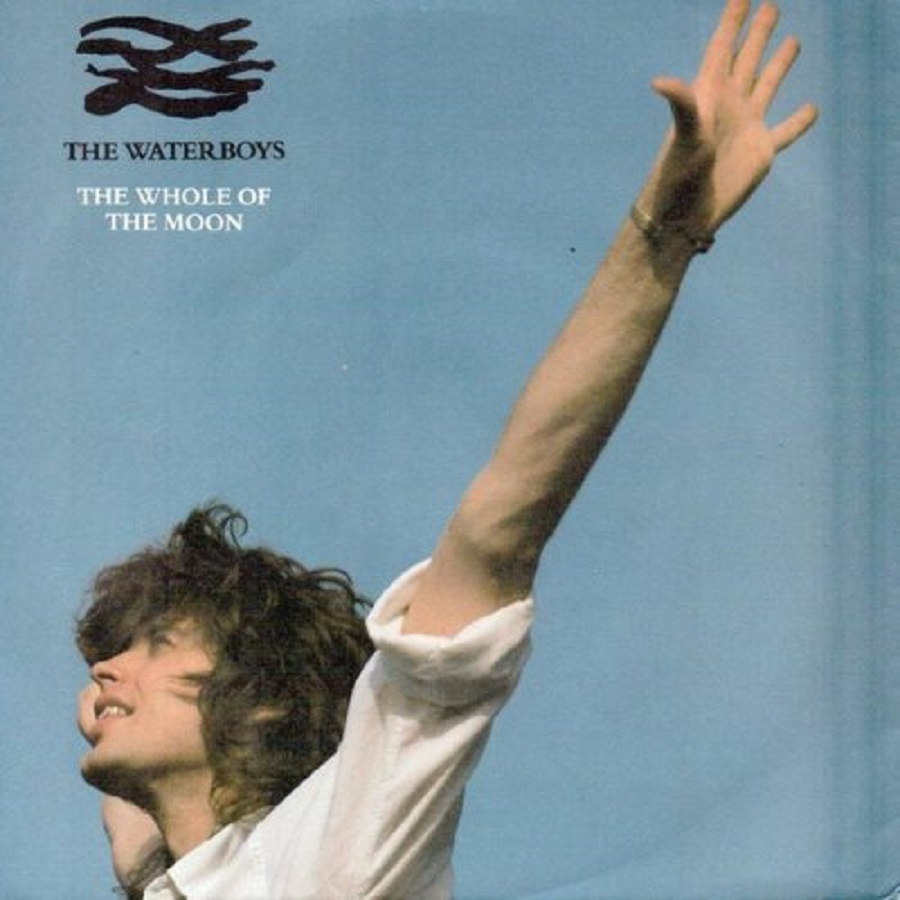
Some songs only take on their true scale years after their release. Songs that, upon first release, have to wait for the audience they deserve, until time grants them the authority they always merited. ‘The Whole of the Moon’ by The Waterboys is such a song: released in October 1985, initially only a modest entry in the charts, but over the decades it has grown into one of the most cherished pop songs of the 1980s. It is a hymn to wisdom and wonder, to the realisation that some people see the world with a wider perspective than others. Above all, it is a monument to the poetic power of one man: Mike Scott.
The Waterboys
The Waterboys are a rock band formed in London in 1983 by the Scottish musician and songwriter Mike Scott. The band’s line-up has changed continuously over the years, with Scott remaining the only constant. Over more than four decades, the band has drawn on a wide range of styles, from punk rock and rock and roll to folk, Celtic soul, country and rhythm and blues.
Scott was born in Edinburgh and partly grew up in Ayr. From a young age he was passionate about music, influenced in part by soul musicians such as Otis Redding. At fifteen, he formed his first band, started his own music fanzine called Jungleland and played in local punk groups. He later studied English literature and philosophy for a year at the University of Edinburgh, a background that would permanently shape his songwriting. The British poets William Blake and William Butler Yeats would continue to inspire him throughout his life.
Scott began his career as a guitarist and frontman of the Edinburgh band Another Pretty Face, which he later moved to London and renamed Funhouse. When he became dissatisfied with the direction of that band, he began writing solo material, which eventually led to the formation of The Waterboys.
In their early period, The Waterboys combined a rock sound related to early U2 with elements of classical trumpet, jazz saxophone and contemporary keyboards. Critics described this sound as ‘Big Music’, a term Scott himself coined and shared with contemporaries such as Simple Minds and Big Country. Where U2 embraced the world with large-scale messages of hope, Scott chose a more individual and literary path.
The Whole of the Moon
It began on a cold January night in New York City in 1985. The song was the only one not yet largely completed at the start of the recording sessions for ‘This Is the Sea’. It began as a sketch on the back of an envelope on a windy street in New York and was only fully completed in May 1985 in a London studio. Scott’s girlfriend had asked him whether it was easy to write songs. As he looked around and saw the moon in the sky, the opening line came to him. He wrote the words on that envelope and developed the song further over the following months.
The message of the song was deliberate. In every line, the singer describes his own limited perspective and immediately contrasts it with the greater vision of the person he is singing about. The lyrics were inspired by Scott’s admiration for people who seemed to inhabit a far richer inner universe than himself, including Jimi Hendrix and Syd Barrett. The official view is that the song is a composite portrait of many people rather than one specific individual.
The musical influence on the arrangement was clear. Scott asked keyboard player Karl Wallinger to play a synth line inspired by Prince, whose work he and Wallinger had discovered together after seeing the film ‘Purple Rain’. A striking feature of the song is the trumpet work of classically trained Roddy Lorimer. Scott wanted the trumpets to have a similar impact to the flugelhorns in ‘Penny Lane’ by The Beatles, like sunlight breaking through clouds. Lorimer spent three days working with Scott on the arrangement. Saxophonist Anthony Thistlethwaite provided a solo at the end, while an explosive sound was achieved by adding echo to a fireworks recording from a BBC sound effects record.
At its initial release in October 1985, the song was not a major success. It only reached the lower regions of the charts, although it reached number twelve in Australia and number twenty-six in the United Kingdom. Promotion was hindered because Scott refused to appear on the popular British television programme Top of the Pops, which required artists to mime. It was a principled decision that cost him commercially but underlined his artistic integrity.
On its re-release in March 1991 as part of the compilation ‘The Best of the Waterboys 81 90’, ‘The Whole of the Moon’ reached number three in the British singles chart. In 1992, it won the Ivor Novello Award for best song musically and lyrically. The song now has more than 138 million streams on Spotify, almost four decades after its first release.
Prince
The circle closed in a remarkable way when Prince, the musician who had partly inspired the sound of ‘The Whole of the Moon’, performed the song himself years later. Scott had already acknowledged the influence by writing on the record label: ‘For Prince, U saw the whole of the moon’, a reference to the Prince-inspired sonic world he and Wallinger had created together.
In February 2014, Prince played at the smallest venue of his Hit and Run tour in London, the jazz club Ronnie Scott’s, with a capacity of only 250 people. In an intimate performance with his band 3rdEyeGirl, he unexpectedly covered ‘The Whole of the Moon’. Those present described it as almost surreal, the man who had unknowingly helped shape the song now singing it himself.
In his version Prince completely reversed the perspective of the lyrics so that he himself was the one seeing the whole moon. He also adjusted certain lines and added references to his own work, a typical Prince intervention, absorbing the song and making it his own while returning it to the world with added meaning. In 2015, he covered the song again in Minneapolis at Paisley Park Studios, once more with 3rdEyeGirl. The fact that he returned to it repeatedly shows its lasting power.
This Is the Sea
‘This Is the Sea’ is the third studio album by The Waterboys, released on 16 September 1985 by Ensign Records. It is regarded as the final album of the band’s Big Music period and is considered by critics to be the peak of their early rock-oriented sound. It reached number thirty-seven in the UK album chart.
Scott himself describes it as the record in which he fulfilled all his youthful musical ambitions, the definitive expression of the early Waterboys sound. He cited The Velvet Underground, Van Morrison’s ‘Astral Weeks’ and the minimalism of Steve Reich as influences. It is an album that seeks grandeur without becoming pompous, and poetry without pretension.
‘This Is the Sea’ was also the last album to feature a substantial contribution from Karl Wallinger. His relationship with Scott was creatively fruitful but also tense, with both struggling to fully acknowledge each other’s contributions. Wallinger left the band at the end of 1985 to form World Party. His departure marked the end of a creative partnership that had helped define the album, and it opened the way for a new phase. Scott moved to Ireland, embraced Celtic folk music and in 1988 released ‘Fisherman’s Blues’.
In 2024, the making of ‘This Is the Sea’ was documented in a box set titled ‘1985’, containing demos, alternative versions and live recordings that trace the creative process day by day. It offers a rare insight into an album that outlived its era.
Don’t Bang the Drum
‘Don’t Bang the Drum’ is the opening track of ‘This Is the Sea’ and immediately sets the tone for the album. The song was partly shaped by Karl Wallinger, who at the time played a central creative role in the band. Scott refined and rewrote the arrangement several times before it reached its final form, a driving, powerful track combining saxophone, piano and electric guitar into a sound larger than the sum of its parts.
Where ‘The Whole of the Moon’ is an ode to vision and enlightenment, ‘Don’t Bang the Drum’ is a call for independence and original thought. Together they represent two sides of the same artistic belief, that there is more than what everyday life shows, and that it is the artist’s task to uncover it. The song was released as a single in countries including Germany and remained a regular part of The Waterboys’ live sets.
The story of ‘The Whole of the Moon’ is essentially the story of a song that was ahead of its time, or rather,
a song that needed time to prove it would outlast it. The Waterboys disbanded in 1993 but were revived by Scott in 2000 and continue to release albums and tour worldwide. ‘The Whole of the Moon’ travels with them as proof that the best songs do not expire. They grow, deepen and find new listeners who understand them.
Perhaps that is exactly what the song itself says, that some things truly span the full extent of the moon while we often only see its crescent.


