
Dry Cleaning – Secret Love
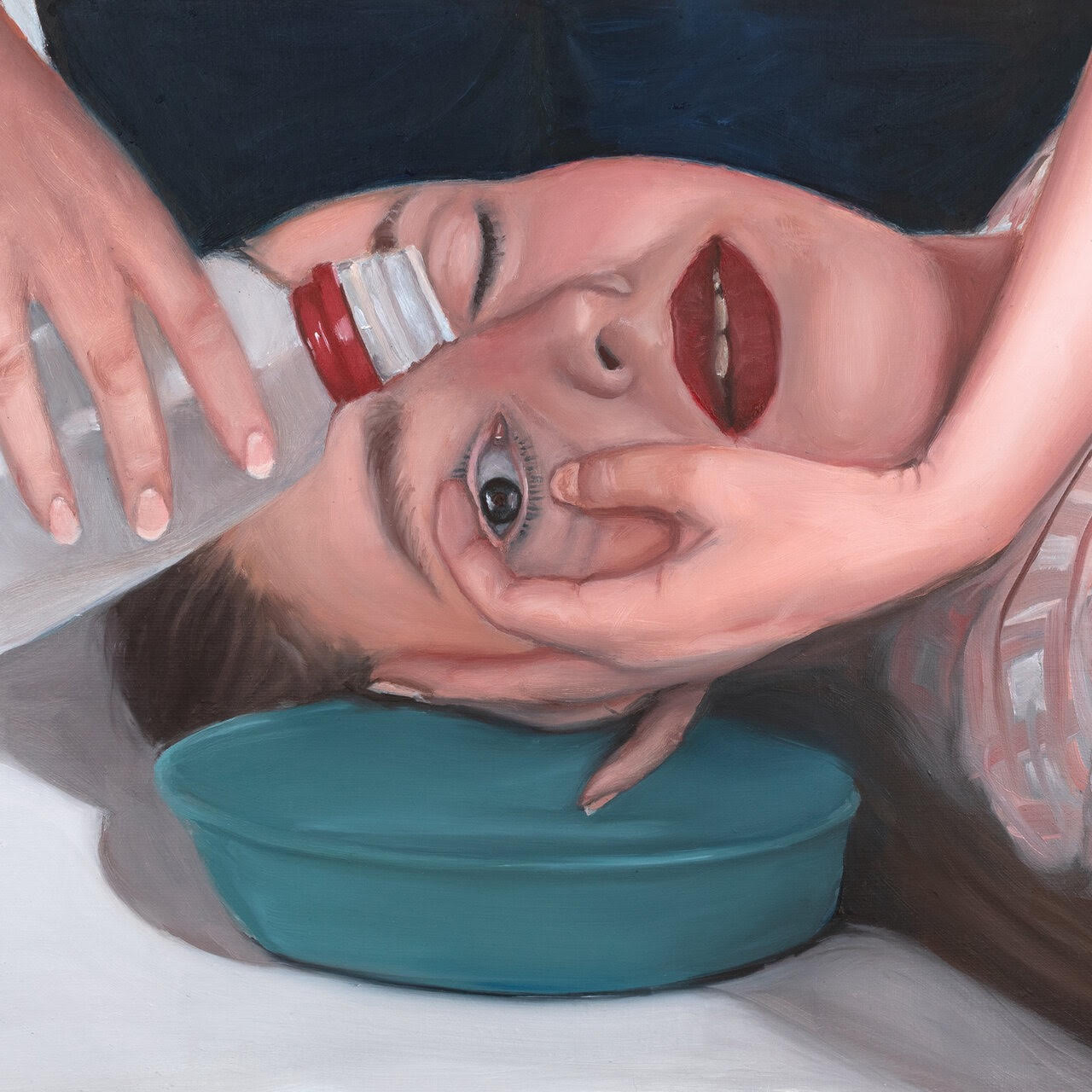
There are bands that intrigue you from the very first moment, and there are bands that slowly crawl under your skin until you realise you can no longer do without them. Dry Cleaning unmistakably belongs to the latter category. With their third album “Secret Love”, the London quartet have delivered a record that is not only their most layered production to date, but also a convincing statement that spoken-word post-punk is far from exhausted. Anyone familiar with their breakthrough single “Scratchcard Lanyard”, with that now-famous line about the “Tokyo bouncy ball”, knows that Florence Shaw and her bandmates have a rare talent for transforming the everyday into something extraordinary.
Since their debut “New Long Leg” in 2021 and the swift follow-up “Stumpwork” a year later, Dry Cleaning have established themselves as frontrunners of what is often referred to as the ‘sprechgesang wave’: bands that combine spoken text with tight, angular post-punk guitars. The excitement surrounding “Stumpwork”, which many at the time hailed as brilliant, has since cooled somewhat. But where some bands might buckle under fading hype, this quartet, consisting of vocalist Florence Shaw, guitarist Tom Dowse, bassist Lewis Maynard and drummer Nick Buxton, chooses depth instead. And that depth has paid off: “Secret Love” is once again a formidable album.
The most significant change for this third record was the choice of a new producer. After two albums with John Parish, known for his work with PJ Harvey, the band opted this time for Welsh musician Cate Le Bon, herself a respected artist with a distinctive sonic identity. It makes perfect sense that the band would seek new collaborations, but it is worth remembering Parish’s role: he was the one who allowed Dry Cleaning to flourish and laid the foundation on which they now continue to build. Without his work on “New Long Leg” and “Stumpwork”, the band would not be where it is today.
The meeting with Le Bon was serendipitous. During the Pitchfork Music Festival in Chicago in 2022, the band were greeted backstage by Wilco frontman Jeff Tweedy, who invited them to his studio, The Loft. Le Bon happened to be there at the time, working on the production of Wilco’s “Cousin”. Sparks flew, leading to an intensive collaboration at Black Box Studios in France’s Loire Valley. Le Bon’s influence is felt throughout the album without ever overshadowing the band. Where the first two records carried a certain insular, pandemic-era atmosphere, ‘Secret Love’ breathes more space and light. The production is richer yet remains intimate, a combination that could have been risky for this band but instead becomes their greatest strength.
Florence Shaw remains the constant and the beating heart of Dry Cleaning. The former illustration teacher, who only joined the project in her mid-thirties without any prior band experience, has developed a unique voice that hovers somewhere between beat poetry and everyday commentary. Her lyrics often consist of fragments: overheard conversations, notes on her phone, observations drawn from advertising and the internet. On “The Cute Things”, she describes twins at an impasse: ‘We’re meant to be from the same egg, but you confuse me.’ It is precisely this blend of the familiar and the absurd that makes her work so compelling.
The title track “Secret Love (Concealed in a Drawing of a Boy)” finds Shaw at her most melodic. She increasingly experiments with singing rather than speaking, which some critics consider a drawback, as her vocal lines can sound tentative, but this also adds a vulnerability that makes the band feel more human. The track itself is full of characteristically Dry Cleaning observations: ‘New York has been pretty good / We have a couple of days left and as yet I have seen no one famous.’ This fusion of the mundane and the poetic sets the band apart from their contemporaries. Opener ‘Hit My Head All Day’, at over six minutes, is one of the longest songs the band have ever recorded. It begins with a relentless drum loop reminiscent of Iggy Pop’s “Nightclubbing”, while Maynard channels his inner Tina Weymouth. Shaw delivers some of her driest and funniest lines: ‘When I was a child / I wanted to be a horse.’ It is a clear statement of intent, signalling that the band has no interest in repeating itself.
The undisputed highlight of the album, however, is “My Soul / Half Pint”. What a glorious track. Jeff Tweedy contributes guest guitar, his elastic lines dancing through the stereo field like a mop and vacuum cleaner, fitting for a song about the irritations of household chores. Yet it is Lewis Maynard’s bass that truly steals the show. What a sound. The way those basslines snake through the track, filling space without overwhelming it, carrying and challenging the rhythm at the same time, is nothing short of masterful. On this album, Dry Cleaning have developed a bass sound that is bound to inspire countless other artists in the years to come. Mark my words: before long, this influence will be everywhere. ‘Blood’ forms the emotional centre of the record, with Le Bon’s dynamic production perfectly underscoring the misanthropic paranoia that runs through the song. Jangly guitars support Shaw’s opaque observations on mortality and deep physical shocks. Elsewhere, “Rocks” delivers one of Dowse’s rawest, most noise-driven guitar parts, paired with an industrial snare that would have been too extreme even for the band’s early EP phase.
A special mention goes to “Let Me Grow and You’ll See the Fruit”, a beautiful, folk-tinged song that recalls Bristol band Movietone and slowly blossoms into a devastating portrait of loneliness. It shows just how versatile the band has become. The album closes with ‘Joy’, a rare, clear burst of optimism that feels hard-earned rather than naïve. When Shaw asks the listener ‘not to give up on being sweet’, the album reaches a moment of grace.
No album is perfect, and “Secret Love” is no exception. Some critics point out that “Cruise Ship Designer” loses momentum and does not fully justify its runtime. The sung choruses, though charming in their vulnerability, do not always convince; Shaw is at her strongest when operating in her beat-poet mode. And while Le Bon’s production is generally praised, some listeners find her choices on the safe side compared to what the band has done before. Still, these are minor quibbles in the grand scheme of things. This is not an album that will change anyone’s opinion of Dry Cleaning, but for those who were already fans, it offers an entirely new trove of treasures to uncover.
“Secret Love” proves that Dry Cleaning were never a novelty act destined to fade quickly. The hype surrounding “Stumpwork” may have subsided, but the band responds with depth rather than repetition. Three albums in, they demonstrate that their unique formula, Shaw’s stream-of-consciousness observations set against taut post-punk arrangements, is endlessly elastic. The band have surpassed their initial limitations, left any novelty value behind, and moves confidently into new spaces. Their idiosyncratic setup turns out to be infinitely flexible: as large as they want, as small as they need, to capture the chaos of the world. Thanks to the foundation laid by John Parish and the fresh energy brought in by Cate Le Bon, Dry Cleaning has once again delivered a formidable album. “Secret Love” shows that the ordinary is worth mining for the extraordinary, and that the bass just might be the secret weapon. (8/10) (4 AD Records)


