
Richard Barbieri – Hauntings
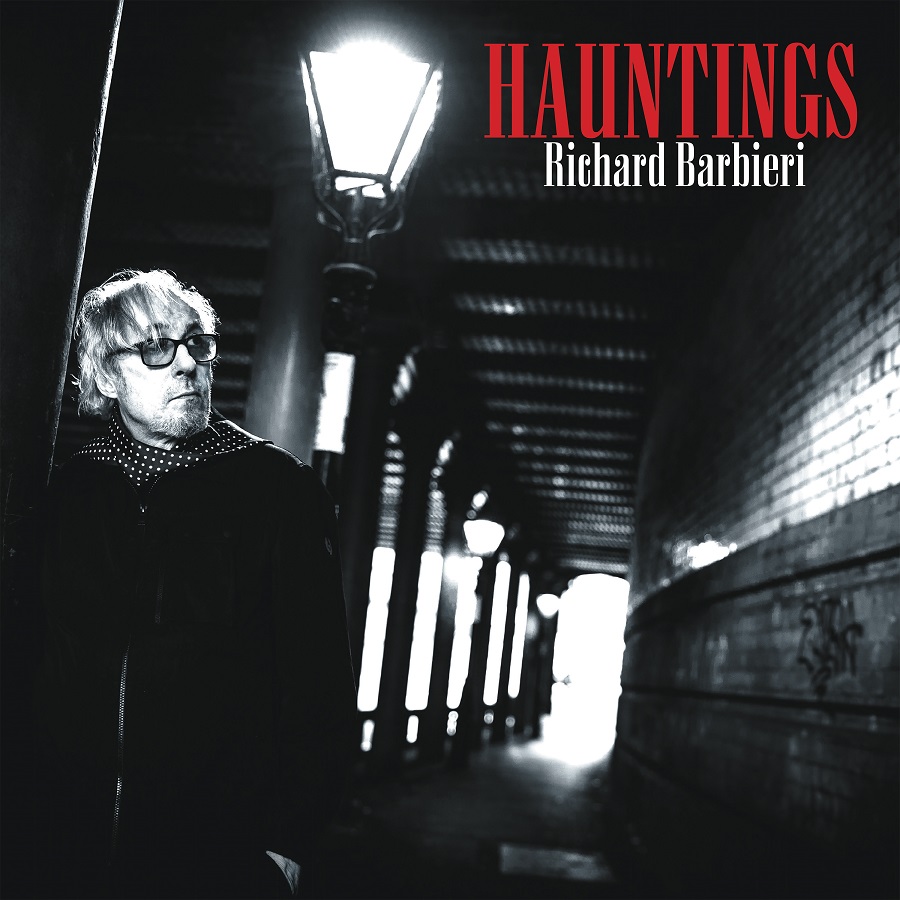
Settle in properly, because Richard Barbieri is never something you absorb in one go. While his contributions to Japan and Porcupine Tree were still somewhat accessible, his solo work demands an immense amount of endurance and an absolute willingness to fully comprehend the compositions on “Hauntings”. Calling Barbieri a ‘keyboardist’ does him a disservice: the man is a master of sound in all its facets, pitch, depth of tone, colour and time. Everything determines how a sound is perceived by the listener. Barbieri builds with sound and does so with remarkable precision, taking all the time he needs.
As a listener, you must not be in a hurry either. The compositions unfold slowly, almost hesitantly, as if every note first needs to explore the space before it fully reveals itself, like a landscape awakening in spring. The cloud cover breaks and the first buds of early bloomers appear, followed by the exuberant blossoms of plants that know they only have a few weeks to show themselves in full glory. In this way, Barbieri composes a landscape by layering synth textures, supported by subtle percussive elements.
It is ambient, certainly, but unlike many other records in this genre, it does not descend into esoteric mumbling that leads nowhere. That is impressive, because on “Hauntings” clear melodic lines are hardly present. The music moves organically, suggests rather than defines, never strictly outlined, yet certainly not ‘floaty’, and that is because the compositions do in fact have structure. Tracks such as “Anemonia”, for example, where the percussion briefly takes centre stage. That piece is followed by the ominous “Victorian Wrath”, the first track where the album’s title becomes clearly apparent.
Humanity is constantly driven forward as a victim of its own time. Barbieri lets us wander through Victorian London, in an era that longed both for what was familiar and for what was new. It marked the beginning of an unequal class struggle, with the rise of a self-aware middle class and the growth of a vast working class. He then takes us to Paris during the Belle Époque, much like the Victorian era, a time dominated by the belief that everything was possible.
It forms the prelude to pieces such as “Traveler” and “A New Simulation”, which reflect on our modern age. Our time is vibrant, but it also feeds anxiety about what is yet to come. Thanks to modern technology, we know minute by minute where conflict is happening on this planet. We follow raging fires live through various media. The only comfort we will ultimately always have is music.
“Hauntings” contains pieces that, without exception, are excellently mastered and produced, as we have come to expect. The level of detail in the mix is impressive. “Hauntings” is not an album of standalone tracks, but a suite that ideally should be performed by an orchestra capable of translating Barbieri’s sound worlds. Such a performance is something you experience, something that washes over and through you, after which it settles into memory. Slowly and inevitably. (8/10) (V2 Records)


