
Precious Pop Pearls: The Story Behind Vanilla Ice – “Ice Ice Baby”
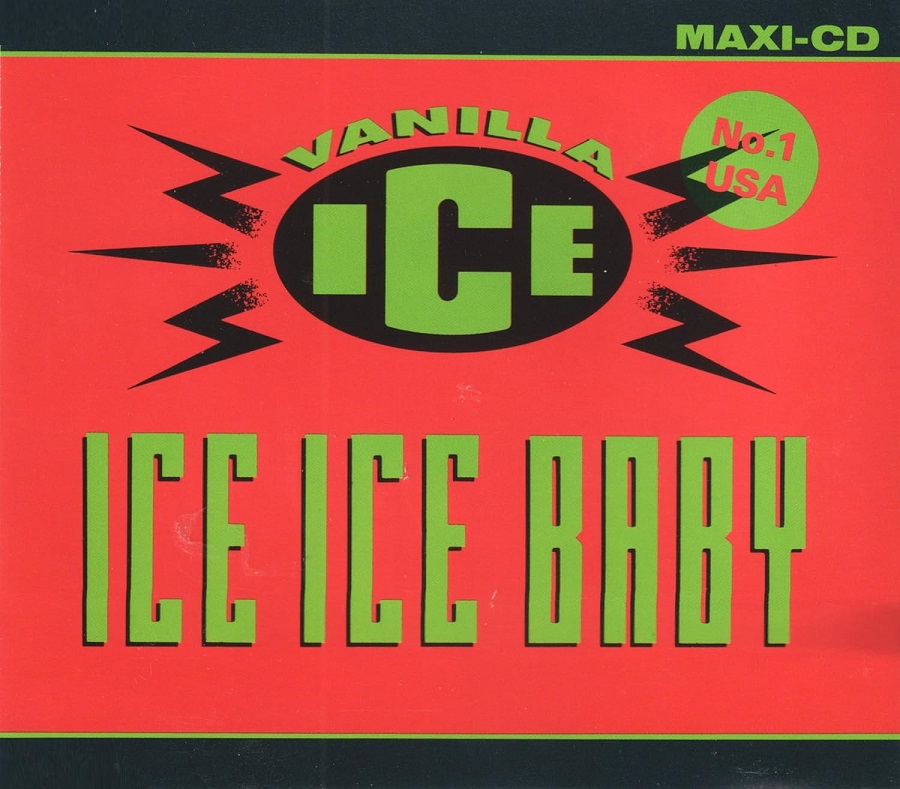
Two notes. That is all it took. The bass loop that poured from every radio in September 1990 lasted less than a second, but was instantly recognisable to anyone who had ever heard it. “Ice Ice Baby” by Vanilla Ice was no slow burn, no creeping success. The song exploded into the charts, seized the number one position in a dozen countries in rapid succession and made history as the first hip-hop single ever to top the American Billboard Hot 100. That the bass loop had been borrowed from Queen and David Bowie, that the artist behind the record had polished up his own biography, and that the critics viewed him with scepticism from the outset: none of that mattered in the autumn of 1990. The sound had spoken.
Vanilla Ice
Robert Matthew Van Winkle was born on 31 October 1967 in Dallas, Texas, but grew up in the suburbs of Miami, Florida. He is credited as the first solo white artist to achieve commercial success in the hip-hop world, and in doing so paved the way for later white rappers. His stage name came about organically on the street: friends began calling him ‘MC Vanilla’ because of his rhyming skills, and when he joined a breakdancing crew, he combined that nickname with one of his favourite moves, ‘The Ice’.
Van Winkle grew up in an environment that exposed him to two musical worlds that most people considered entirely separate. His brother listened to rock and roll, while he himself was fascinated by funk and hip-hop. That combination of influences would later prove decisive for his sound. Miami was also the birthplace of its own sound in those years, known as Miami Bass: heavy on the low end, danceable, and infused with the energy of a city that never seemed to sleep. He was discovered by Tommy Quon, owner of the City Lights nightclub in Dallas, who connected him with club DJ Earthquake and took the first steps towards a serious recording career.
Ice Ice Baby
Van Winkle claimed to have written “Ice Ice Baby” at the age of sixteen, basing the lyrics on his experiences in South Florida. The track initially ended up as the B-side of a release whose A-side was a cover of “Play That Funky Music” by the disco band Wild Cherry. Tommy Quon personally sent the single to radio stations across the country, but the track received almost no airplay and failed to make an impression. That changed because of one decision by one DJ: when David Morales played the B-side instead of the A-side at a radio station in Georgia, the song rapidly gained followers, and other stations followed suit.
The core of the track, that iconic bass loop, was borrowed from another legendary song. It samples the bassline of “Under Pressure” from 1981 by Queen and David Bowie, who initially received neither credit nor royalties for the sample. After representatives of Queen and Bowie threatened legal action for copyright infringement, the matter was settled out of court, and Van Winkle was required to pay financial compensation. Bowie and all members of Queen also received songwriting credit.
The commercial success of “Ice Ice Baby” was unprecedented. It was the first hip-hop single ever to top the American Billboard Hot 100. The success was not confined to America: the song also topped the charts in Australia, Belgium, Germany, Ireland, the Netherlands, New Zealand and the United Kingdom. The timing was right. 1990 was the year hip-hop finally broke through into the mainstream for good, with MC Hammer alongside Vanilla Ice as a major catalyst. His dance hit “U Can’t Touch This” brought hip-hop into living rooms on a mass scale. Vanilla Ice and MC Hammer shared that space, but each served a slightly different audience: Hammer was flamboyant and dance-oriented, while Vanilla Ice positioned himself more as a genuine street rapper, though that authenticity would later be called seriously into question. The music video for “Ice Ice Baby”, shot on the roof of a warehouse in Dallas for a budget of just 8,000 dollars, received heavy rotation on music channel The Box and generated enormous public interest.
Jedward
The strength of a song can also be measured by what other artists do with it. “Ice Ice Baby” has received various reworkings over the years, but the most notable came in 2010 from Irish twin brothers John and Edward Grimes, better known as Jedward. The duo, who had found fame through The X Factor, created a mash-up with the original inspiration behind the song. Their version, titled “Under Pressure (Ice Ice Baby)”, combined elements of both the Queen/Bowie original and the Vanilla Ice hit, with Van Winkle himself as a guest artist. The single reached number one in Ireland and number two in the United Kingdom, a remarkable comeback for a song that had already seen its heyday twenty years earlier.
To the Extreme
“Ice Ice Baby” appeared on Vanilla Ice’s debut album, “To the Extreme”, released on 10 September 1990 via SBK Records and EMI Records. The album stood at the top of the American Billboard 200 for sixteen consecutive weeks and was certified seven times platinum. It was at the time the best-selling hip-hop album of all time. In 1990, Vanilla Ice signed to SBK Records, which reissued an earlier independently released album with new artwork and new music. The label paid 325,000 dollars for the rights. By January 1991, it was the fastest-selling album since Prince’s “Purple Rain” from 1984, with six million copies sold in just three months. Critical reception was mixed: some reviewers praised his energy and showmanship, while others found the lyrics superficial. Buyers were entirely unmoved by these objections.
Play That Funky Music
The single that was originally intended as the breakthrough became the follow-up instead. After the success of “Ice Ice Baby”, “Play That Funky Music” was reissued as a standalone single with new lyrics and a remixed drum track. The cover of the Wild Cherry song from 1976 had gone largely unnoticed at its first release, but now benefited from the slipstream of its predecessor, reaching number four on the American Billboard Hot 100 and number ten in the United Kingdom. Rob Parissi, the writer of the original Wild Cherry song, filed a lawsuit over the failure to credit his contribution, and ultimately received more than 500,000 dollars in royalties. The song demonstrated that Vanilla Ice was more than a one-hit wonder: two major hits in quick succession, a sold-out world tour as the opening act for MC Hammer, and an unexpected cameo in the feature film “Teenage Mutant Ninja Turtles II: The Secret of the Ooze”, for which he wrote and performed “Ninja Rap”.
After the first wave of success came a decline that was just as steep as the rise. The public that had initially embraced him turned away as his credibility as a street rapper was increasingly called into question. Yet Van Winkle continued to make music, experimented with nu-metal and rock, and later reinvented himself as a successful television personality and host of a home renovation programme. “Ice Ice Baby” outlasted the mockery and endured as one of the most recognisable songs of its decade. What began as a B-side played by accident ended as a milestone in the history of pop music: proof that hip-hop was no longer the exclusive property of one community, but a language anyone could speak, for better or worse.


