
Messiah’el Bey – Azteca Charm
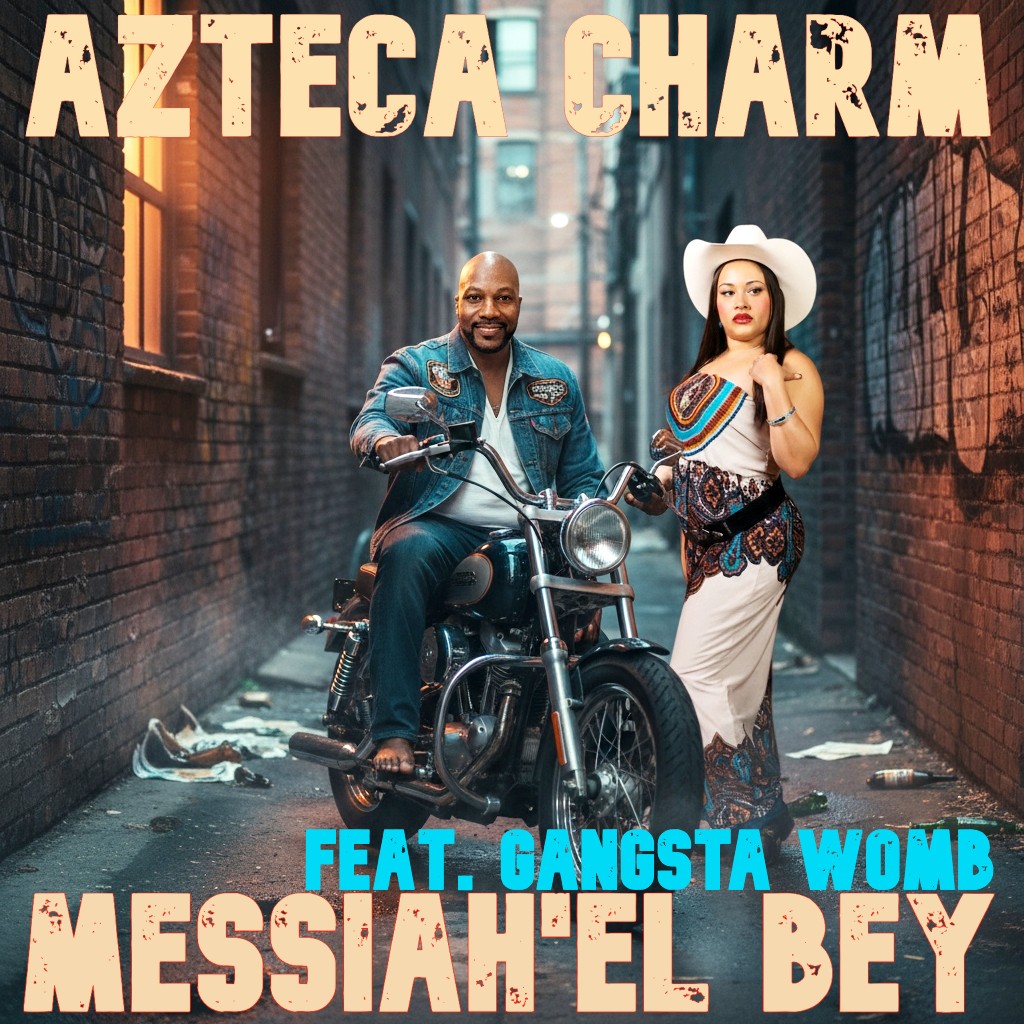
After “Jazz Can Heal America’s Soul” and “The Karma of Trust”, Messiah’el Bey rounds off his ambitious trilogy with “Azteca Charm”, an album that brings together women’s empowerment and cultural pride in thirteen exceptional tracks. The Brooklyn-based musician introduces two new voices: Gangsta Womb and Spanish Fly, two female vocalists who fundamentally shape the character of this album and elevate it to great heights. The result feels both personal and political, intimate yet defiant, and marks an artistic peak in Bey’s career.
The album opens with “Act 1: Introduction”, a spoken interlude that immediately makes clear to the listener that this is no random collection of songs. Bey’s background as a spoken word artist comes fully to the fore here. He treats “Azteca Charm” as a theatrical piece in three acts, with each act adding a new layer to the story about liberation and resistance. This structure not only gives the album cohesion and direction, but transforms it into a complete artistic experience that takes you along from beginning to end.
The title track immediately sets the tone and convinces directly. Spanish Fly makes her entrance with a voice that radiates Puerto Rican warmth, precisely as the title promises. Her interplay with Gangsta Womb works not only surprisingly well; it feels as though these voices should have always sounded together. Where you might expect a rapper from the latter name, she proves to be a versatile vocalist who effortlessly switches between vulnerable moments and powerful statements. Bey somehow manages to unearth these talents, and that remains a remarkable gift that makes this album something special.
The four tracks that follow form the emotional centre of the first section. “Loving You” opens with romance, but the album doesn’t linger there. “I’m not your bitch” brutally changes course with a direct message about autonomy. Gangsta Womb sounds at her rawest here, supported by production that is deliberately unpolished but precise, which comes across so powerfully. The contrast with “Kissing Blues” is striking, a track in which Bey’s jazz roots become clearly audible and bloom fully. The atmosphere evokes his work on “The Nuyorican Jazz Experience”, although it sounds fuller, richer, and more mature here. “Sunny Days” offers a perfect breathing space before the transition to “By any means nescessary” takes place via a considerable series of samples. That choice raises questions, because the voices of Gangsta Womb and Spanish Fly, combined with Bey’s organic instrumentation, already bring the album to such heights that the samples feel superfluous. It’s one of the few moments where Bey’s production choices somewhat interrupt the album’s natural flow. “By any means nescessary” itself convincingly closes the first section with an unmistakable reference to Malcolm X.
“Act II: Cointelpro” refers to the FBI programme that infiltrated and sabotaged Black activists. That historical context colours “Extra Extra”, an urgent track in which the personal stories from the first section are placed within a broader social struggle. Bey’s production becomes denser and more intense here, with percussion that creates and maintains tension in a way that continues to grip the attention.
The highlight is without doubt “Ode to Lolita Lebrón”, a track that alone is reason enough to purchase this album. Spanish Fly delivers her finest performance of the album here, paying tribute to the Puerto Rican activist who attacked the Capitol in 1954 in protest against the American occupation. It’s a courageous choice to place such a controversial figure centre stage, but Bey’s approach is respectful without being hagiographic. Spanish Fly finds the right balance between reverence and emotion, supported by subtle Afro-Caribbean rhythms and strings that give the track a cinematic grandeur. This is Bey at his strongest, a musician who knows how to translate cultural history into music without falling into clichés. It’s a masterpiece within a strong album.
“Act III: The Conclussion” leads towards the finale with a surprising turn. “God only knows” is the first cover in Bey’s catalogue, and what a successful choice. He takes the Beach Boys track and makes something entirely different from it, understated and melancholic, fitting within his jazz and soul vocabulary. It feels like a conscious choice to pause after all the defiance to reflect on universal feelings, and that choice works perfectly.
“Sister – Demo Version” closes the album in a way that initially raises questions, but ultimately convinces through its sincerity. The spontaneity and naturalness of this recording fit perfectly with the philosophy of organic music production that runs through the entire album. Gangsta Womb sounds unprocessed and natural here, resulting in an intimate conclusion that touches emotionally. It’s not a compromise but a conscious artistic choice that shows Bey places concept above convention.
Production-wise, Bey opts for a warmer approach than on “The Karma of Trust”, that album which flirted with psychedelics and Wu-Tang Clan guests. Here everything serves the female voices, and that choice pays dividends many times over. Bey lets his production breathe, pulls back where necessary and knows precisely when to stand out. Notable is the shift towards Latin jazz. Afro-Caribbean rhythms and clave patterns play a larger role than on his earlier albums and give “Azteca Charm” a distinctive character. The instrumentation is largely live, with keys, strings and percussion together weaving a rich sonic tapestry that recalls Tito Puente and Eddie Palmieri, but with a contemporary twist that is typically Bey. The production sounds warm and organic, precisely what the album needs.
The contrast between Spanish Fly and Gangsta Womb remains fascinating throughout the album. Spanish Fly has a more trained, classical approach, whilst Gangsta Womb sounds more direct and raw. Those differences work excellently because they give the album variation without losing cohesion. Indeed, their interaction creates a dynamic that keeps the album constantly engaging.
The theme of female empowerment could easily have become heavy and moralistic, but Bey avoids that pitfall completely. The message emerges from the stories and emotions of the vocalists themselves and therefore feels authentic and powerful. It’s convincing because it’s sincere, not because it’s preached. Even “I’m not your bitch”, with its direct title, doesn’t feel crude but honest, a necessary outburst within the context of the album.
As the conclusion of a trilogy, “Azteca Charm” brings not only focus and clarity, but it also surpasses its predecessors. Where “Jazz Can Heal America’s Soul” laid the foundation and “The Karma of Trust” experimented, Bey finds here his finest balance between accessibility and artistic integrity, between personal and political, between experiment and tradition. The Acts are not superfluous interludes but essential links that give the album conceptual depth and transform it into a coherent work of art. Without those interludes, “Azteca Charm” would fragment into separate tracks. Now it forms a compelling whole in which each component has precisely its place.
“Azteca Charm” confirms that Messiah’el Bey has developed into one of the most interesting and relevant voices in contemporary jazz and soul. He refuses to be limited by expectations or genres and creates music that is both intellectually stimulating and emotionally affecting. This is no casual listening experience but an album that demands attention and repays that attention many times over. After multiple listening sessions, new layers continue to reveal themselves, a sign of a work built to last. With “Azteca Charm”, Bey has not only successfully concluded a trilogy, but he has also delivered his masterpiece. This is unquestionably the finest album of his career and simultaneously the absolute pinnacle of the jazz and soul scene in 2025. An album that will define the year. (9/10) (Independent Release)


