
Precious Pop Pearls: The Story Behind Fat Larry’s Band – “Zoom”
In the autumn of 1982, something remarkable happened in the British charts. Whilst bands such as Duran Duran and Soft Cell dominated with their synthesiser sounds, a funk number by a relatively unknown American band reached second place. “Zoom” by Fat Larry’s Band never reached number one, but it left a lasting impression that remains palpable decades later. The song never reached the highest positions in the band’s homeland, but instead conquered the hearts of listeners on the other side of the Atlantic Ocean, where it would grow into an anthem for an entire generation.
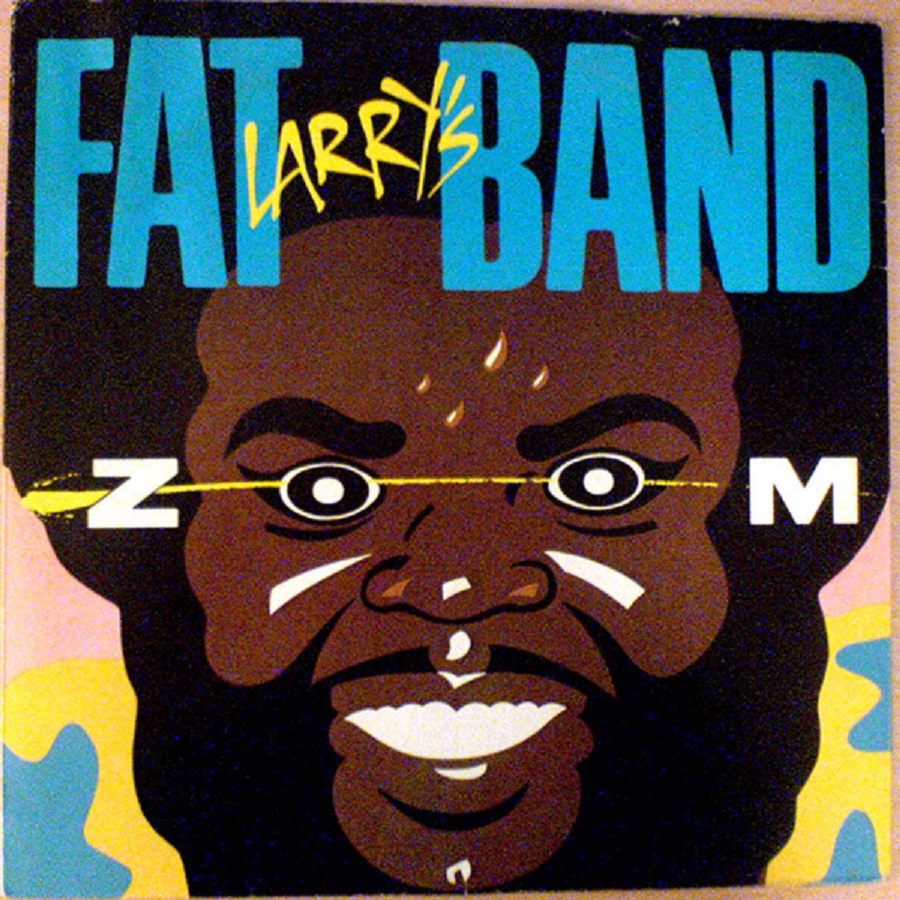
The story of “Zoom” is one of contrast: a band that was barely recognised in its own country, but acquired a status in Europe that few had foreseen. The single remained in the British charts for eleven weeks, reached the tenth position in Australia, where it was listed for 24 weeks, and likewise entered the top ten in New Zealand. In the United States, however, the number only reached position 89 in the R&B charts and did not even make the Billboard Hot 100. This discrepancy between international success and the home market would prove characteristic of the band’s career.
Fat Larry’s Band
The story of Fat Larry’s Band begins in Philadelphia, the birthplace of Philly soul. In 1976, drummer and singer Larry James, known by his nickname ‘Fat’ Larry, founded the band. James was not unknown in the music world at that time. He had already gained experience as a session musician for renowned acts such as The Delfonics and Blue Magic, two groups that were essential to the development of the characteristic Philadelphia sound.
The line-up of Fat Larry’s Band was impressive in size and versatility. Members included trumpeter and flautist Art Capehart, guitarists Ted Cohen and Tony Middleton, singers Freddie Campbell and Darryl Grant, keyboardist Terry Price, singer Alfonso Smith, saxophonist Doug Jones, bassist Larry La Bes, trombonist and alto saxophonist Jimmy Lee, and keyboardist Erskine Williams. This extensive line-up enabled the band to produce a voluminous, orchestral sound that closely aligned with the traditional Philly soul aesthetic, whilst simultaneously offering space for the funk grooves that dominated in the early eighties.
Philadelphia was a musical powerhouse during that period. The city had defined a unique sound with producers such as Kenny Gamble and Leon Huff, characterised by lush string arrangements, prominent brass sections and an unmistakable groove. Fat Larry’s Band grew up in this tradition, but also adapted to changing times. Whereas the Philly soul of the early seventies still relied heavily on analogue production techniques and live instrumentation, the eighties saw the rise of synthesisers and drum machines. The band skilfully balanced between these two worlds.
The first years were not easy for Fat Larry’s Band. They released multiple albums on various labels, including WMOT Records and Stax, but major commercial breakthroughs remained elusive. Their music was appreciated within the R&B community, but the crossover to the mainstream audience simply would not happen. That would change with their fifth studio album, a record that would drastically alter the course of their career.
Zoom
“Zoom”, a cover of a single by The Commodores, was released as the fourth single from the album “Breakin’ Out” in 1982. The number was not an obvious choice for a hit. The production was relatively modest compared to the bombastic stadium rock that dominated the charts, and the lyrics revolved around a subject as old as pop music itself: romantic attraction and the desire for quick escapades.
What distinguished “Zoom”, however, was the way it brought together different elements. The rhythm section laid down a tight, danceable groove that immediately appealed. The horn parts added a brassy, confident layer, whilst Freddie Campbell’s vocals found the perfect balance between smooth and expressive. The number had an infectious energy that drew people onto the dance floor, but was also melodious enough to penetrate radio stations that normally did not play pure funk.
The timing of the release was crucial. In 1982, pop music found itself in a transitional phase. The disco explosion of the late seventies was over, but the dance floor culture remained. Boogie and post-disco funk filled the vacuum, with artists such as Shalamar, Evelyn “Champagne” King and The Whispers dominating the charts with infectious grooves. “Zoom” fit perfectly into this landscape whilst simultaneously offering something unique.
In Great Britain, the number found particularly fertile ground. The single reached the second position in the UK Singles Chart in October 1982 and remained in the chart for no less than eleven weeks. The success was so great that the number received a place in the popular British sitcom “Only Fools and Horses”, specifically in the 1982 Christmas special entitled “Diamonds Are for Heather”. This exposure further strengthened the song’s popularity and contributed to its lasting legacy in British pop culture.
The music video for “Zoom” followed the conventions of the early eighties. The band was filmed during an energetic performance, interspersed with dance scenes and images of cars illustrating the theme of speed and movement. The video received airplay on programmes such as Top of the Pops and helped to visually anchor the number in viewers’ collective memory.
In Australia and New Zealand, the number likewise enjoyed success. In Australia, “Zoom” reached the tenth position and was listed for 24 weeks, an impressive achievement that testified to the lasting appeal of the number. In New Zealand, it climbed to the fourth position, where it remained for a week and was listed for a total of 14 weeks.
The contrast with the homeland remained painfully clear. Although “Zoom” did receive some radio airplay there, it only reached position 89 in the R&B charts and could not break through to the general charts. This discrepancy was symptomatic of the position of many funk artists in the early eighties. The American market was divided and unpredictable, whilst European listeners were often open to a broader spectrum of black music.
Regine Velasquez
The Filipino singer Regine Velasquez recorded a cover of “Zoom” for her album “Retro”, released in 1996. Velasquez, known as ‘Asia’s Songbird’, was one of the most successful artists in Southeast Asia, with more than seven million albums sold in the Philippines and one and a half million in the rest of Asia.
The album “Retro” was a collection of new arrangements of songs from the seventies and eighties. Besides “Zoom”, it contained covers of numbers such as “I Can’t Help It” by Andy Gibb, “Through the Eyes of Love” by Melissa Manchester and “I Want to Know What Love Is” by Foreigner. The choice of “Zoom” underscored the international reach of the original and proved that the number had a lasting impact far beyond the Western markets.
Velasquez’s version retained the essence of the original but added her characteristic vocal power. Whereas Fat Larry’s Band radiated a collective energy, Velasquez’s interpretation placed the spotlight on individual vocal virtuosity. The result was a version that was respectful towards the original, but still had its own identity.
Another notable cover came from an entirely different angle. The British alternative rock band The Boo Radleys recorded the number during the recording sessions for their album “Giant Steps” in 1993. The Boo Radleys were known for their eclectic approach to shoegaze and psychedelia, and their version of “Zoom” appeared as the B-side on the single “Barney (…And Me)”.
This cover was less accessible than the original. The Boo Radleys transformed the funk number into a layer of guitar feedback and layered sounds, a typical treatment for a band that placed experimentation above commercial considerations. It was a curious choice for a cover, but it did demonstrate how versatile the basic material was and how it lent itself to different interpretations.
Breakin’ Out
“Zoom” was not the only highlight of the album “Breakin’ Out”. The album, produced by Larry James and Nick Martinelli for James Gang Productions and Watchout Productions, was recorded at the Alpha International Recording Studios in Philadelphia. It represented a conscious attempt by the band to create a more accessible sound that could break through to a wider audience.
The opening number “Act Like You Know” became the first single from the album and scored reasonably well in the United States, where it reached position 67 in the R&B charts and position 24 in the dance charts. The number would later gain a second life as part of the soundtrack to the video game “Grand Theft Auto: Vice City”, through which a new generation became acquainted with the music of Fat Larry’s Band.
Other tracks on the album, such as “Traffic Stopper”, “House Party” and “Be My Lady”, offered variation within the funk and boogie genre. “Golden Moments” slowed the tempo and offered a soulful ballad that showcased the vocal capabilities of the band. “Breakin’ Out”, the title song, was an extensive instrumental number that demonstrated the musical skills of the band members.
The album reached position 58 in the British album charts, a respectable achievement that proved the band had more of a foothold in the United Kingdom than in their own country. In the United States, however, commercial success remained limited, a pattern that would continue throughout the band’s career.
The production of “Breakin’ Out” reflected the spirit of the early eighties. There was room for synthesisers, but the emphasis remained on live instrumentation. The string arrangements by Don Renaldo’s Strings and Horns added a lush layer that recalled the classic Philly soul sound, whilst the keyboards and synthesisers of Bryan Hudson gave a modern touch.
A Tragic End
The success of “Zoom” and “Breakin’ Out” led to follow-up albums, but the magic could not be fully repeated. In 1983, the album “Straight From The Heart” appeared on the Society Hill Records label, distributed by EMG. It contained the single “Straight From The Heart” which reached position 88 in the British charts, but the impact was less than with earlier releases.
The band continued to tour and perform, but struggled with the changing music market. The mid-eighties brought a new wave of electronic music, and traditional funk bands found it increasingly difficult to remain relevant. Nevertheless, Fat Larry’s Band retained a loyal following, especially in Europe, where their concerts remained well attended.
The tragic end came on 5 December 1987, when Larry James died of a heart attack at the age of 38. His death meant the end of the band. Without the founder and driving force behind the group, it was unthinkable to continue. Freddie Campbell, one of the singers, later died in 2013, another important member of the original line-up.
For those who return to 1982, to that specific mix of funk, soul and boogie that dominated the dance floors before hip-hop and house would conquer the world, “Zoom” remains a perfect snapshot. The number captures the energy and optimism of a genre at its peak, played by musicians who understood their craft and could lay down a groove that still moves people decades later. Fat Larry’s Band made music that functioned on the dance floor, but also had an emotional charge. In “Zoom”, that comes together in something greater than the sum of its parts: a number that makes you move whilst simultaneously putting a smile on your face. That is no small achievement, and it explains why the song, despite all the limitations of its time and context, has remained a lasting gem of pop music.


