
Precious Pop Pearls: The Story Behind Scott McKenzie – “San Francisco”
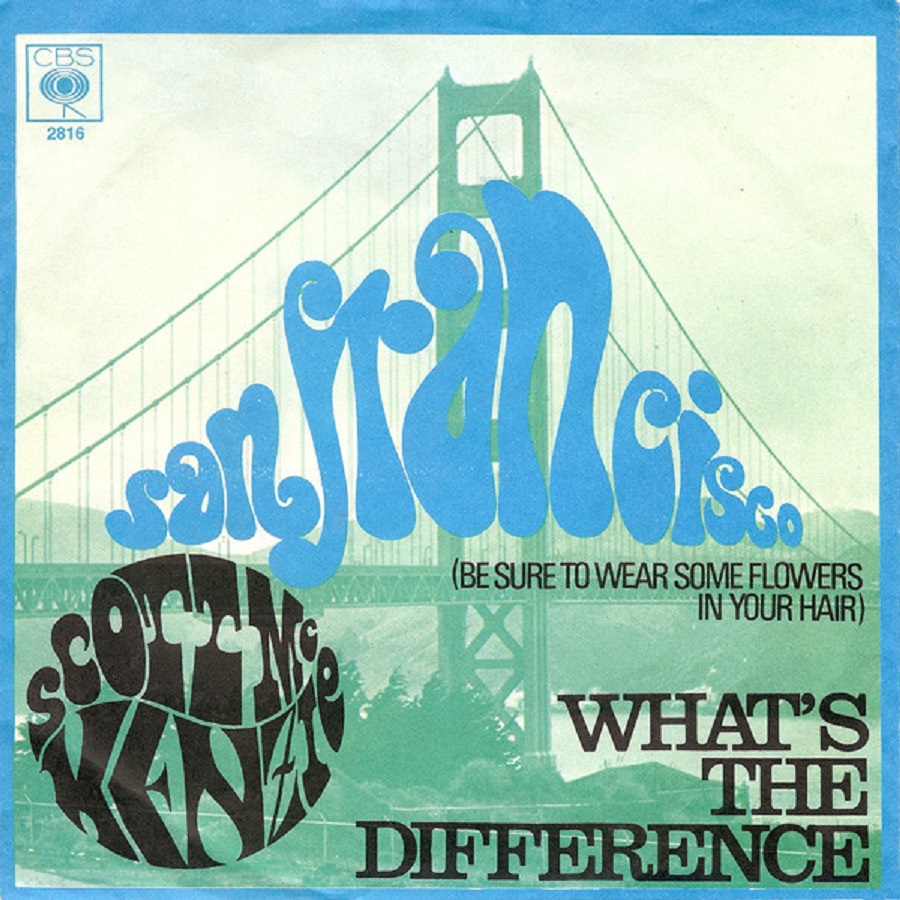
At the end of the nineteen-sixties, pop music changed significantly. Music became more than entertainment and developed into a cultural and social statement. In this climate, a song appeared that for many became the sound of a generation and a movement. “San Francisco” by Scott McKenzie grew into an international symbol of hippie culture and the ideals of love, freedom and resistance against established structures. The song has become timeless and is still associated with a specific moment in music history in which optimism and protest came together.
Scott McKenzie
Scott McKenzie was born as Philip Blondheim and grew up in the United States. He initially became part of the Los Angeles music scene and was involved in various musical collaborations. His most famous connection was with John Phillips, who would later play an important role in the success of the group The Mamas & the Papas. McKenzie was asked by Phillips to sing a song that would eventually become his greatest success.
His voice is characterised by a warm and slightly melancholic tone, which suited the atmosphere of the late nineteen sixties. Although he did not have an extensive hit career, he managed to leave a lasting impression on pop history with a single record.
San Francisco
The song “San Francisco” was written by John Phillips and produced with a clear vision of the cultural movement emerging at the time. The lyrics refer to the city of San Francisco, which during that period became the centre of the hippie movement and the counterculture against the established order.
The single was released in nineteen sixty-seven and became a worldwide success. The song reached high positions in various charts, including number one in the United Kingdom and high rankings in the United States and other countries. The combination of simple melody, recognisable message and social context created a broad audience.
Musically, the song fits within folk pop, with influences from the emerging psychedelic music of the time. Compared to other music of that era, such as work by artists like The Beatles and The Byrds, “San Francisco” aligns with the trend of introspective and socially aware lyrics. At the same time, it stands out through its direct, almost hymn-like character.
Petula Clark
The British singer Petula Clark recorded a cover of “San Francisco”, giving the song her own interpretation. Clark, who herself achieved major international success with songs like “Downtown”, managed to bring the song to a wider audience once again.
Her version preserves the core of the original but adds a more polished and orchestral approach. This matches her own style, in which pop music was often combined with light arrangements and accessible production. The cover confirms the international appeal of the song and shows how strongly it lends itself to different interpretations.
The Mamas & the Papas
The album on which “San Francisco” appeared was not initially released by Scott McKenzie himself as part of a full studio album. The song became known mainly as a single and as part of the broader musical output of the creative circle around John Phillips and The Mamas & the Papas.
The success of the song helped increase interest in the work of this musical circle. The style of the song closely matches the harmonies and folk pop influences that also characterised The Mamas & the Papas. This strengthens the musical context in which the song was created.
Like an Old Time Movie
After the success of “San Francisco”, Scott McKenzie released some other songs, including “Like an Old Time Movie”. Although this single did not achieve the same international success, it does show the artistic direction McKenzie followed.
The song builds on the same soft and introspective style, with an emphasis on melody and emotion. It confirms McKenzie as an artist who focused mainly on atmosphere and feeling rather than commercial repetition of success.
“San Francisco” remains one of the most recognisable songs of the nineteen sixties and functions as a musical time document of a period in which culture and music were strongly intertwined. Scott McKenzie managed to secure a lasting place in pop history with a single record. The song transcends its original context and remains a symbol of an era in which music gave voice to change and ideals.


