
Christian Löffler – Until We Meet Again
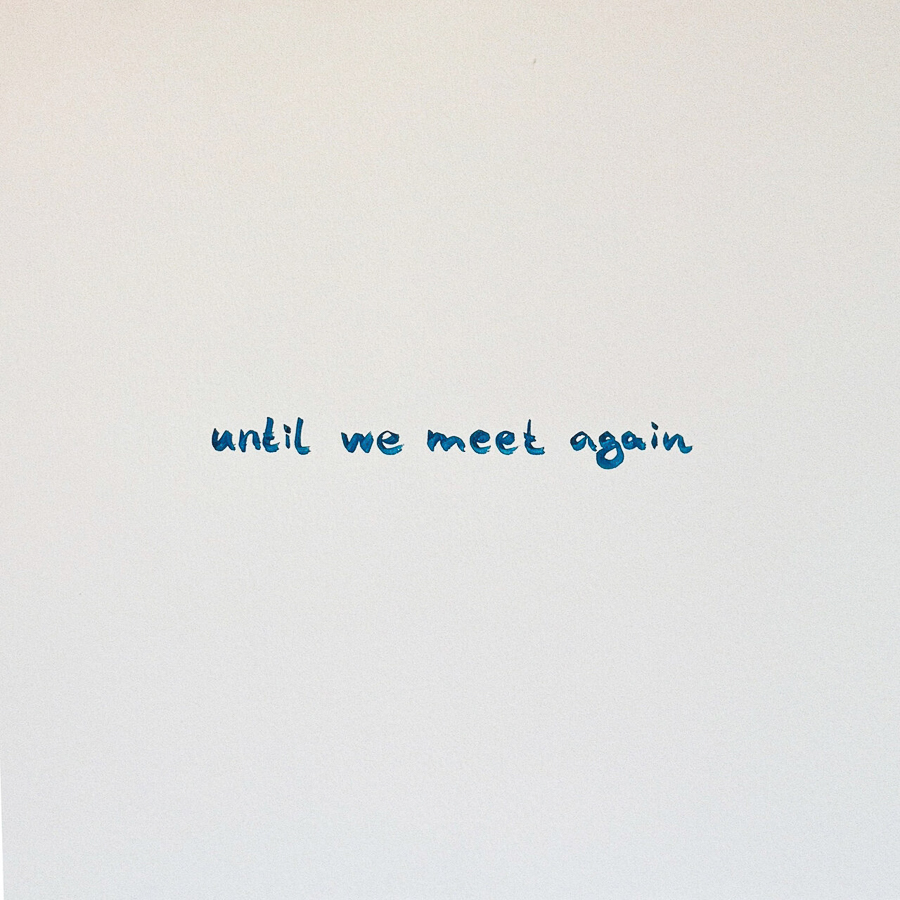
Some artists make albums. And then there is Christian Löffler, who builds experiences. The German producer and visual artist from the Baltic Sea region has developed his own language within melodic electronica over the past decade, somewhere at the intersection of dancefloor and daydream. After “A Life” from 2024, he now releases “Until We Meet Again” into the world, thirteen tracks that fall like gentle rain on anyone who has ever had to leave someone behind.
The album was largely written on the road, while touring, as bare piano sketches on a laptop. That nomadic origin is noticeable. “Until We Meet Again” sounds like music that does not wait until you are home, but finds you in hotel rooms, on platforms, in aeroplanes heading somewhere. Löffler describes his own work as a combination of melancholy and euphoria, and on this album, he achieves that balance with remarkable precision.
The collaboration with the Swedish singer Adna forms the backbone of the record. She appears on five of the thirteen tracks, and her voice fits Löffler’s production so seamlessly that it is hard to imagine they only met for this project. On “What We Used To Say”, her voice floats above a rhythm that pulses like a heartbeat, recalling a memory, while “No Distance Can Dim Our Light” has something of an incantation: distance does not exist if you refuse to believe in it. The American producer Shallou also appears on the track “Closer”, which grips a little more firmly than the rest of the album and moves towards club territory without losing its intimacy.
Musically, “Until We Meet Again” is an album that has deliberately stretched its boundaries. Where Löffler previously worked extensively with field recordings and sounds from nature, the focus here has shifted to the human element, to encounters, to what remains after someone has gone. The productions are built from piano, which are then surrounded by vintage Japanese synthesisers, strings and cello. The result is something that works both in a concert hall and in the open air, and that is rarer than it sounds.
The opening track, “Islands”, is calm, but not static. It is the musical equivalent of looking out over water without knowing what lies on the other side. “Home” is one of the stronger instrumental moments, with a melody that stays with you long after the track has ended, the kind of melody you return to without being able to explain why. And the title piece “Until We Meet Again” earns its place in the middle of the album, as a breath between two conversations.
Still, the album is not without its shortcomings. Some tracks, such as “Seven Tepe” and “ILY”, fade slightly into the background, not because they are bad, but because they are less distinctive than the stronger pieces around them. With an album of thirteen tracks, it is fair to ask whether every track is necessary, or whether some merely maintain the atmosphere rather than add something to it. It is a small price for an otherwise coherent work, but it is there.
Anyone looking for a gateway into this album would do well to start with “What We Used To Say”. In four minutes, the track captures what “Until We Meet Again” is about: the secret language two people build together, the words and places and habits that exist only between them, and the silence that remains when the other person is no longer there. It is the kind of song that Bon Iver might write on his best days if he were German and enjoyed dancing a little more.
With “Until We Meet Again”, Löffler has made an album that grows with every listen. It is not a record that overwhelms on first acquaintance, but one that slowly takes hold of you, like someone whose name you never forget. That is also precisely the theme. The encounters that strike the deepest are rarely the loudest. (8/10) (Ki Records)


