
Precious Pop Pearls: The Story Behind Donald Fagen – “I.G.Y.”
In the autumn of 1982, a particularly recorded single appeared that projected the optimism of the 1950s into the future with an ironic gaze. “I.G.Y.” by Donald Fagen referred to the International Geophysical Year, a scientific collaboration project of sixty-seven countries that ran from July 1957 to December 1958. While most artists in that period embraced the synthesiser era with flashy new wave and electronic disco, Fagen chose a polished, jazz-inspired production that offered a reflection on lost dreams. The title stood for International Geophysical Year, but mainly imagined a world in which technology would solve all problems. The single reached number 26 on the American Billboard Hot 100, number 8 on the Adult Contemporary chart and number 17 on the Mainstream Rock chart. Internationally, the track also performed solidly, with a top 40 position in Canada and modest placements in Australia and the Netherlands. It was Fagen’s only solo top 40 hit in the United States, but the song would grow into a timeless classic within the jazz-pop tradition.
Donald Fagen
Donald Jay Fagen was born on 10 January 1948 in Passaic, New Jersey, into a Jewish family with Eastern European roots. His mother, Eleanor, had performed as a singer in the Catskill Mountains in her youth, which filled the household with music. At a young age, Fagen bought his first single, “Reelin’ and Rockin’” by Chuck Berry, but his musical horizon expanded drastically when a cousin introduced him to jazz in 1959. At the age of eleven, he attended the Newport Jazz Festival, where he encountered the layered complexity of jazz. This experience completely changed his perspective and he developed what he later called an antisocial personality, lost interest in rock ’n’ roll and immersed himself in the works of Charles Mingus, Thelonious Monk and Miles Davis.
In 1967, Fagen met Walter Becker in a coffeehouse at Bard College, where both studied English literature. Becker played guitar and bass, Fagen keyboards, and their shared love for both jazz and rock resulted in several short-lived collegiate bands. The two developed an intense creative chemistry and, after graduation, moved to Brooklyn and later to Los Angeles, where they worked as songwriters for ABC/Dunhill Records. In 1971, they founded Steely Dan, a band named after a sex toy from William S. Burroughs’ novel “Naked Lunch”. Steely Dan became one of the most respected acts of the 1970s, with albums such as “Aja” from 1977, which reached number three on the American album charts and was certified platinum.
Steely Dan’s approach was as perfectionist as it was original. Fagen and Becker worked with dozens of session musicians, some of the best in the business, and demanded countless takes until every note sounded exactly as they had envisioned. They combined jazz vocals and complex chord progressions with rock, funk and soul, while their lyrics were steeped in cynicism, dark humour and cryptic stories about separated characters. Ten top 40 hits followed between 1972 and 1981, including “Do It Again”, “Rikki Don’t Lose That Number” and “Hey Nineteen”. But after the album “Gaucho” from 1980, Fagen and Becker decided in 1981 to temporarily separate. Becker moved to Hawaii to grow avocados and overcome his drug addiction, while Fagen moved to New York to start his solo career.
I.G.Y.
The song opened with a bright synthesiser and smooth drums that created an optimistic, almost floating atmosphere. The lyrics sketched a vision of the future as it was dreamed of in the late 1950s: cities powered by solar energy, an undersea tunnel between continents, permanent space stations and spandex jackets for everyone. Fagen sang as if he were looking from 1958 into the future, with the United States bicentennial in 1976 as a reference point. The lyrics mentioned a machine that would make major decisions, programmed by men with compassion and vision, and spoke of a world in which everything would be possible. The instrumentation was lavish and meticulously produced, with contributions from session musicians such as drummer Jeff Porcaro of Toto, guitarist Larry Carlton and keyboardist Rob Mounsey, who handled the horn arrangements.
The production of the song took place between 1981 and 1982 at Soundworks Digital Audio/Video Recording Studios and Automated Sound in New York, as well as Village Recorders in Los Angeles. Gary Katz, who had produced Steely Dan’s entire discography, oversaw this project as well, with Roger Nichols as chief engineer. A striking aspect was that “I.G.Y.” was recorded using 3M digital 32-track and 4-track machines, making it one of the first fully digitally recorded singles in pop music. This technology was brand new at the time and the engineers even took courses at 3M in Minnesota to master the equipment. The digital clarity contributed to the tight, virtually flawless sound that became characteristic of the entire album “The Nightfly”.
The meaning of the song lay in its layered nature. On the surface, it appeared to be a cheerful celebration of progress, but the lyrics contained subtle irony. Fagen had personally experienced how the dreams of the 1950s did not materialise and how the optimism of that era was replaced by political scandals, the Vietnam War and social unrest. The line in which he promised a beautiful world was simultaneously an acknowledgement that such promises were often unfulfilled. This ambiguity made the song highly suitable for audiophile demonstrations. Because every frequency was recorded so carefully, “The Nightfly” was used for years in hi-fi shops around the world to demonstrate the quality of sound systems. The song seemed simple in structure, but the refined arrangements and production values made it a masterpiece of studio craftsmanship.
The release in September 1982 came at a time when synthesisers and drum machines dominated. Asia achieved major hits that year, Michael Jackson was preparing “Thriller”, and electronic acts such as Soft Cell and The Human League dominated. Fagen’s choice of a jazzier sound with acoustic instruments alongside synthesisers was striking, but it fit perfectly with a growing trend that would later be called sophisti-pop. This genre combined the smooth production values of the early 1980s with jazz, soul and world music, and artists such as Sade, Roxy Music and The Style Council would follow similar paths. “I.G.Y.” was nominated for the Grammy Award for Song of the Year in 1983, but lost to “Always on My Mind”.
Take 6
In 2002, exactly twenty years after the original release, the American a cappella gospel group Take 6 released a notable rendition of “I.G.Y.” under the title “Beautiful World”. This version appeared on their album of the same name and was produced by bassist Marcus Miller. Take 6, known for their complex vocal harmonies and their blending of gospel, jazz and R&B, had won several Grammy Awards since their debut in 1988 and established themselves as one of the most technically skilled vocal ensembles in the world. Their interpretation of “I.G.Y.” transformed Fagen’s secular, ironic view of technological progress into a spiritual message of faith and hope.
The album “Beautiful World” contained, besides “Beautiful World”, covers of classic soul and pop songs by Stevie Wonder, Curtis Mayfield and Sting, all given the same layered vocal treatment. Marcus Miller’s production added subtle instrumental accents to certain tracks, but in “Beautiful World” the emphasis remained on the voices themselves. The choice to record this song was remarkable, as “I.G.Y.” was not the most obvious selection for a gospel group. Yet Take 6 managed to preserve the essence of the song while completely reinterpreting it with their own sound. For fans of the original, this version offered a fresh perspective, while the gospel audience received an inspiring arrangement that fitted perfectly within Take 6’s repertoire. The version did not chart, but reinforced the reputation of the original as a timeless composition capable of transcending genres.
The Nightfly
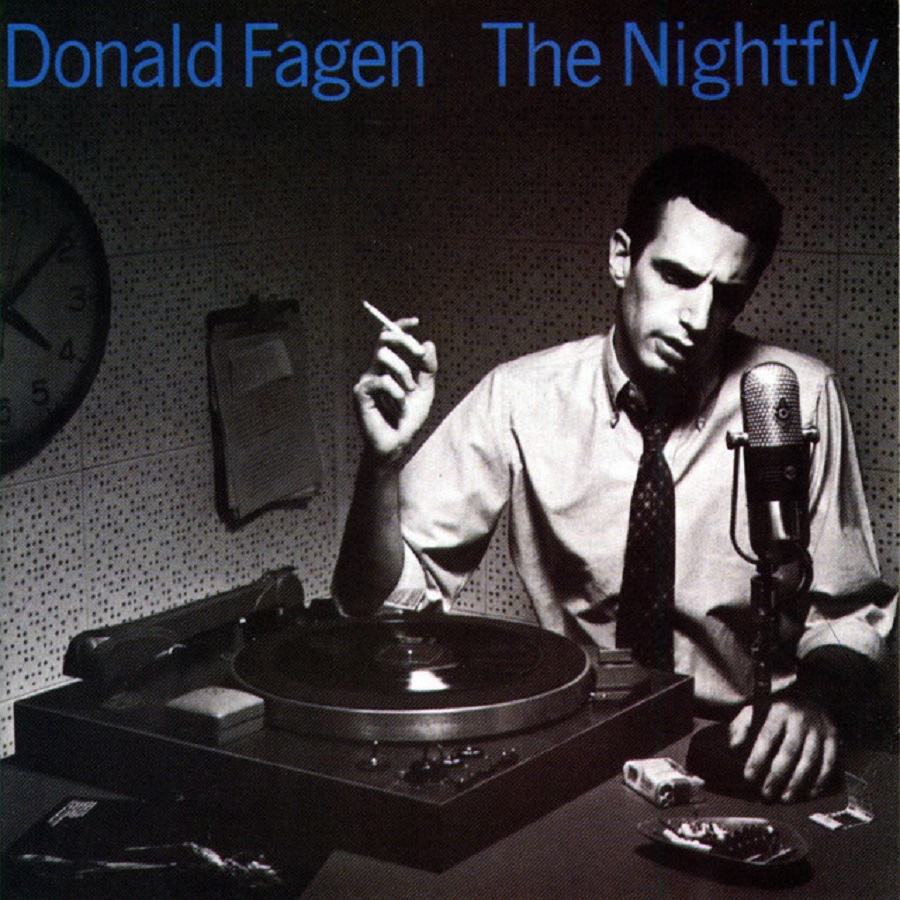
“I.G.Y.” was the opening track of Fagen’s debut album “The Nightfly”, released on 1 October 1982 via Warner Bros. Records. The album, named after the nighttime disc jockeys Fagen had listened to as a teenager in his bedroom via a portable radio, was largely autobiographical. While Steely Dan’s lyrics were generally cryptic and full of cynicism, Fagen focused on “The Nightfly” on his own youth in the suburbs of New Jersey during the late 1950s and early 1960s. Each track referenced a specific aspect of that period: the jazz music heard on the radio at night, the fear of a nuclear war and the resulting bunker culture, tropical holidays and the tension of the Cold War. The album cover showed Fagen himself as a nighttime DJ with headphones and a cup of coffee, while the back depicted a row of houses with one lit window, a reference to the solitary listener.
The album reached number 11 on the Billboard 200 and remained in the chart for 27 weeks. Internationally, it performed even better, reaching seventh place in Norway, eighth in Sweden and ninth in New Zealand. In the United Kingdom, it reached position 44. In December 1982, “The Nightfly” was certified gold in the United States for more than half a million copies sold, and in August 2001, it was certified platinum for over a million copies sold. Critics were unanimously positive.
At the 1983 Grammy Awards, “The Nightfly” received seven nominations, including Album of the Year, but lost to Toto’s “Toto IV”. Other nominations were for Best Engineered Recording, Best Pop Vocal Performance and Best Instrumental Arrangement Accompanying Vocal. Despite not winning a single Grammy, the album continued to grow in stature. Audiophile publications regularly selected it as a reference for digital recording quality, and in 198,4 a special Mobile Fidelity Sound Lab edition appeared on half-inch Beta and VHS videocassettes, one of the first albums in a pre-recorded digital format. Later reissues on DVD-Audio in 2002, DualDisc in 2004 and hybrid SACD in 2011 showed that The Nightfly was a lasting testament to studio perfectionism and sonic excellence. The album laid the foundation for Fagen’s later solo career and remained an inspiration for producers and musicians striving for similar levels of detail and refinement.
New Frontier
In January 1983, “New Frontier” was released as the second single from “The Nightfly”. The song, which lasted over six minutes on the album version and was shortened for radio, told the story of teenagers meeting in the early 1960s in an underground atomic bunker. The lyrics were both sarcastic and nostalgic, with Fagen depicting the bizarre reality of a generation that grew up under the constant threat of nuclear war. The bunkers, intended as protection against a possible Soviet attack, were transformed in the song into romantic meeting places where young people danced to music and tried to find normality amidst global tensions. This ironic reversal of fear into romance was typical of Fagen’s writing style, which always contained multiple layers of meaning.
Musically, “New Frontier” combined elements of jazz and funk with a shuffle rhythm and layered harmonies. The instrumentation included electric pianos, synthesisers, drums and a harmonica played by Fagen himself. The production was as polished as the rest of the album, with Roger Nichols as chief engineer and Gary Katz as producer. The song reached number 70 on the Billboard Hot 100, considerably lower than “I.G.Y.”, but performed better on the Adult Contemporary chart and in the Netherlands, where it reached number 47. The relatively modest commercial performance did not diminish the artistic value of the song, which was praised by critics for its ingenious concept and seamless execution.
What really distinguished “New Frontier” was the accompanying video, produced by Cucumber Studios and directed by Rocky Morton and Annabel Jankel. The clip combined live-action footage with animation in a style reminiscent of 1950s educational films and Disney cartoons. The story followed a young couple driving in a convertible to an underground bunker, where they danced and experienced romance while animated sequences illustrated the world above ground. The clip became a favourite on MTV in the channel’s early days and is still considered one of the great videos of the early MTV era. Fagen himself appeared only on a poster on the bunker wall, consistent with his reluctance to be in the spotlight. The video reinforced the nostalgic theme of the album and showed that Fagen was not only an excellent composer but also a visual storyteller capable of combining images and music into a coherent work of art.
After The Nightfly, Fagen released three more solo albums, including “Kamakiriad” in 1993 and “Morph the Cat” in 2006, but no single reached the commercial heights of “I.G.Y.”. In 1993, Fagen and Becker reunited Steely Dan, leading to new albums such as “Two Against Nature” in 2000, which won four Grammy Awards, including Album of the Year, and “Everything Must Go” in 2003. After Becker died in 2017, Fagen continued to perform under the name Steely Dan, carrying on the legacy of their joint work. In 2001, Steely Dan was inducted into the Rock and Roll Hall of Fame, a recognition of their lasting influence on popular music.
“I.G.Y.” remained a staple in Fagen’s live performances and was re-released in 2021 on the live album “The Nightfly Live”. The song demonstrated that pop music could be both intellectual and accessible, that complex production and emotional resonance could go hand in hand, and that a look back at the past was sometimes the best way to understand the present. For listeners drawn to the refined arrangements, ironic lyrics and sonic perfection, “I.G.Y.” remained a pearl of pop music, a song that transcended time and continued to connect generations through its universal message of hope and disappointment, dreams and reality.


