
Precious Pop Pearls: The Story Behind Michael Zager Band – “Let’s all chant”
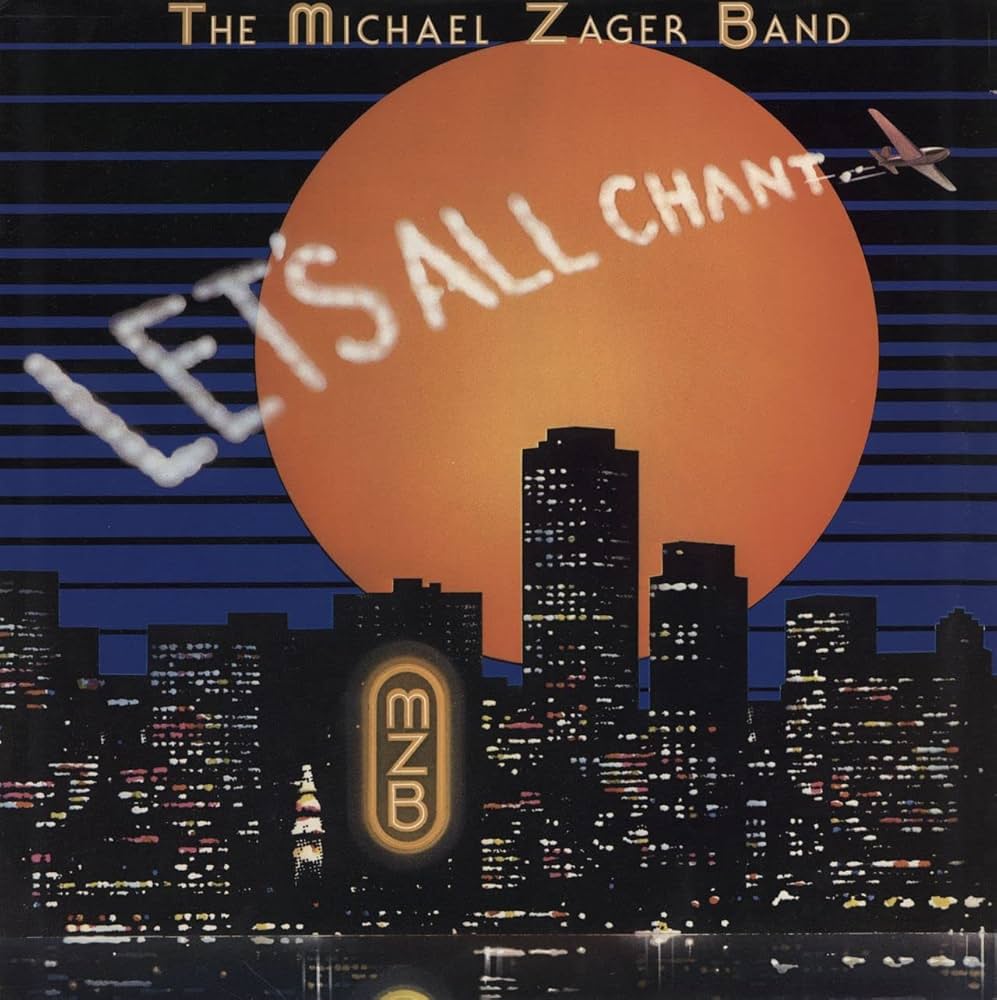
“Let’s all chant”, the hit by the Michael Zager Band, belongs to that rare category of hits that are so fundamentally connected to their time that they have almost become iconic. It is a song that originated from an observation in the clubs of New York, an almost shy idea that would grow into a worldwide dance floor hit. The story behind it is one of accidental inspiration, professional craftsmanship, and an unexpected magic that sometimes arises when the right elements come together.
Michael Zager
The man behind the project, Michael Zager, was born on 3 January 1943 in Passaic, New Jersey. His musical career began long before the disco era reached its peak. After his studies at the University of Miami and the Mannes College of Music, he developed into a versatile musician, composer, and producer. Between 1968 and 1973, he was part of the jazz-rock band Ten Wheel Drive, where he refined his skills as an arranger and keyboard player. This background in jazz and rock would later add a unique element to his disco productions.
In the mid-1970s, when disco slowly but surely began to dominate American dance floors, Zager saw the possibilities of the genre. He worked as a producer and arranger for various artists and created in 1975 his first project aimed at the disco market: Love Child’s Afro-Cuban Blues Band, later shortened to Afro-Cuban Band. The success of this project convinced him that there was a future in the disco world. When Jerry Love, former head of Artists and Repertoire at A&M Records, came to him with a remarkable idea, Zager was ready for his next step.
Love and Zager had already founded the Michael Zager Moon’s Band in 1976, but it was only after an evening in the clubs of Greenwich Village that their breakthrough would become reality. Love was a regular visitor of Studio 54 and went to clubs almost every night. During one of his visits, he noticed something remarkable: people continuously sang the syllables ooh-ah, ooh-ah along with every melody being played. It was a spontaneous expression of collective joy, a way for visitors to enhance their engagement with the music. The next day, Love enthusiastically told Zager and suggested writing a song around this chant. Zager’s initial reaction was cautious. Meanwhile, the band changed its name to Michael Zager Band and signed a contract with Private Stock Records, the label that would become their platform.
Let’s all chant
The song that resulted, “Let’s all chant”, was written by Michael Zager and Alvin Fields. Fields, who could also be heard as a singer on the band’s albums, contributed to the strikingly simple lyrics. The lyrics mostly consisted of encouragements to move, dance, and sing along, exactly as Love had observed in the clubs. Musically, however, the song was anything but simple. Zager integrated a classical string arrangement in the middle of the song, an unexpected twist that distinguished it from the standard disco formula. This baroque pause, as critics would later describe it, gave the song a refinement rarely found in disco productions of that time.
The production made use of a large ensemble of musicians. Francisco Centeno on bass, Allan Schwartzberg on drums, Jeff Mironov on guitar, and Rob Mounsey on synthesisers, electric piano, and clavinet formed the core. On top of this came brass, strings, harp, and percussion, resulting in a lush, orchestral sound. The vocal arrangements, with their repeated ah-ah and eh-eh refrains, were performed by Fields and a group of backing vocalists. It was a production that combined Zager’s orchestral background with the rhythmic foundation of disco.
“Let’s all chant” was released as a single in December 1977, with “Love Express” as the B-side, exactly in the Christmas week. Zager himself feared that this was the worst moment for a release, as many major artists released their albums at this time. He expected it to become at most a disco hit. Reality, however, exceeded all expectations. On 18 February 1978, the single reached the number one position on the American disco chart, where it remained for a week, displacing Cerrone’s “Supernature” from the top. The song, however, proved to have a broader appeal than just disco clubs. It climbed to number 15 on the Soul Singles chart, number 36 on the Billboard Hot 100, number 25 on the Cash Box Top 100, and number 31 on the Record World chart.
Internationally, the song performed even better. In the United Kingdom, it climbed to number 8 and remained twelve weeks in the charts. In France, the song reached number 5 and became the eleventh best-selling song of 1978. The Netherlands saw the song peak at number 4, while in Belgium it reached number 2 on the Flemish Ultratop 50. In Canada, the song reached number 2 on the dance chart and number 27 on the general chart. These international performances were remarkable for a song that had initially been intended as a simple club hit.
Pat and Mick
The song did not remain limited to its original version. In 1988, British radio presenters Pat Sharp and Mick Brown, known as Pat and Mick, recorded a cover version. Produced by Stock Aitken Waterman, the dominant hit factory of the late 1980s, this version transformed the song into a synth-pop and Euro house sound. The electronic beats and the call-and-response character of the original were maintained, but the production sounded unmistakably modern for its time. This version also included samples of Duran Duran’s “The Reflex”, adding an extra dimension to the sound.
The single was released as a charity single for Help A London Child. It reached number 11 on the UK Singles Chart and remained for nine weeks in the top 100. It also reached number 4 on the UK Indie Chart. Pat and Mick’s choice of this song was symbolic: it connected the disco glory of the 1970s with the house music and synth-pop revolution of the late 1980s. It was one of their most successful releases, although their next single, “I Haven’t Stopped Dancing Yet” in 1989, would reach even higher at number 9.
The cover version by Pat and Mick was only the beginning of a long series of interpretations. In 1996, British producer and DJ Gusto remixed the song, adding house influences and pulsating electronic rhythms while retaining the chant-like hooks. This version reached number 21 on the UK Singles Chart and number 2 on the UK Dance Chart. In 2002, German DJ Ole Wierk, under the alias DJ Valium, produced an electronic dance remake with trance influences that reached number 42 in France, number 44 in Austria, and number 73 in Germany. That same year, the French act Seventy Three covered the song for use in commercials for Orangina and later McDonald’s, reaching number 41 in the French charts. In 2003, Disco Queen released a version that reached number 10 in Greece. Bob Sinclar remixed the song in 2010 for an Oasis Tea commercial, and French DJs DatA, Nôze, and DJ Zebra released their own interpretations that same year. In 2011, the song was interpolated in “Galera” by Jessy Matador with King Kuduro and Bra Zil.
Let’s all chant album
“Let’s all chant” served as the opening track and lead single of the eponymous debut album by the Michael Zager Band, released in 1978 on Private Stock Records. The album reflected the same orchestral disco approach that made the single so distinctive. The six tracks on the album included, besides the title track, “Soul To Soul”, the B-side “Love Express”, “Music Fever”, “Freak”, and “Dancin’ Disney”. The album was produced as a continuous mix, with the tracks on each side seamlessly flowing into each other, a characteristic production technique for disco records intended for club use.
The production took place at the Secret Sound Studios in New York City, with additional recording and mixing on 48 tracks at the Trident Recording Studios in London. Rick Rowe handled recording and mixing, while Bob Ludwig and Joe Gastwirt handled mastering. The album cover, designed by B. Arnold and Neil Terk with artwork by David Willardson, reflected the extravagant aesthetic of the disco era. The credits listed an impressive roster of musicians, including brass, strings, harp, and percussion, highlighting the project’s rich production value. “Love Express”, the B-side of the single, was even rated higher by some critics than the A-side for its effective groove.
Life’s a party
Later in 1978, the Michael Zager Band released a second album, titled “Life’s a Party”. This album was remarkable in several ways, not least because it contained the first recording of the then fifteen-year-old Whitney Houston. Zager had discovered Whitney and invited her, along with her mother, Cissy Houston, to sing on the title track of the album. Whitney’s contribution was mainly as a backing vocalist, although she was also heard as the lead singer in certain parts. It was a modest beginning for someone who would later become one of the greatest singers in the music scene.
The album “Life’s a Party” was partly recorded at the Secret Sound Studios in New York and partly on 48 tracks at the Trident Recording Studios in London, where the entire album was also mixed. Like the debut album, it was produced as a continuous mix on both sides. The seven tracks included “Life’s A Party”, “You Don’t Know a Good Thing”, “I Wish You Would Make Up Your Mind”, “Love, Love, Love”, “Still Not Over”, “On And On”, and “Using You”. Cissy Houston was prominently present on multiple tracks, including “I Wish You Would Make Up Your Mind” and “Using You”, bringing her gospel-like soul to the disco arrangements. Although “Life’s a Party” did not have the same commercial impact as the debut album, it was appreciated as a solid disco album that captured the authenticity of the 1970s dance floor.
After the success of “Let’s all chant” and the subsequent albums, Michael Zager gradually shifted his focus from performance to production and composition for others. Between 1979 and 1981, he composed new bridges for three cover versions of classics by The Spinners, all released as medleys. “Working My Way Back to You” paired with “Forgive Me, Girl” reached number 2 on the Billboard Hot 100 in March and April 1980 and number 1 in the UK. “Cupid” combined with “I’ve Loved You for a Long Time” reached number 4 in the US in July and August 1980. A third medley, “Yesterday Once More” with “Nothing Remains the Same”, was less successful, peaking at number 52.
This period marked Zager’s transition to a more versatile career as a producer and arranger. He produced for an impressive roster of artists, including Peabo Bryson, Luther Vandross, Deniece Williams, Jennifer Holliday, Joe Williams, Arturo Sandoval, and Herb Alpert. His work extended to over 400 commercials for major brands such as Dr Pepper, IBM, Budweiser, Burger King, and many others. This commercial work earned him various awards, including a Clio Award and multiple awards at international film festivals. Whitney Houston would later sing for him in a commercial for Bounce detergent, completing a circle back to their first collaboration on “Life’s a Party”. His original scores and studio recordings of Whitney Houston, The Spinners, and the Michael Zager Band were archived in the Rock and Roll Hall of Fame and Museum in Cleveland, Ohio.
“Let’s all chant” remained, however, his most enduring contribution to pop culture. The song appeared in numerous films and television series. In 1978, it was heard in the thriller Eyes of Laura Mars during a scene where Laura Mars sets up an elaborate photo shoot. It featured on the soundtrack of the film The Last Days of Disco (1998) and in Spike Lee’s Summer of Sam (1999). In 2021, it was used in the Spanish-language Netflix film Las Leyes de la Frontera. On television, it appeared in an episode of Derrick in November 1978 and was used in various advertising campaigns, including for Médiatis in 2006. This continuous presence in popular media confirmed the song’s status as a definitive disco classic.


