Album review overview: Robin Berlijn, The Hara and more

Dozens of new albums arrive at Maxazine’s editorial staff every week. There are way too many to listen to them all, let alone review them. It ensures that too many albums are left behind. And that’s a shame. That is why today we post an overview of albums that arrive at the editors in short reviews.
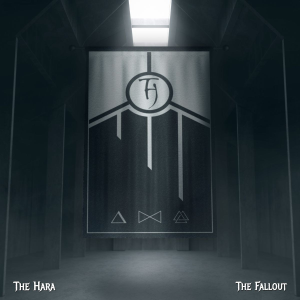
The Hara – The Fallout
Metalcore has recently seen a huge rise in popularity. Just look at an Electric Callboy, who easily fills large venues. The Hara are a British band that has not existed for very long. In 2022, they released their first album, and with this third, “The Fallout”, they deliver what they themselves call their most personal album. Singer Josh Taylor, who is also responsible for the songwriting, sometimes finds it difficult to communicate in daily life, which works better for him through music. “The Fallout” mainly deals with the music industry. How it gives with one hand and takes with the other, leaving them with the constant feeling that they have to reach their peaks, which can be mentally heavy. “The Fallout” brings metalcore with pop punk influences and a touch of prog. The genre is now very well represented by countless bands, which will make it difficult to stand out. The Hara are still young and clearly ready for an adventure in the music world. Their own identity comes through, and that alone often takes you far in rising above other releases. (Rik Moors) (7/10) (Mascot Records)
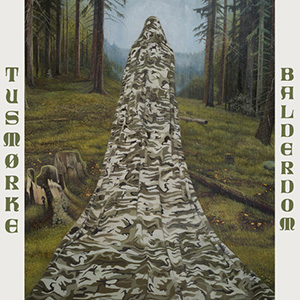
Tusmørke – Balderdom
“Balderdom” is the 13th album by Tusmørke. If you can expect one thing from this Norwegian prog rock band, it is that you never know what to expect. Their music contains unexpected twists and remarkable blends and alternations between rhythm and melody, among other elements. The sound breathes a retro atmosphere. The same applies to “Balderdom”, although the sound is duller than expected. The layered vocals are sometimes wordless. Vocal parts alternate with extended instrumental passages. There are countless nice details and jazz influences in the complex yet reasonably accessible songs. In “Rerun of Forever (Stravinsky)”, a lot comes at you at times. Some songs have several empty seconds at the end, while “Vi er et kollektiv” is oddly cut off. “Lidskjalv” is a well-constructed epic lasting more than 21 minutes. The sound remains somewhat dull; the sharp, high flute tones create a strange imbalance. Because the sound is more retro than usual, the contrasts and the layers in vocals and music come across less well this time, disturbing the harmony. A pity, because “Balderdom” is made for lovers of complex prog. (Esther Kessel) (6/10) (Karisma Records)
Fabio de Almeida – Requiem for a Dragon
The Portuguese saxophonist Fabio de Almeida has lived and worked in Tilburg (Netherlands) for some time. We have nothing against that, but it seems there are more inspiring places than Tilburg. It may have influenced the choice to compose a requiem, a mass for the deceased. The best-known work in this genre is Mozart’s Requiem, and this “Requiem for a Dragon” certainly shows kinship with it. The tone is often dark, solemn and sombre. The fire in the dragon, a symbol of strength and a metaphor for one’s inner power, has been extinguished. De Almeida almost whispers on his instrument, in sober arrangements often featuring only drums, bass and piano. It is impressive how the composer captures emotion and melancholy in the compositions without them collapsing under the weight of the heavy theme. That is due to the dynamics De Almeida introduces, also and especially in his own playing. The opening “Mark of the Wanderer”, but especially “Forever until it lasts”, are good examples. De Almeida truly makes his instrument speak, sometimes in only a few notes. It turns out Tilburg is a very fertile ground for beautiful, cinematic jazz. (Jeroen Mulder) (8/10) (Dox Records)

Wolverine – Anomalies
We had to wait more than 10 years for the sixth album by the Swedish prog rock band Wolverine. In the early days, Wolverine still played progressive metal with death influences. Nothing of that can be heard now. The emphasis now lies on atmosphere and melancholy, comparable with bands such as Anathema, Steven Wilson and compatriots Katatonia. The lyrics deal with themes such as ageing, identity and existential reflection. All band members know exactly what they are doing, but I would like to mention singer Stefan Zell separately. His singing is expressive and, at the same time, fragile and powerful. The music on “Anomalies” is certainly not easy listening. Even after several listens, I am still trying to place and process everything I have heard. I am convinced that “Anomalies” will be one of the best albums of 2026 that this genre has to offer. (Ad Keepers) (8/10) (Music Theories Records)

Robin Berlijn – Carcassettes Vol 6
Thirty years later, a missing link appears in Robin Berlijn’s career. This cassette from 1996, only now widely available through the remastered Carcassettes series, captures the 25-year-old guitarist before Fatal Flowers, Kane and all those other stops followed. And what a charming time capsule it has become. “Kind In Tuin” opens with unmistakable sixties swing that could just as easily have appeared on an Ellen ten Damme record. The basic recording and elementary production, inherent to the Carcassettes concept, do not detract from the quality. On the contrary, they give the songs a raw authenticity. With “Hut”, your heart skips a beat: Zeppelin? No, but the intro teasingly plays with that expectation. The most fascinating track is “De Zachte G”, a primal version of the Amsterdam guitar school in which you can still hear squatter roots rattling. Here, the DNA of an entire musical ecosystem is hidden within four minutes. For those who know Berlijn’s later work, this album is indispensable: it fills in blank spots and shows where everything began. A sympathetic project that tells more about the development of a guitarist than many polished studio albums ever could. (Jan Vranken) (8/10) (Carcassettes)