
Precious Pop Pearls: The Story Behind Air – “All I Need”
In the autumn of 1998, electronic music reached a gentle turning point. While Paris was buzzing with the energy of the French Touch movement, featuring artists like Daft Punk and Stardust, the duo AIR released a track that belonged on no dance floor. “All I Need” was a restrained declaration of love, a whisper in a world full of sound explosions. It became the third single from their debut album “Moon Safari” and proved that electronic music could also be vulnerable and poetic.
Air
Nicolas Godin and Jean-Benoît Dunckel grew up in Versailles and met in the 1980s while both playing in the band Orange. They had very different educational backgrounds. Godin studied architecture at the École nationale supérieure d’architecture de Versailles, while Dunckel focused on mathematics. Yet they found each other through their shared love of 1970s music. They first played together in Orange before deciding in 1995 to continue as a duo under the name AIR. Their musical inspiration came from a wide range of sources, from Pink Floyd’s progressive rock to Kraftwerk’s experimental synthesiser music, from Burt Bacharach’s refined arrangements to the dark elegance of Siouxsie and the Banshees. This eclectic mix made their sound immediately recognisable. Unlike many of their French contemporaries who relied on samples and disco beats, Godin and Dunckel chose to play vintage instruments. Their Moog synthesisers, Korg MS-20, Wurlitzers, and Rhodes pianos became the cornerstones of their sound.
Beth Hirsch
American singer Beth Hirsch lived in the same period as Godin and Dunckel in the artistic district of Montmartre. She had already signed a contract in France and was working on various musical projects. One day she went to a nearby studio to record with a producer she knew. In that same building, Nicolas Godin was waiting on a couch. He had heard Hirsch’s demo and was impressed by her voice. Seeing her there, he seized the opportunity and invited her to record vocals for the album AIR was working on. Hirsch agreed and was tasked by the duo with writing lyrics and melodies. This resulted in “All I Need”, a track where Hirsch not only provided vocals but also composed the lyrical and melodic core. The lyrics are simple yet expressive, with the singer singing about the need for time, a sign, and above all, someone’s presence. It is a love song in its purest form, without embellishment or drama. At the band’s request, Hirsch also wrote a second track for the album, “You Make It Easy”, completing her mark on “Moon Safari”.
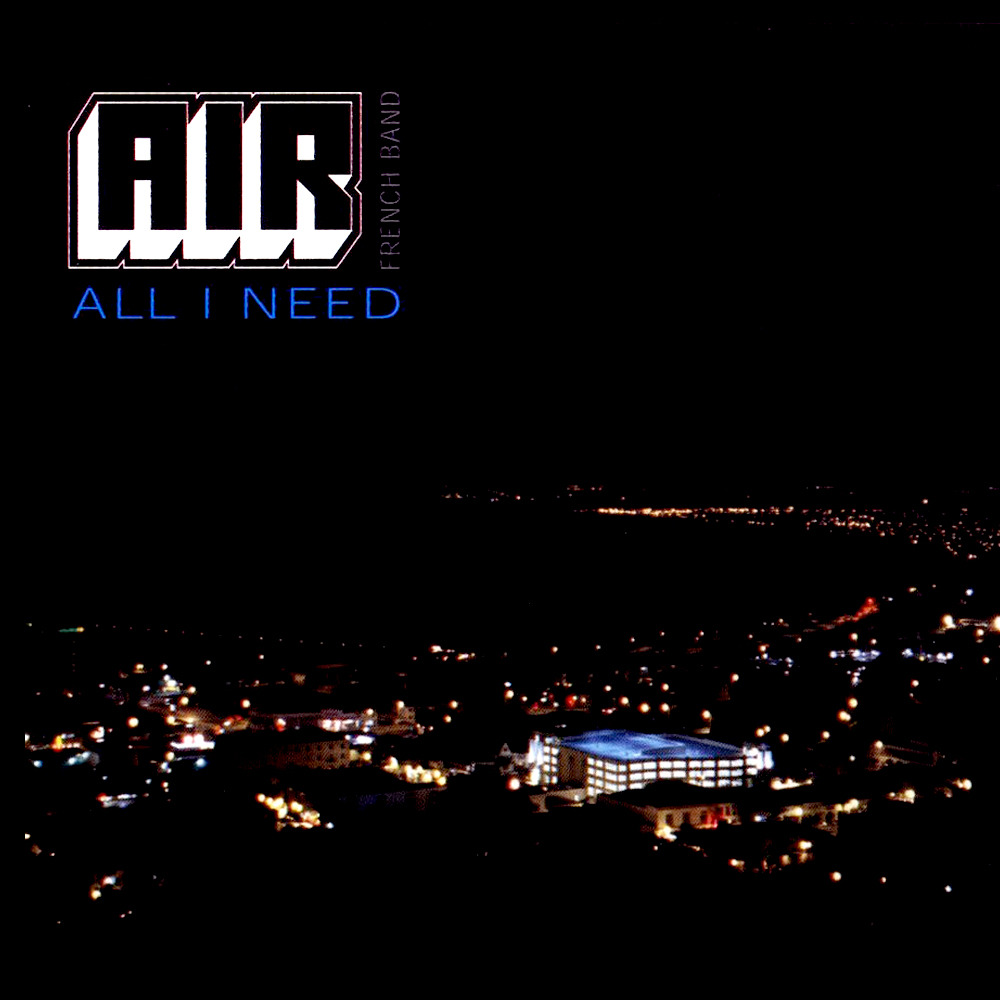
All I Need
“All I Need” was released on November 9, 1998, as the third single from “Moon Safari”, following “Sexy Boy” and “Kelly Watch the Stars”. While those two tracks were playful and airy, AIR chose pure emotion with “All I Need”. The production was meticulous. Godin played acoustic guitar, bass, no fewer than three different synthesisers, drums, and organ. Patrick Woodcock supported him with a second acoustic guitar. Dunckel added organ, Rhodes piano, and Wurlitzer to the sonic palette. Strings were recorded at the legendary Abbey Road Studios in London, while the rest of the track was completed in Parisian studios. The song was based on an earlier AIR composition called “Les Professionnels”, which appeared on their 1997 EP “Premiers Symptômes”. For “All I Need”, they expanded that foundation into a full arrangement where Hirsch’s voice could float above a bed of guitar fragments, warm synthesiser tones, and subtle strings. The music builds slowly and then dissipates, as if following a breath. Critics praised the track for its instrumentation and especially for Hirsch’s vocal performance. Later, “All I Need” was included in the book “1001 Songs You Must Hear Before You Die”, a recognition of its enduring value.
Lara Chedraoui (Intergalactic Lovers)
The music video for “All I Need” was directed by Mike Mills, who would later become known as a filmmaker with works like “Beginners” and “20th Century Women”. In the video, a young couple from Ventura, California, talk about their affection and relationship while skateboarding through the streets. Mills later stated in interviews that this video marked a turning point for him. He discovered a willingness to be completely sincere, emotionally, without being sentimental. He had always hidden behind irony and distance, but with “All I Need”, he let go of those barriers. What Mills could not foresee was that the couple in the video would later break up, as AIR revealed in their web series “Air Time Machine”. Over the years, various artists have reinterpreted “All I Need”. Beth Hirsch herself released a new version in 2020, “All I Need (ELIOT’s Cosmic Remix)”, featuring her vocals in a more stretched arrangement. Other musicians, from jazz ensembles to pop artists, have also covered the song, though these versions remained mostly unnoticed. The influence of “All I Need” extended beyond covers. The track became a blueprint for a certain form of emotional electronic music, where technology and humanity merge. Artists like Röyksopp, Sébastien Tellier, and Bent were inspired by how AIR created atmosphere and feeling without descending into bombast. Although “All I Need” was never recorded by a major artist, the version performed by Lara Chedraoui, singer of Intergalactic Lovers, together with Guy Van Nueten on Flemish TV, must not be forgotten.
Moon Safari
“Moon Safari” was released on 16 January 1998 and was immediately embraced by critics and the public alike. The album peaked at number 21 in France and reached the top ten in countries like Ireland and the United Kingdom, where it achieved double platinum status. In the United States, by February 2012, the album had sold over 386,000 copies, an impressive figure for a French electronic album. The ten tracks on “Moon Safari” formed a cohesive whole. The album opens with “La Femme d’Argent”, a seven-minute instrumental track that sets the tone for what is to come. Next came the singles “Sexy Boy” and “Kelly Watch the Stars”, each with its own playful charm. “All I Need” brought calm to the middle of the album, followed by the instrumentals “Talisman” and “Remember”. The album closes with “New Star in the Sky” and “Le Voyage de Pénélope”, tracks that underline the spatial theme of the album. Critics were laudatory. Mixmag called the album brilliantly inventive, NME praised its sensitive yet persistent grasp of melody, and Pitchfork suggested the music suited minimalist architecture, making love in a field of sunflowers, and waiting in line for Space Mountain. Rolling Stone placed “Moon Safari” at number 93 on their list of the best albums of the nineties, while the French edition of the magazine ranked it 65th in their list of 100 essential French rock albums. The book “1001 Albums You Must Hear Before You Die” also included it in its canon. In 2021, Dave Depper of the American band Death Cab for Cutie recreated the entire “Moon Safari” as a tribute to the original. In 2024, AIR celebrated the 25th anniversary of the album with a reissue and a world tour in which they performed the album in full.
You Make It Easy
In addition to “All I Need”, Beth Hirsch wrote a second track for “Moon Safari”: “You Make It Easy”. This track, the seventh on the album, is as intimate as “All I Need” but has a slightly lighter atmosphere. Hirsch sings about the simplicity of love, about how someone can make life easier by being present. The lyrics are direct and sincere, without detours. The instrumentation is more delicate than “All I Need”, with a more prominent role for acoustic guitar and less dramatic build-up. While “All I Need” is a ballad with a climax, “You Make It Easy” feels like an uninterrupted stream of warmth. The song was never released as a single but became a fan favourite. During live shows, Godin and Dunckel experimented with the vocals of both tracks. Because Hirsch did not tour with them, they had to be creative. On “You Make It Easy”, Godin sang the vocals while playing acoustic guitar, but his voice was processed through a voice changer to create an androgynous effect. Dunckel sang the chorus, also with a manipulated voice. It was not a perfect solution, but it worked within the context of their live shows. For fans familiar with the original versions, it was a loss not to hear Hirsch’s voice live, but it also demonstrated the resilience of the compositions themselves.
After “Moon Safari”, AIR pursued an increasingly ambitious and sometimes polarising artistic path. In 2000, they composed the soundtrack for Sofia Coppola’s directorial debut “The Virgin Suicides”, a cinematic interpretation of the story of five sisters. The soundtrack went gold in both France and the United Kingdom. A year later, they released “10 000 Hz Legend”, an album that explored their experimental side further and was less accessible than their debut. Fans and critics were divided, but the album confirmed that AIR was not interested in repetition. Albums such as “Talkie Walkie” (2004) and “Pocket Symphony” (2007) found a balance between their breezier pop side and their experimental leanings. In 2012, they released a new soundtrack for Georges Méliès’ silent classic “Le Voyage dans la Lune” from 1902, a project that highlighted their love for cinema and history. Both also worked on solo albums. Dunckel released various records under the name Darkel and later under his own name, while Godin focused on projects that intertwined architecture and music. Their influence on electronic music in the 2000s and beyond cannot be underestimated. While the late 1990s were dominated by big beat and more aggressive electronic sounds, AIR demonstrated that there was room for nuance, for silence, for breathing. “All I Need” remains one of the most beautiful examples of that philosophy. It is a track that has outlived its time because it never conformed to time. It is timeless, not because it sounds like nothing, but because it sounds like everything that love and desire mean.


